
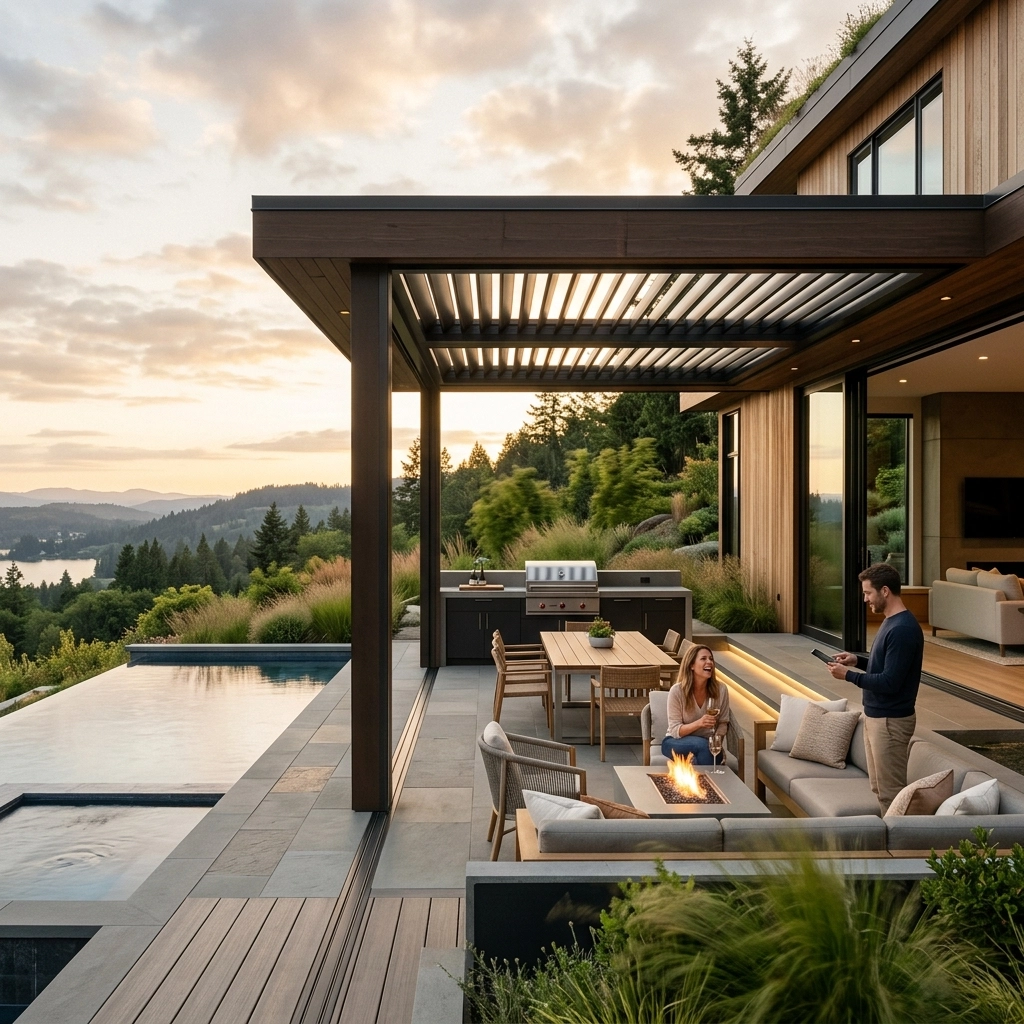
Outdoor living in New Zealand is undergoing a fundamental transformation. What was once viewed as a simple deck or a seasonal patio cover is now being reimagined as a fully integrated, high-performance extension of the home. Across the Pacific, homeowners, developers, and architects are shifting their focus toward creating "outdoor infrastructure": spaces designed for year-round utility, comfort, and architectural permanence.
This evolution is driven by a demand for spaces that combine weather protection with smart technology, airflow control, and high-end aesthetics. As we move into 2026, the market is moving away from cheap, temporary imports and toward engineered systems that sit at the intersection of luxury and practicality.
Historically, the outdoor market was bifurcated. Consumers generally had to choose between lightweight, low-durability kitsets or fully bespoke architectural builds with prohibitive price tags.
In 2026, the mid-market pergola has emerged as the dominant category. This segment focuses on engineered systems that offer the styling of a custom build but leverage modular efficiency. These systems provide:
Homeowners now prioritize adaptable architecture over static shelter. The expectation is a system that feels premium but remains accessible through modular design.
Outdoor areas are no longer treated as optional landscaping features; they are now considered critical home infrastructure. This shift mirrors the evolution of the indoor kitchen: it is now a high-functioning room that must perform under pressure.
Modern outdoor rooms are expected to function with the same sophistication as an interior lounge. This includes the integration of:
This trend is heavily influenced by the hospitality sector. Having experienced the comfort of luxury rooftop bars and resorts, residential buyers are demanding the same all-weather performance for their own backyards.
One of the most significant design shifts for 2026 is the move away from "all-or-nothing" roofing. Traditional pergolas often forced a compromise between natural light and total weather protection.
Hybrid roofing layouts solve this by combining different materials within a single structure. Common configurations now include:
This "mixed-material" approach ensures that adding an outdoor structure doesn't result in a dark, cold interior living room: a common complaint with older, fixed-roof designs.

Smart technology has moved from a luxury "gimmick" to a standard functional requirement. However, the 2026 trend focuses on invisible automation: systems that work in the background to protect the investment and improve comfort without requiring constant manual adjustment.
Key smart features currently in high demand include:
The focus is on reliability and simplicity. Modern users want technology that reduces the mental load of home maintenance rather than adding complexity.
The "wellness" trend has moved outdoors. We are seeing a surge in demand for dedicated recovery zones that go beyond the traditional swimming pool. These spaces are often designed with natural textures and softer lighting to create a sanctuary-like atmosphere.
New outdoor infrastructure projects frequently incorporate:

Technology is not limited to louvres and lights. For schools, clubs, and high-end residential estates, AI-powered sports technology is becoming a core part of outdoor infrastructure.
With the rise of backyard pickleball and multi-sport courts, there is an increasing demand for:
This trend highlights the shift toward high-utility spaces that serve both recreational and developmental purposes.
In 2026, homeowners are taking a long-term view of their property development. The trend of "building it all at once" is being replaced by modular, staged growth.
By starting with a high-quality engineered frame, owners can add features as their lifestyle and budget evolve. The typical progression looks like this:
This modular approach ensures that the foundation of the outdoor space is high-quality, avoiding the need to tear down and replace inferior structures later.

The unique environmental challenges of the Pacific: extreme UV, coastal salt air, and sudden high-wind events: are driving a demand for better engineering. Consumers are becoming more educated on the technical specifications of their outdoor systems.
Key technical considerations for 2026 include:
The trajectory of outdoor living in 2026 is clear: permanence, performance, and integration.
The backyard is no longer a separate entity; it is a sophisticated, technologically advanced wing of the modern home. By prioritizing engineered mid-market solutions, hybrid roofing, and smart automation, homeowners are creating spaces that offer year-round utility and genuine long-term value.
Key Takeaways for 2026:
The future of outdoor living is about creating environments that adapt to the way we live, work, and play( regardless of what the weather is doing outside.)


