
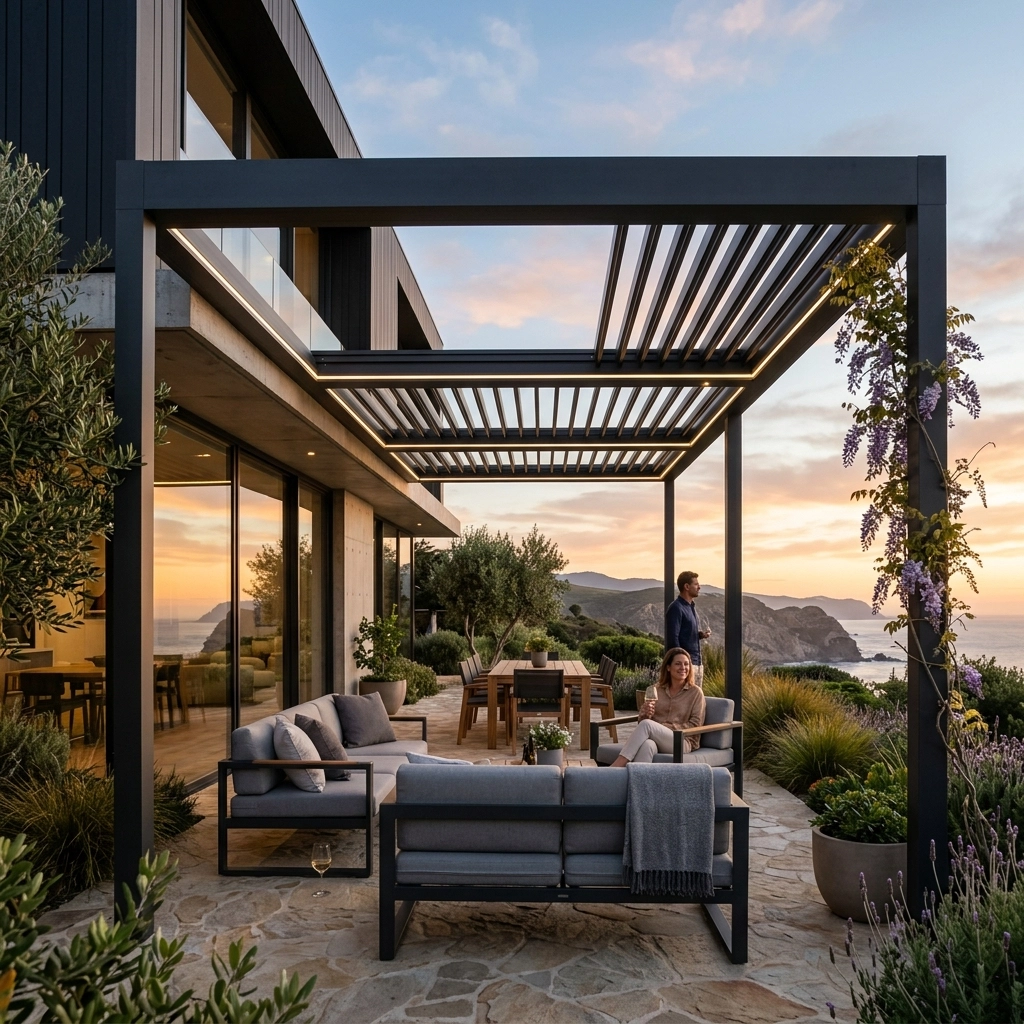
Modern architecture has fundamentally redefined the relationship between a home’s interior and its surroundings. No longer viewed as isolated structures in a garden, pergolas have evolved into sophisticated architectural extensions of the residence. Today’s designs prioritize functional outdoor living environments that serve as hubs for entertaining, dining, and even professional remote work.
As the demand for high-quality outdoor living continues to surge across New Zealand and the international market, the design of these structures is shifting toward a minimalist aesthetic, integrated technology, and high-performance materials. The modern pergola is a tool for blurring the line between indoors and out, creating a cohesive living zone that remains usable regardless of the season.
The contemporary home focuses heavily on open-plan living, the maximization of natural light, and seamless transitions. Pergolas play a pivotal role in this architectural philosophy by extending the interior footprint into the landscape while providing necessary shelter and structural definition.
A defining feature of many modern residential builds is the use of large sliding or stacking glass doors that open directly onto covered patios. Instead of treating the outdoor area as an afterthought, designers are now integrating louvre systems into the initial build process. This foresight ensures that the outdoor space feels less like a traditional patio and more like a second living room, fully integrated with the home’s primary structural lines.
One of the most prominent trends in modern design is the transition toward minimalist aluminium structures. These systems offer clean, crisp lines and flat roof profiles that complement the boxy, geometric forms of modern residential architecture.
Key features of minimalist aluminium designs include:
Aluminium is the preferred material for modern outdoor shading solutions due to its inherent technical properties. It offers superior resistance to corrosion: essential for coastal environments: and requires significantly less maintenance than traditional timber. Its high strength-to-weight ratio allows for slimmer profiles and longer spans, which are critical for maintaining unobstructed views in contemporary designs.
The move toward high-functionality has led to the widespread adoption of motorised louvre systems. Unlike a fixed roof, which provides permanent shade but can block light during the winter months, these systems offer total control over the environment.
The technical core of these systems lies in the adjustable roof blades. These can be rotated to track the sun for optimal heat gain or closed completely to provide a water-tight seal against rain. This versatility effectively converts an outdoor space into an all-season room.
Modern motorised systems often feature:
The primary objective of modern outdoor design is the creation of a functional "flow." This means the pergola must do more than just provide shade; it must define a zone that serves a specific lifestyle purpose.
Modern pergolas are increasingly designed as direct extensions of kitchens and dining areas. When a pergola is planned as a structural extension, it allows for the installation of:
By treating the pergola as a structural "ceiling," homeowners can apply interior design principles: such as zoning and lighting layers: to the outdoors, creating a space that feels intentional and luxurious.
While aluminium remains the dominant structural material for its durability, modern designers often incorporate mixed materials to introduce warmth and texture. This prevents a large structure from feeling too industrial and helps it harmonize with the natural environment.
Common material pairings include:
These combinations allow for a balance between the high-performance benefits of metal and the tactile, inviting nature of organic materials.
A common challenge in outdoor design is providing weather protection without sacrificing natural light inside the home. This has led to the development of hybrid roofing systems. These designs combine aluminum louvres or solid panels with translucent elements like glass or high-grade polycarbonate.
Natural light roofing is particularly beneficial for:
In high-end residential projects, pergolas are being used to create resort-style environments. By the poolside, the pergola serves as a cabana, providing deep shade and a sense of privacy.
To achieve this "resort" look, modern designs often incorporate:
The result is a high-performance leisure zone that adds significant value to the property and enhances the daily lifestyle of the residents.
The integration of smart technology is perhaps the most significant shift in the evolution of the pergola. Modern outdoor living areas are now part of the connected home ecosystem. Through platforms like the Tuya app or integrated home automation systems, users can control every aspect of their environment.
Key technological integrations include:
For a pergola to successfully complement a modern home, several technical factors must be addressed during the planning phase:
The modern pergola has transitioned from a simple garden accessory to a sophisticated piece of outdoor architecture. By prioritizing clean lines, high-performance materials like aluminium, and advanced louvre systems, homeowners can create versatile environments that defy the limitations of traditional outdoor spaces.
The key takeaways for modern pergola design are:
As we move forward, the focus will remain on creating cohesive, technology-driven environments that allow us to live, work, and entertain in the open air without compromising on comfort or style.


