
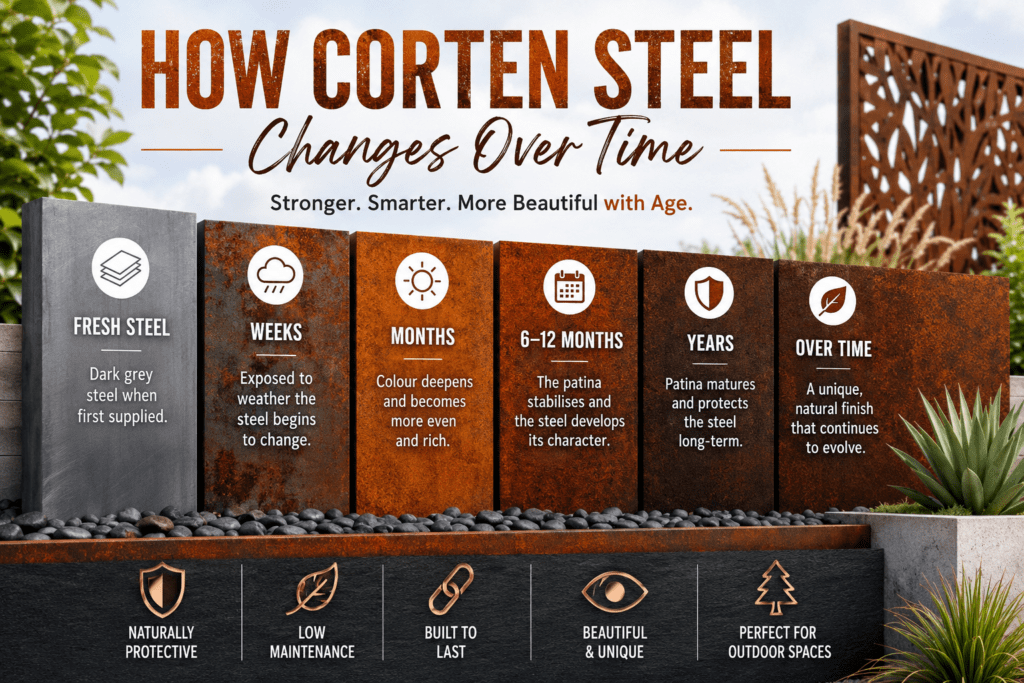
Corten steel is known for one thing above all else: it gets better with age.
Unlike painted steel, corten is designed to weather naturally. Over time, the surface develops a rich rust-coloured patina that protects the steel underneath and gives each structure a unique architectural finish.
Corten steel, also known as weathering steel, is a steel alloy designed to form a protective oxide layer on the surface.
This outer layer looks like rust, but it performs differently from ordinary rust. Instead of continuing to break down quickly, the patina helps slow further corrosion when the steel is exposed to normal outdoor conditions.
When corten steel is first supplied, it may arrive looking dark grey, blue-grey, or lightly oxidised.
At this stage, the surface is still developing. Colour may be uneven, and some areas may weather faster than others depending on sun, rain, wind, and handling marks.
This is completely normal.
Once exposed to the weather, corten steel begins to change colour.
The surface may move through shades of:
brown
orange
gold
red
dark rust
During this early phase, the steel may release some rust-coloured runoff, especially after rain. For this reason, corten products should be positioned carefully around pale concrete, light paving, tiles, or rendered walls.
Over several months, the surface begins to stabilise.
The colour becomes deeper and more consistent, often moving from bright orange tones into a richer brown or burnt copper finish.
This is the stage where corten steel starts to develop its signature architectural appearance.
Over time, corten steel continues to darken and mature.
The final appearance will depend on the environment. Coastal areas, shaded spaces, high moisture zones, and areas with limited airflow may weather differently from open, sunny locations.
No two corten steel products will age exactly the same, which is part of the appeal.
The patina is not just decorative.
It helps protect the steel by creating a dense surface layer. This makes corten steel popular for:
outdoor screens
fire pits
planters
garden edging
pergolas
feature panels
architectural structures
The material blends well with timber, concrete, stone, landscaping, and modern outdoor spaces.
Corten steel needs good airflow and natural wet-dry cycles to perform well.
Avoid placing corten where it remains constantly wet, buried in soil, or trapped against surfaces that hold moisture. The protective layer works best when the steel can dry between weather exposure.
Drainage is also important. Rust runoff can stain nearby surfaces during the early weathering stage, so placement should be planned before installation.
In most outdoor applications, corten steel is left unpainted.
Painting or sealing changes the natural ageing process and can reduce the visual character that makes corten so popular.
Some projects may use sealers to reduce runoff or lock in a specific colour, but this changes the natural finish and may require ongoing maintenance.


