
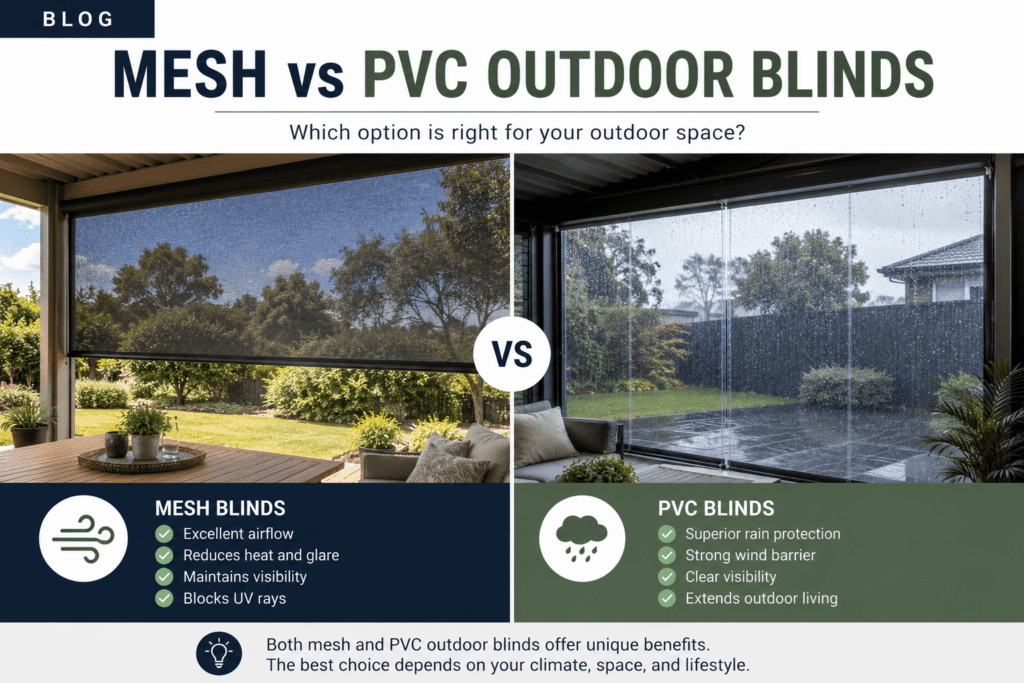
Outdoor blinds have become one of the most popular additions to pergolas, patios, gazebos, and outdoor entertaining areas throughout New Zealand.
They provide protection from wind, rain, glare, and harsh sunlight while helping create a more comfortable outdoor environment throughout the year.
Two of the most common outdoor blind materials are mesh blinds and PVC blinds. While both offer weather protection, they perform very differently depending on the conditions and how the space is used.
Understanding the strengths and limitations of each option can help homeowners choose the best solution for their outdoor living area.
Mesh blinds are manufactured using woven outdoor fabrics that allow a percentage of air and light to pass through while blocking UV radiation and reducing glare.
Depending on the fabric selected, mesh blinds are available in various openness factors, typically ranging from 1% to 15%.
These fabrics are commonly used in outdoor entertaining spaces because they maintain visibility and airflow while still providing shade.
One of the biggest advantages of mesh blinds is ventilation.
Because the fabric allows air to pass through, outdoor areas remain cooler during summer and are less likely to feel enclosed.
This makes mesh blinds ideal for spaces where airflow is important.
Mesh fabrics allow occupants to see through the blind during daylight hours.
This helps preserve outdoor views while still reducing glare and sunlight exposure.
For homes with gardens, pools, or scenic outlooks, maintaining visibility is often a major advantage.
Since air can pass through the fabric, mesh blinds typically experience lower wind pressure than solid materials.
This can improve performance in exposed outdoor environments.
High-quality mesh fabrics can block a significant percentage of harmful UV radiation while still allowing natural light into the space.
While mesh blinds offer excellent comfort and visibility, they are not completely weatherproof.
Heavy rain can still penetrate the fabric, particularly during strong winds.
For areas that require complete enclosure, mesh may not provide sufficient protection.
PVC blinds are manufactured from clear or tinted flexible vinyl material.
Unlike mesh fabrics, PVC creates a near-solid barrier against wind and rain while maintaining visibility through the blind.
These systems are commonly used in cafés, restaurants, outdoor dining areas, and residential spaces where weather protection is a priority.
PVC blinds provide significantly better protection from rain compared with mesh fabrics.
When properly installed, they can help create an enclosed outdoor room that remains usable during wet weather.
PVC acts as a shield against cold winds, helping retain warmth in outdoor entertaining spaces.
This can be particularly beneficial during New Zealand's cooler months.
Transparent PVC allows users to enjoy outdoor views while remaining protected from the elements.
The result is an enclosed space that still feels connected to the outdoors.
By reducing exposure to wind and rain, PVC blinds can help increase the number of days an outdoor area is comfortably usable each year.
PVC blinds are not as breathable as mesh fabrics.
Because they restrict airflow, enclosed areas can become warmer during summer conditions.
Condensation may also occur in certain weather situations.
Over time, PVC can require additional cleaning and maintenance to preserve clarity and appearance.
| Feature | Mesh Blinds | PVC Blinds |
|---|---|---|
| Airflow | Excellent | Limited |
| Rain Protection | Moderate | Excellent |
| Wind Protection | Good | Excellent |
| Visibility | Excellent | Excellent |
| UV Protection | Excellent | Good |
| Summer Comfort | Excellent | Moderate |
| Winter Comfort | Moderate | Excellent |
| Outdoor Views | Very Good | Excellent |
| Privacy | Moderate | Low |
| Maintenance | Low | Moderate |
The answer depends on how the outdoor space is used.
Many homeowners are now combining mesh and PVC blinds in the same outdoor area.
For example:
This approach provides a balance between airflow, visibility, and weather protection while allowing the space to adapt to changing conditions throughout the year.
Both mesh and PVC outdoor blinds offer significant advantages for outdoor living spaces, but they are designed for different purposes.
Mesh blinds excel at maintaining airflow, reducing heat, and preserving outdoor views, making them ideal for summer comfort.
PVC blinds provide superior protection from wind and rain, helping create an outdoor room that can be enjoyed throughout the year.
The best solution depends on your location, climate, and how you intend to use the space. By understanding the differences between mesh and PVC systems, homeowners can create a more comfortable and functional outdoor environment in every season.


