
In the realm of modern architectural design, a profound shift has occurred. The once-dominant preference for "white-on-white" minimalism and Mediterranean creams has been eclipsed by a more sophisticated, moody, and grounded aesthetic. Often referred to as "Dark Mode" architecture, this design movement leverages deep charcoal, onyx, and midnight-black finishes to redefine outdoor living spaces and structural silhouettes.
Far from being a fleeting trend, the use of dark architectural elements represents a fundamental understanding of visual weight, environmental integration, and the interplay of light and shadow. In regions like New Zealand and the Pacific Islands, where the landscape is vibrant and the sunlight is intense, dark-toned structures provide a necessary visual anchor that complements: rather than competes with: the natural surroundings.
Designing in "Dark Mode" is an exercise in restraint and luxury. When an outdoor structure, such as a pergola or a louvred system, is finished in a high-grade dark matte or satin powder-coat, it immediately conveys a sense of structural permanence.
While light colors tend to expand and draw the eye toward the structure itself, dark tones have a receding quality. This "vanishing effect" allows the architecture to sit quietly within a landscape. In high-end residential and commercial projects, dark grey or black elements act as a frame, drawing the observer’s attention through the structure and toward the view beyond. Whether it is a rugged coastline or a manicured garden, the dark palette serves as a sophisticated border that enhances the colors of nature.
Color psychology plays a critical role in architectural specification. Darker tones are inherently associated with:
By utilizing dark finishes, designers can transform a sprawling outdoor deck into a focused, curated environment. This is particularly effective in urban settings where the goal is to create a private sanctuary amidst the chaos of the city.
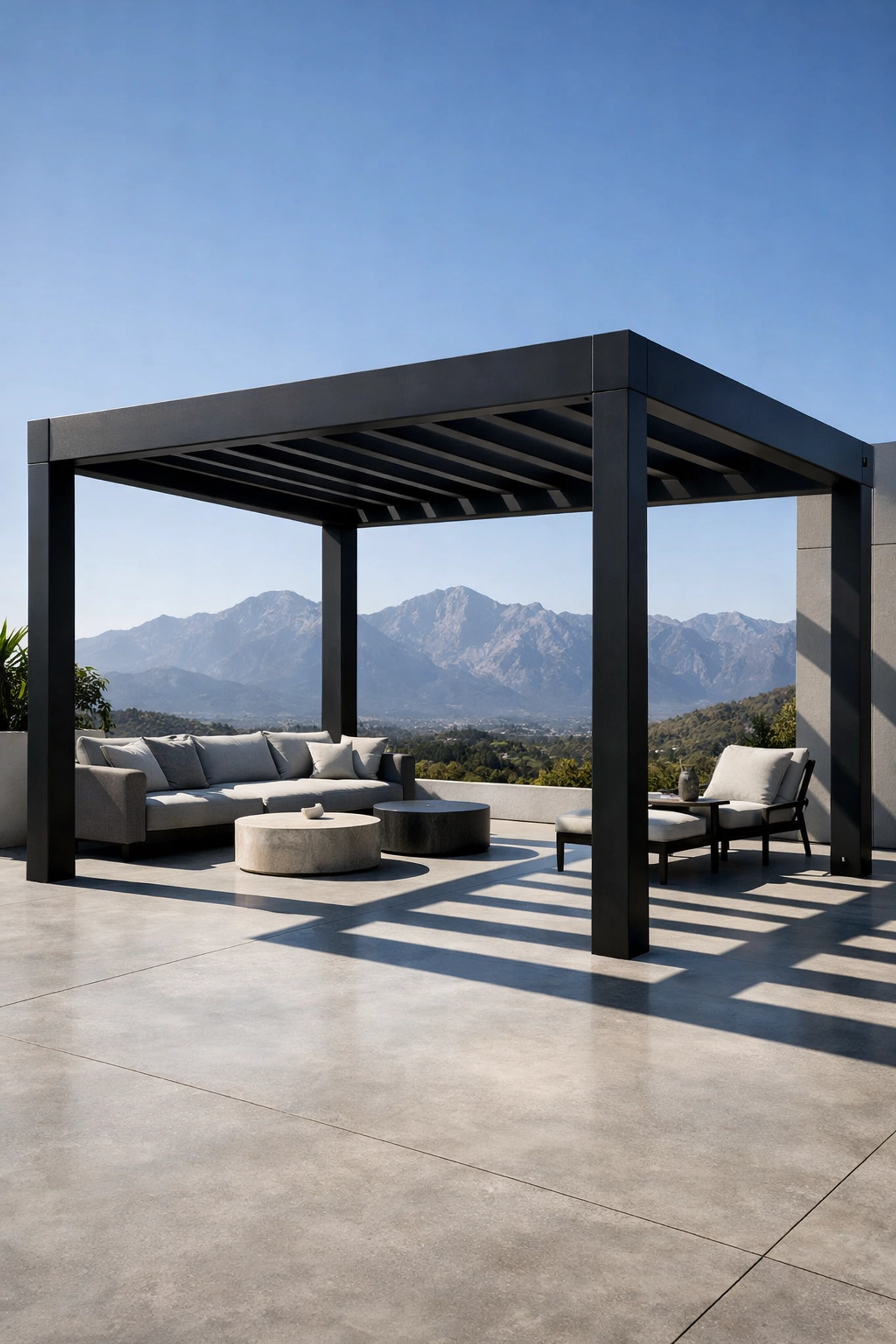
One of the most compelling reasons to adopt a dark architectural palette is the way it interacts with greenery. In the Pacific and New Zealand regions, the local flora: ranging from deep forest greens to silvery tussocks: is exceptionally vivid.
When placed against a white or light-toned structure, green foliage often looks muted or shadowed. However, when set against a charcoal or black backdrop, the chlorophyll in the leaves appears to glow. This high-contrast relationship makes gardens look lusher and more vibrant. For developers and homeowners looking to maximize the impact of their landscaping, a dark structure is often the most effective tool in the toolkit.
Furthermore, dark structures excel at hiding the "visual noise" of hardware and joinery. Screws, gaskets, and mechanical components effectively disappear into the shadows of a dark finish, resulting in a cleaner, more monolithic appearance that highlights the purity of the architectural lines.
The interaction between dark surfaces and natural light is a technical consideration that requires careful planning. While it is a common misconception that dark surfaces make a space feel "heavy," the reality is that they are masters of glare reduction.
In the high-UV environments of the Pacific, the glare from white or light-colored surfaces can be physically uncomfortable. Dark architectural elements absorb a significant portion of the visible light spectrum, reducing reflected glare and making the outdoor space more habitable during the peak hours of the day.
Thermal Considerations and Performance:
It is essential to acknowledge that dark surfaces have higher thermal emissivity: they absorb more heat than light surfaces. However, in modern architectural design, this is managed through:
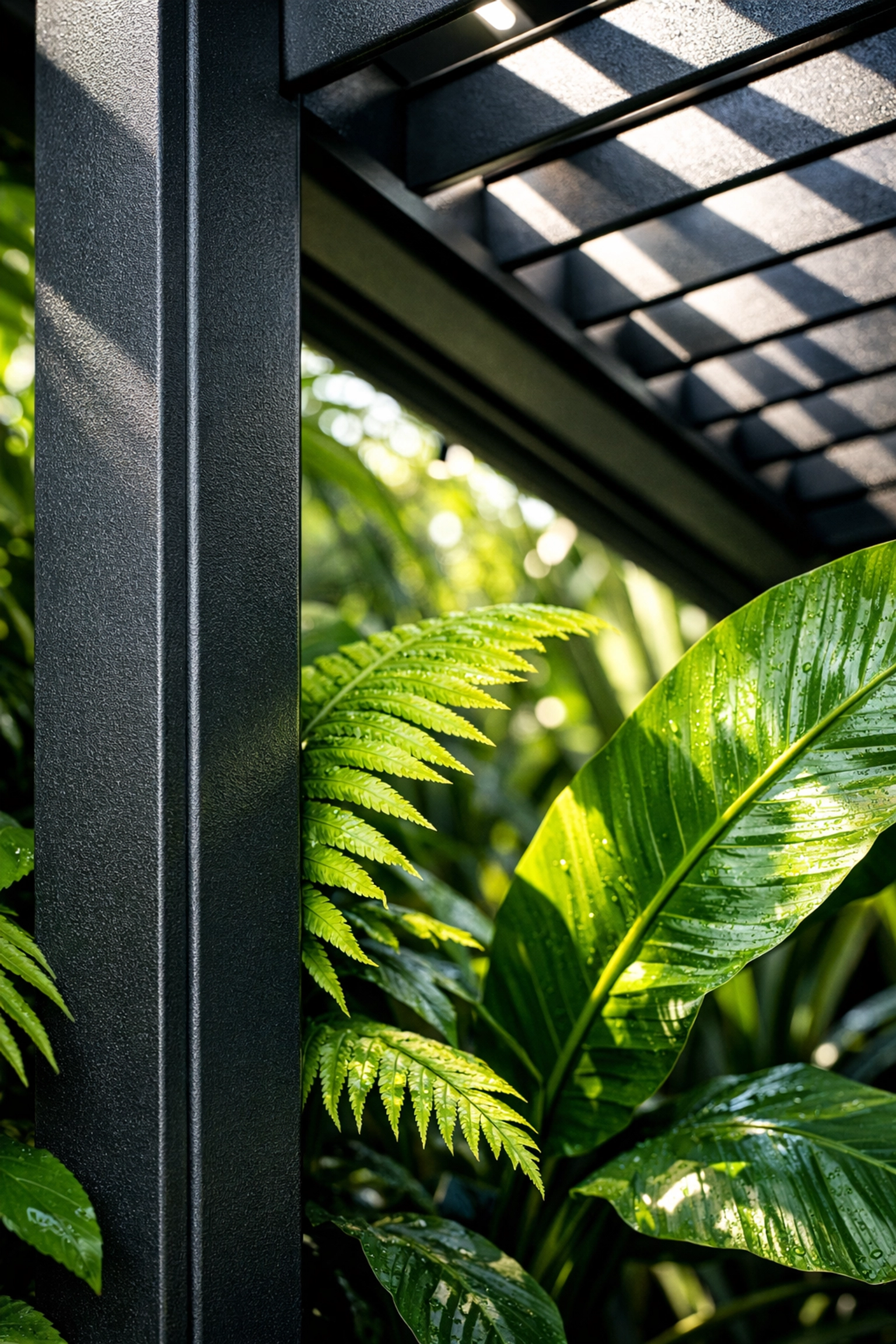
When specifying "Dark Mode" for the New Zealand or Pacific market, the technical specification of the finish is just as important as the color choice. The combination of high salt spray, intense UV radiation, and fluctuating humidity levels requires a finish that is engineered for resilience.
Architectural-Grade Powder Coating
Most modern dark-toned outdoor structures utilize an electrostatically applied powder coating. For these environments, the following standards are critical:
For those considering the technical differences in hardware longevity, understanding the nuances of material grades is vital. You can explore more on this in our technical guide on louvre kitsets and stainless steel grades.
Implementing a dark palette requires more than just picking the darkest swatch available. Successful execution relies on contrast and layering.
For more insights into how these structural choices affect property value and lifestyle, see our article on why outdoor blinds are becoming essential in modern homes.
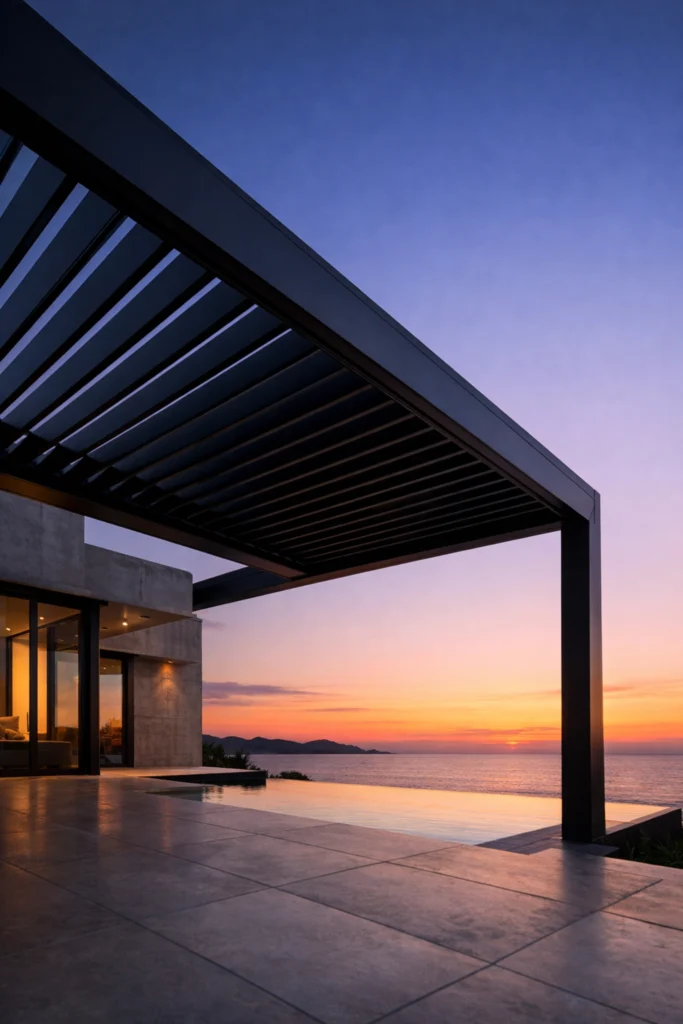
The trend toward dark, minimalist architecture is also driven by the move toward simpler, more integrated outdoor systems. Modern homeowners and developers are increasingly looking for solutions that offer high design impact with lower maintenance and installation complexity.
Whether it is a residential backyard or a commercial hub like the Vuvale Plaza in Nadi, the "Dark Mode" aesthetic provides a universal language of luxury that fits any context. The shift away from over-complicated, multi-colored structures toward monochromatic, dark-toned systems reflects a broader architectural movement toward clarity and purpose.
Adopting a dark architectural palette for outdoor structures is a strategic design choice that offers both aesthetic and functional benefits.
✔️ Visual Integration: Dark tones allow structures to recede, framing the landscape and making greenery appear more vibrant.
✔️ Glare Reduction: Unlike white surfaces, dark finishes absorb light, significantly reducing eye strain in high-sun environments.
✔️ Durability: When specified with architectural-grade powder coating, dark aluminum structures are highly resistant to the harsh UV and saline conditions of the Pacific.
✔️ Timeless Appeal: Charcoal and black are "non-colors" that transcend seasonal trends, ensuring the property remains modern for years to come.
✔️ Sophisticated Contrast: The interplay between dark structural lines and warm natural materials like wood and stone creates a high-end, curated feel.
By focusing on texture, light management, and high-quality finishes, designers and developers can utilize "Dark Mode" to create outdoor spaces that are as resilient as they are beautiful. For those looking to understand the broader market shifts, our look into why simpler outdoor systems are gaining popularity provides further context on this minimalist evolution.


