
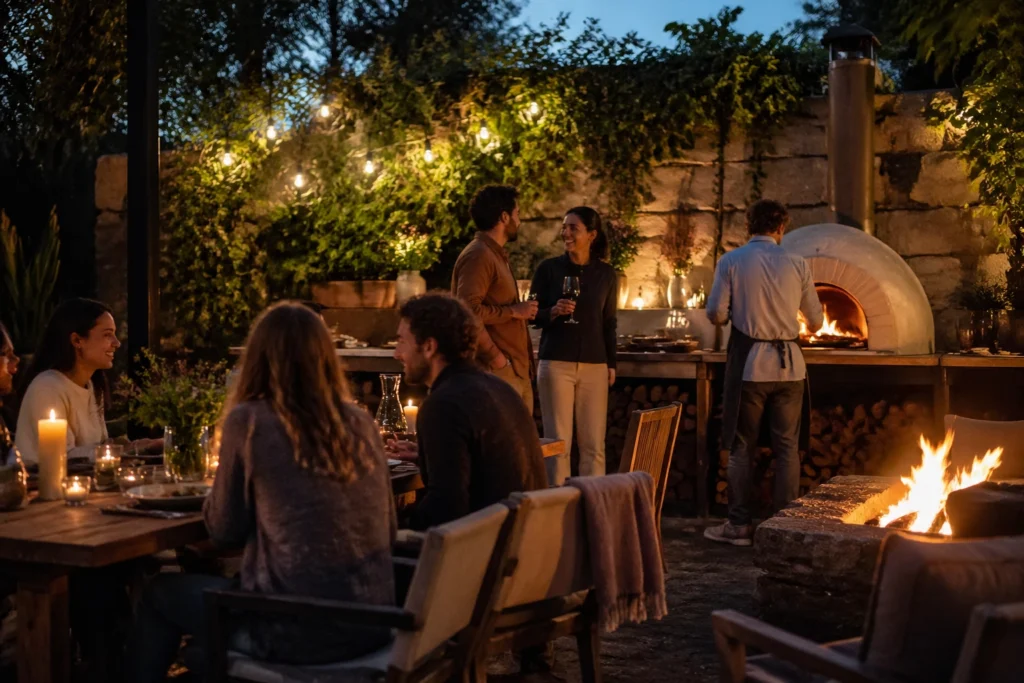
or decades, the standard outdoor entertainment setup consisted of a portable gas grill and perhaps a set of folding chairs. While functional, this "task-oriented" approach to the backyard is rapidly evolving. Homeowners and designers are now shifting toward the culinary pivot: a movement that prioritizes the outdoor space as a secondary home interior, centered around the elemental warmth of Outdoor Fires and the artisanal capabilities of wood fired pizza ovens.
This transition isn't just about buying a new appliance; it’s about changing the ROI (Return on Investment) of your home. By moving beyond the basic grill, you create a social anchor that functions across all four seasons, turning a simple deck into a high-performance living zone.
The primary limitation of a standard barbecue is its isolation. The "cook" is often separated from the guests, tethered to a gas bottle and a timer. Incorporating a dedicated fire zone or a wood-fired unit flips this script.
Fire acts as a natural focal point. Whether it is a sleek, Corten steel fire pit or a built-in stone hearth, the presence of an open flame slows down the pace of an evening. It provides a source of light and heat that extends the usability of your outdoor area well into the autumn and winter months, ensuring your investment doesn't sit idle for half the year.

While the name suggests a single-purpose tool, wood fired pizza ovens are actually the most versatile "ovens" in a culinary arsenal. They operate on three distinct heat principles: convection, conduction, and radiation.
Unlike a kitchen oven that tops out at 250°C, a well-insulated outdoor oven can reach over 400°C. This high-heat environment is essential for that "leopard-spotted" crust and smoky finish that gas simply cannot replicate.

For those looking to integrate these units into a cohesive design, prioritize setups that focus on thermal mass, insulation, and efficient heat retention.
To truly master the pivot, you must look past the frozen pizza. The versatility of these ovens allows for high-heat searing, mid-range baking, and overnight slow-roasting using residual heat.
The secret to gourmet results is time, not sugar. Using a long fermentation process creates a complex flavor profile and a structure that stands up to 400-degree heat.
Forget boiling or steaming. Toss seasonal greens, asparagus, or halved peppers in olive oil, sea salt, and garlic.
After the pizza party is over and the fire has died down to embers, the oven remains a heat battery.

To maximize the "Bang for Buck" of your Outdoor Fires, placement is everything. You want to ensure the smoke path doesn't interfere with your dining area, while the heat remains accessible.

When we talk about the value of these upgrades, we often focus on property resale. While a high-end outdoor kitchen and fire feature certainly add value, the "Lifestyle ROI" is the real driver.
Investing in Outdoor Fires and wood fired pizza ovens changes how you interact with your home. It turns "making dinner" from a chore into an event. It encourages kids to put down their devices and help stretch dough. It turns a Friday night at home into a culinary experience that rivals any local bistro.

For more inspiration on how to utilize these tools, focus on learning a wider range of wood-fired recipes and techniques to get the most out of your setup.
✅ Versatility is King: Wood-fired ovens are for far more than just pizza; they are high-performance roasters and bakers.
✅ Year-Round Utility: Fire zones extend the life of your outdoor space into the colder months.
✅ Atmospheric Value: The sensory experience of real wood smoke and flame creates a social anchor gas cannot match.
✅ Structural Planning: Successful integration requires thinking about wood storage, smoke paths, and overhead protection.
✅ Culinary Growth: Moving to wood-fired cooking encourages a "slow food" approach that enhances home life.


