
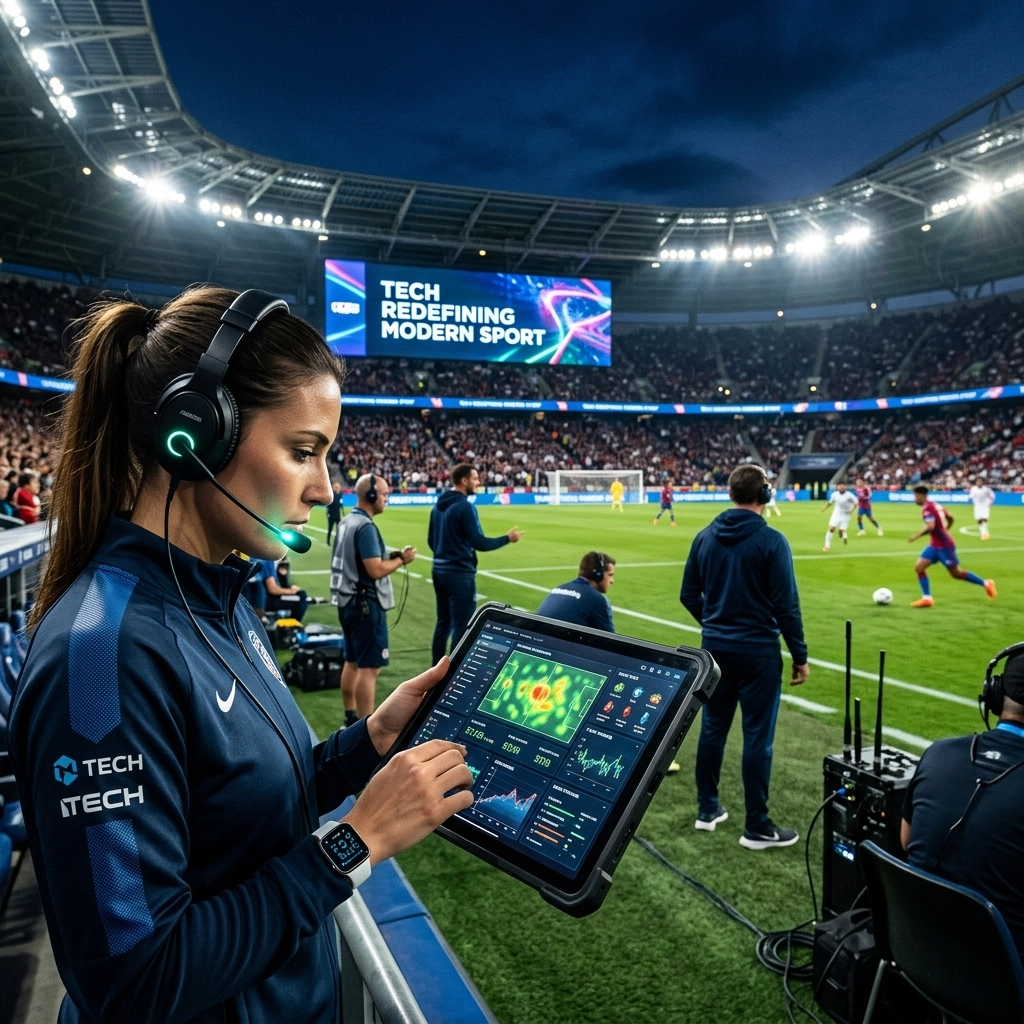
The landscape of modern athletics is no longer defined solely by physical prowess and grit. While the human element remains at the core of every competition, a silent revolution is unfolding in the background. From local community parks to high-performance training facilities, technology is rewriting the rules of engagement. It’s an era where data, advanced engineering, and rapid-deploy systems are closing the gap between amateur play and professional excellence.
Whether it’s the way a coach reviews a play or how a facility manager protects a high-value turf, the focus has shifted toward precision and efficiency. The tools used today are designed to maximize every second of play, ensuring that environmental factors and technical limitations no longer dictate the outcome of a match.
For decades, capturing high-quality sports footage was a luxury reserved for top-tier professional leagues with massive broadcast budgets. Traditional setups required multiple operators, heavy equipment, and a dedicated production trailer. That era is officially over.
The introduction of VisionPlay AI 180 technology has democratized sports broadcasting. By utilizing a 180-degree 4K field of view, these systems capture the entire field of play without the need for a human operator. The real magic, however, lies in the AI-driven motion tracking. The software identifies the ball and the movement of players, automatically panning and zooming to follow the action in real-time.
For coaching staff, this is a game-changer. The ability to review tactical positioning through live sports streaming means that every defensive lapse or offensive breakthrough can be analyzed with mathematical accuracy.

One of the greatest challenges in sports management is environmental volatility. Heavy rain or intense UV exposure can degrade playing surfaces and force cancellations, leading to lost revenue and disrupted training schedules. The solution lies in rapid-deploy sports covers and engineered stadium structures.
These aren't simple tarps. We are talking about highly engineered systems designed to withstand significant wind loads while providing complete surface protection. Modern outdoor sports infrastructure now focuses on modularity. If a facility needs to cover a temporary seating area or protect a cricket pitch during a downpour, these structures can be deployed in a fraction of the time required by traditional methods.
The materials used in these covers are often high-tensile, UV-resistant fabrics that provide a stable internal climate. This level of environmental control ensures that the "field of play" remains consistent, regardless of what is happening in the sky.
Golf has always been a game of inches, but the technology now available to the average player provides insights that were once the domain of PGA pros. The Vector™ series distance technology represents the pinnacle of this precision. Handheld and cart-mounted GPS units provide yardages to the pin, hazards, and layup points with millimetre accuracy.
Beyond simple distance, the integration of electric carts has transformed course logistics. Modern carts are no longer just transport; they are mobile data hubs. Integrated with long-life lithium batteries and precision braking systems, they offer a smoother, more reliable experience that keeps the pace of play moving.

The fastest-growing sports globally aren't the traditional giants; they are the high-intensity, small-format games like Pickleball and 3 x 3 basketball. These sports require specific surface qualities: grip, bounce consistency, and shock absorption.
Pickleball court mats have become a critical piece of technology for multi-use facilities. These modular mat systems allow a standard tennis court or gymnasium to be converted into a high-performance Pickleball arena in minutes. The textured surface is engineered to provide the exact friction coefficient required for the sport’s unique ball dynamics, while the underlay protects the athlete's joints from impact.
Similarly, the rise of 3 x 3 basketball has pushed the demand for portable, high-durability surfaces. When games are played in urban environments: on concrete or asphalt: the "tech" is in the tiles. These surfaces must drain water instantly and maintain their grip even in humid conditions.
Performance isn't just what happens during the game; it’s the logistics surrounding it. Inflatable shelter systems have redefined the "sideline." These structures can be inflated in under 10 minutes, providing a pressurized, climate-controlled environment for medical staff, equipment storage, or athlete recovery.
On a personal level, the gear athletes wear is undergoing a similar technical shift. Outrunn hats and performance apparel are now engineered with moisture-wicking fabrics that utilize capillary action to pull sweat away from the skin, accelerating evaporation. In the world of water sports, SUP boards (Stand Up Paddleboards) have transitioned from heavy, rigid shells to high-pressure drop-stitch inflatable tech that rivals the rigidity of carbon fiber while remaining entirely portable.

In a country where the sun can be as much of a competitor as the opposing team, outdoor shading solutions are no longer an afterthought. High-performance shading is now integrated into the design of the sporting venue itself.
Utilizing systems like premium umbrellas or automated louvres, facilities can create "cool zones" where athletes can recover between sets or matches. This isn't just about comfort; it's about heat stress management. Maintaining a lower core body temperature during breaks directly correlates to sustained peak performance in the second half of a game.
For spectators, these shading systems represent a significant upgrade in the viewing experience. Modern stadium design uses tensioned fabric structures to provide large-scale coverage without the need for obstructive support pillars, ensuring that every fan has a clear line of sight to the action.
The evolution of sport is being driven by the marriage of engineering and digital intelligence. From the VisionPlay AI cameras that capture every tactical nuance to the Vector™ series that brings precision to the golf course, the tools available today are more accessible and powerful than ever. Whether it is through the deployment of Pickleball court mats or the strategic use of outdoor shading solutions, the goal remains the same: to remove the barriers to performance. As these technologies continue to advance, the "sideline" will only become more integrated, more data-driven, and more capable of supporting the next generation of athletic excellence.
Key Takeaways:


