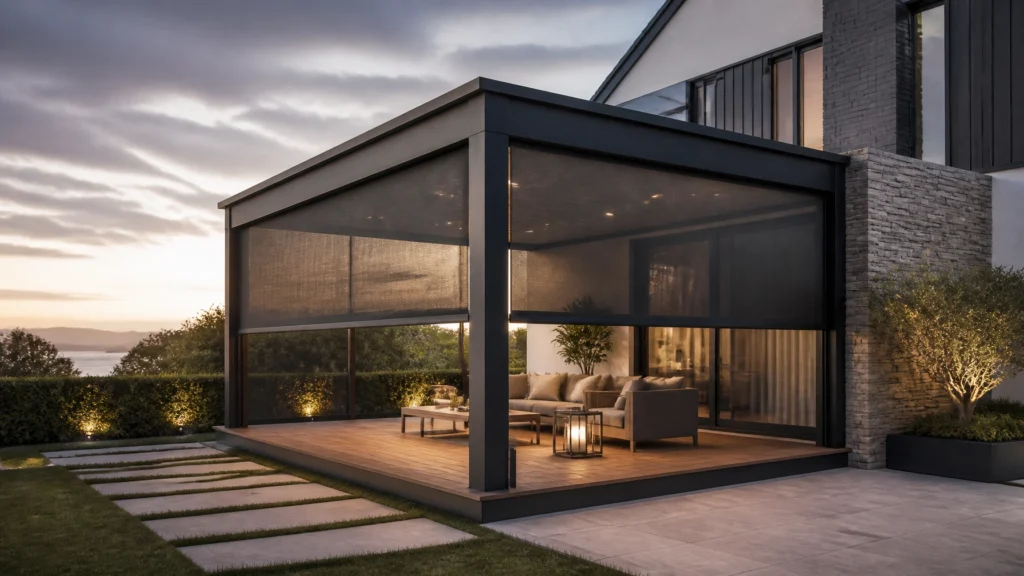
Expanding the Footprint: How Outdoor Blinds Create Year-Round Living Spaces
May 10, 2026
Spread the love
In modern residential design, the distinction between indoor and outdoor environments has become increasingly fluid. Homeowners and developers are no longer satisfied with a simple deck or patio; they require functional "outdoor rooms" that mirror the comfort of the interior. However, the primary obstacle to achieving a truly integrated living space is the unpredictability of the environment.
This is where outdoor shading solutions serve a critical architectural purpose. By installing high-quality outdoor blinds, a property’s usable footprint is effectively expanded without the need for permanent, high-cost structural additions. This guide examines how these systems transform open-air zones into sophisticated, year-round entertainment areas by managing thermal gain, weather ingress, and visual privacy.
The Architectural Concept: Creating a "Room" Without Walls
The traditional approach to adding living space involves Council permits, heavy construction, and significant timelines. Outdoor blinds offer a "soft architecture" alternative. When integrated into a pergola, louvre system, or a covered balcony, they provide the vertical dimension that turns a floor and a roof into an enclosed volume.
By introducing custom outdoor blinds, you create a defined zone. This zoning allows for:
Functional Specialization: Separating an outdoor kitchen from a lounge area.
Environmental Control: Transitioning from a fully open deck to a protected enclosure in under a minute.
Visual Continuity: Using mesh fabrics that complement the home’s exterior palette, ensuring the addition looks intentional rather than an afterthought.
Summer Benefits: Climate Control and UV Mitigation
During the summer months, an unprotected outdoor space often becomes unusable due to excessive heat and solar glare. High-performance outdoor blinds act as a primary thermal barrier.
UV Protection and Heat Management
Unlike internal window treatments, which attempt to block heat once it has already entered the building, outdoor shading solutions intercept solar radiation before it hits the glass or the deck surface.
✔️ Solar Heat Gain: Darker mesh fabrics can absorb and dissipate up to 90% of solar heat, significantly cooling the space.
✔️ UV Protection: High-density fabrics provide a shield against harmful rays, protecting both occupants and expensive outdoor upholstery from fading.
Glare Reduction and Insect Control
One of the most overlooked benefits of modern external blinds is the ability to manage light quality.
Glare Reduction: For those using digital devices or televisions in outdoor lounges, blinds eliminate the "washout" caused by direct sunlight.
Insect Buffer: When used in a side-channel system (where the fabric is locked into tracks), blinds provide a physical barrier against mosquitoes and flies, which is essential for evening dining.
Technical cross-section of a side-channel outdoor blind system showing the locking mechanism for wind resistance.
Winter Utility: Extending the Season
The true test of a versatile outdoor space is its performance during the colder, wetter months. Many property owners assume their outdoor areas must be decommissioned during winter, but the right blind system keeps the space in play.
Wind and Rain Buffering
Wind chill is the primary factor that makes an outdoor area uncomfortable in winter. Outdoor privacy blinds constructed from heavy-duty mesh or clear PVC act as a windbreak, significantly reducing the movement of cold air through the space.
Weather Sealing: Advanced systems utilize a "Zip" or "Track" technology that ensures the fabric remains taut and prevents wind from whistling through the gaps at the edges.
Water Deflection: While not 100% waterproof in extreme storms, most outdoor blinds effectively deflect vertical and angled rain, keeping furniture and decking dry.
Heat Retention and Energy Efficiency
When combined with outdoor heating: such as infrared radiant heaters or gas fire pits: blinds create a "thermal envelope."
Convection Control: The blinds trap the rising warm air and prevent it from being swept away by the wind.
Passive Warming: On sunny winter days, blinds can be lowered to capture the sun’s warmth, creating a greenhouse effect that keeps the area pleasant even when the ambient temperature is low.
Technical Selection: Materials and Operation
Choosing the right system requires an understanding of the technical specifications that drive performance. Not all outdoor blinds are created equal; the choice between mesh and PVC, or manual and motorized, will dictate how the space is used.
Fabric Specifications: The "Openness Factor"
When selecting custom outdoor blinds, you must specify the openness factor (OF) of the mesh.
1% to 3% Openness: Provides maximum privacy and thermal protection. Ideal for spaces facing the direct western sun.
5% to 10% Openness: The "Goldilocks" zone. It offers excellent glare reduction while still maintaining a clear view of the landscape.
PVC (Clear or Tinted): Provides 0% openness, making it a total wind and rain block. Best for "outdoor rooms" that function as a second dining room.
Structural Integrity and Wind Ratings
Outdoor blinds are essentially "sails" when deployed. It is crucial to ensure the system is rated for the wind loads common in your specific geographic area.
Side-Channel Systems: These are the gold standard for durability. The fabric is welded into a track, meaning it cannot "blow out" of the frame.
Crank-Handle vs. Motorization: While manual systems are cost-effective, motorized systems with integrated wind sensors are safer. These sensors will automatically retract the blinds if wind speeds exceed a safe threshold, protecting the structural integrity of the system.
Enhancing Privacy in Modern Developments
With the rise of medium-density housing and smaller lot sizes, privacy has become a premium commodity. Outdoor privacy blinds provide an immediate solution for homes that are overlooked by neighbors.
Unlike traditional fences or hedges, blinds offer "variable privacy."
Daytime Privacy: Most mesh fabrics provide a "one-way" effect during the day. Occupants can see out, but neighbors cannot see in.
Aesthetic Integration: Blinds allow you to maintain an open feel when privacy isn't required, unlike permanent screens which can feel claustrophobic.
Acoustic Damping: While not soundproof, the density of the fabric can help dampen the "echo" effect common in hard-surfaced outdoor patios, making conversations more private.
Protecting Your Investment: Furniture and Decking
The lifespan of outdoor assets: such as teak furniture, outdoor kitchens, and composite decking: is significantly shortened by constant exposure to the elements.
UV Degradation: Sun exposure causes timber to silver and plastics to become brittle. Constant shading when the area is not in use can double the lifespan of these materials.
Moisture Management: By preventing rain from pooling on furniture cushions or decking boards, blinds reduce the risk of mold and rot.
Summary Checklist for Planning
When designing a year-round entertainment area, keep the following technical requirements in mind:
Specify the Purpose: Is the primary goal sun protection (Mesh) or rain protection (PVC)?
Assess Wind Loads: Ensure the system selected (e.g., side-channel) matches the exposure levels of the site.
Consider Automation: If the blinds are large or difficult to reach, motorization is a functional necessity rather than a luxury.
Verify Fabric Color: Remember that darker colors offer better "view through" and heat absorption, while lighter colors reflect more light and can increase glare.
By treating outdoor blinds as a technical component of the home’s envelope rather than a simple accessory, you can maximize the ROI of your outdoor spaces. Whether it is shielding a summer dinner party from the setting sun or trapping the warmth of a heater on a winter evening, these systems are the key to a truly versatile living environment.
Key Takeaway: Outdoor blinds bridge the gap between architectural design and environmental reality. By providing a flexible, high-performance barrier against UV, wind, and rain, they allow for the creation of a "fifth room" that functions effectively in every season.
Seasonal gutter maintenance tips : prep for rain, snow, and ice desert gutters. valeo products ltd supplies winding wires for a wide range of industrial, automotive, and electrical applications. 12 x 9 ft | anti vandal | 2 + 1 toilet block | portable building.