
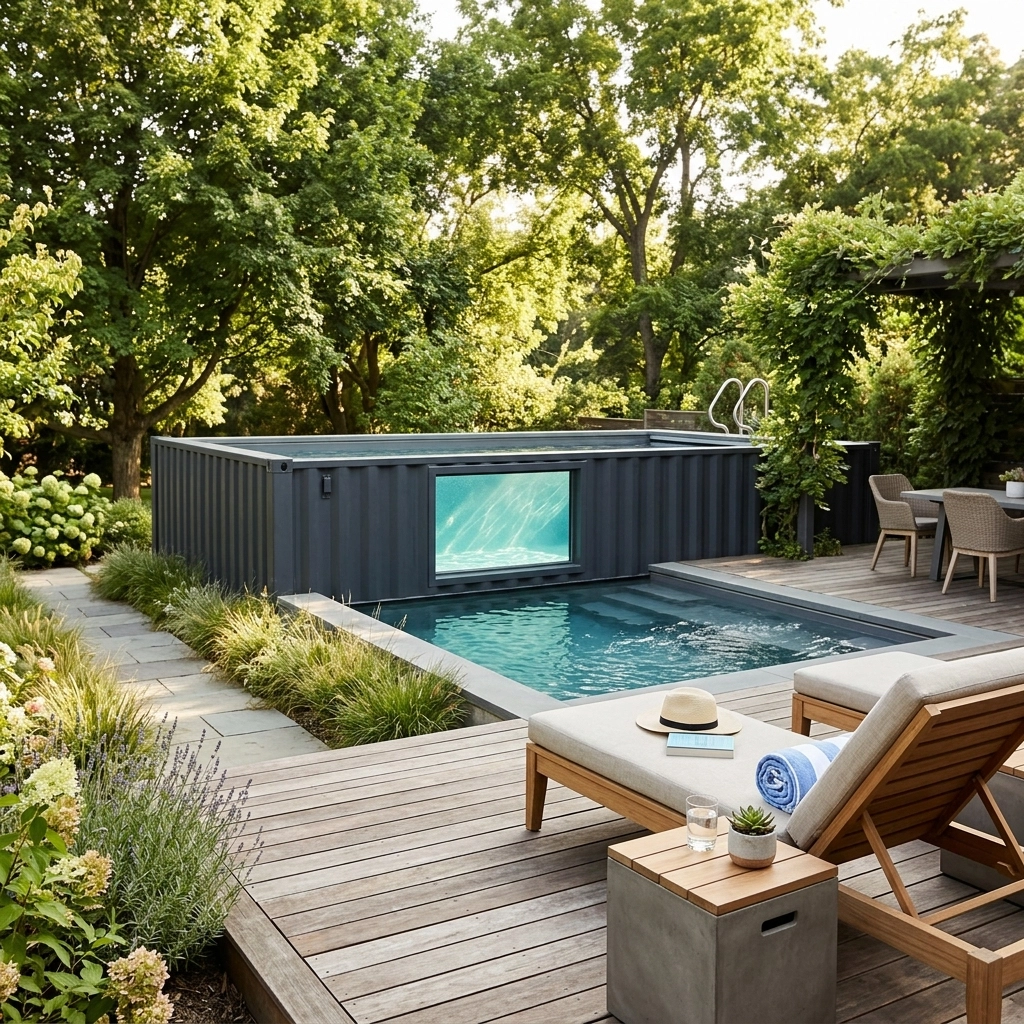
The rise of the container pool represents a significant shift in modern landscape architecture. What began as a sustainable, "upcycled" trend has evolved into a high-end design solution favored for its industrial-chic aesthetic and rapid installation timelines. However, the difference between a standard shipping container and a true backyard sanctuary lies in the level of customization and architectural integration.
For designers and homeowners looking to transcend the "steel box" look, several premium features can transform a container pool into a sophisticated focal point. Whether you are planning a rooftop installation or a sloping garden retreat, these six design interventions provide the architectural edge necessary for a luxury finish.
The most dramatic way to break the solid profile of a container pool is the inclusion of underwater windows. By replacing a section of the steel hull with high-tensile acrylic or tempered glass panels, you create an "aquarium" effect that lightens the visual weight of the structure.
A pool shouldn't just be for swimming; it should be a wellness hub. Modern container pools can be configured with internal bench seating that doubles as a hydrotherapy zone.
By integrating powerful massage jets into a dedicated seating area, you transform a portion of the pool into a functional spa. This multi-zone approach is particularly effective in larger 12-meter (40-foot) containers, where one end can be dedicated to active lap swimming and the other to recovery.
✔️ Key Benefit: Extends the usability of the pool into the cooler months when paired with a heat pump.
✔️ Design Tip: Use ergonomic seating heights (approx. 450mm from the floor) to ensure maximum comfort during long soak sessions.
To elevate the auditory experience of your outdoor space, consider the integration of water features. High-pressure jet sprays or "deck jets" can be mounted into the pool’s coping or side walls.
The sound of falling water masks neighborhood noise and provides a tranquil atmosphere. When combined with smart lighting, these features turn the pool into a dynamic art installation at night. For those seeking a minimalist look, sleek laminar jets produce a clear, non-turbulent stream of water that arcs perfectly into the pool without a splash.
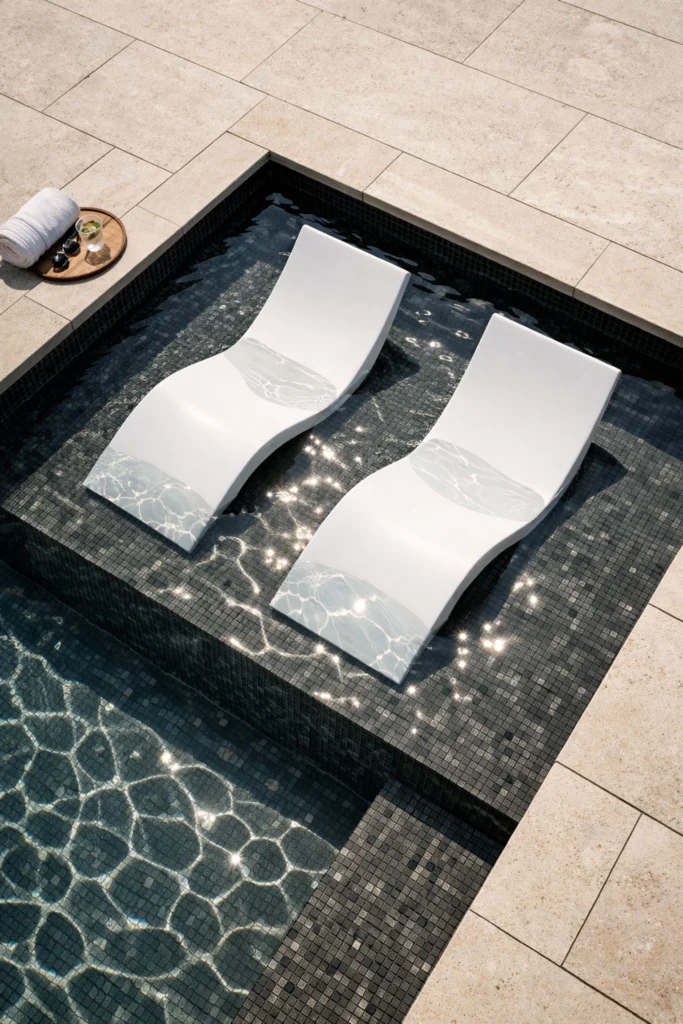
The Baja Ledge: also known as a tanning ledge or sun shelf: is a shallow area (typically 200mm to 300mm deep) designed for lounging. It is the hallmark of resort-style pools.
In a container pool context, the Baja Ledge serves multiple purposes:
Perhaps the ultimate upgrade for a container pool is the Infinity Edge. Traditionally reserved for expensive concrete builds, a container’s structural rigidity makes it an excellent candidate for a "vanishing edge" design, especially on sloped sites.
An infinity edge allows water to spill over one or more sides into a catchment trough (or balance tank), creating a seamless visual link between the pool and the horizon. This is particularly effective when the pool is installed above ground or on a hillside, overlooking a landscape or the ocean.
While many entry-level container pools use a standard vinyl liner or a simple painted finish, high-end projects often utilize mosaic tiles. Tiling the interior of a container pool provides a depth of color and texture that paint cannot replicate.
One of the greatest advantages of a container pool is its versatility in placement. Unlike traditional pools that require massive excavation, these units can be installed in three primary ways:
For any high-end installation, the surrounding environment is as important as the pool itself. To create a true sanctuary, integrate outdoor shading solutions that allow for year-round use. Aluminum louvres are a perfect pairing for container pools; they mirror the linear, modern aesthetic of the container while providing adjustable shade for the poolside lounge area.
Integrating a louvre system directly adjacent to the pool creates a sheltered "cabana" feel, protecting users from harsh UV rays while allowing for ventilation.
It is essential to understand the technical requirements of a container pool project. These units are heavy; a standard 20-foot container filled with water can weigh upwards of 30 tonnes.
Elevating a container pool from a utility object to a design sanctuary requires a focus on both aesthetic finishes and functional zones. By moving beyond the basic box, you can create a high-value asset for any property.
A container pool is no longer just a budget-friendly alternative; with the right customizations, it is a sophisticated, durable, and architecturally flexible choice for the modern home.


