
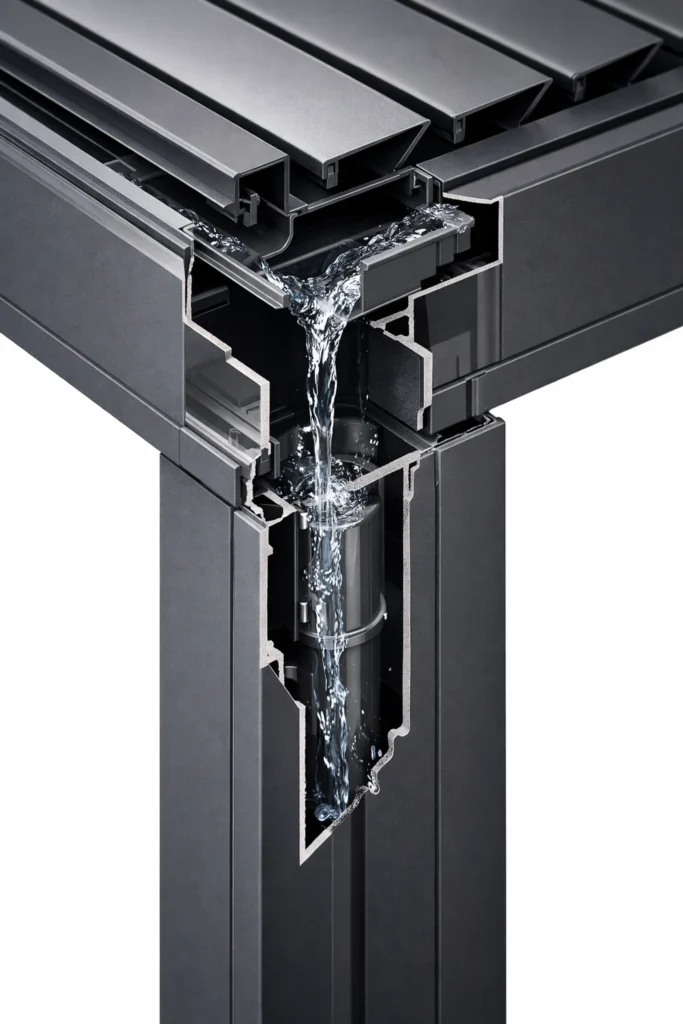
When planning an outdoor living area in New Zealand, the primary objective is almost always weather protection. While the visual appeal of aluminum louvres often captures the initial interest of homeowners and developers, the true value of a premium system lies in its invisible engineering. Specifically, the internal drainage and integrated gutter system determine whether a space remains a functional sanctuary during a downpour or becomes a damp, dripping disappointment.
In the world of high-end louvre systems, "integrated" isn't just a buzzword: it is a sophisticated hydraulic management strategy built directly into the structural frame. Understanding how these systems work is essential for anyone looking to invest in a long-term outdoor solution that prioritizes both form and function.
In traditional patio covers or lower-quality pergolas, drainage is often an afterthought. Water is typically collected by external gutters attached to the outside of the beams. This approach presents several engineering and aesthetic challenges:
By contrast, integrated systems utilize the structural members of the louvre frame itself to manage water flow, creating a seamless and significantly more durable solution.
The engineering of a dry outdoor space begins the moment a raindrop hits the louvre blade. In a high-quality system, the process follows a precise path from the roof to the ground.
When the louvres are in the closed position, the blades interlock to create a watertight seal. Each blade is engineered with a slight "V" or "U" shape: often referred to as a "double-walled" design: which acts as a mini-gutter. This ensures that even in heavy rain, water is captured on the surface of the blade rather than splashing through the gaps.
As water runs off the ends of the interlocking blades, it falls into a heavy-duty internal gutter that runs along the inside perimeter of the main support beams. Unlike standard household gutters, these are deep-profile channels designed to handle the high-volume water catchment typical of New Zealand’s sudden tropical-style downpours.
The most critical part of the engineering is how the water exits the frame. In a premium louvre system, the corner posts are not just supports; they are hollow structural conduits. The water travels from the perimeter gutters into a concealed transition point inside the post. From there, it flows internally down to the base of the structure.
Engineering a gutter system inside a structural frame requires a material that can withstand constant moisture exposure without compromising its load-bearing capacity. This is why 6063-T5 aluminum is the industry standard for high-performance outdoor structures.
6063-T5 aluminum is an architectural-grade alloy known for its exceptional strength-to-weight ratio and superior corrosion resistance. For New Zealand conditions, this is non-negotiable for several reasons:
Ensuring your system uses this specific grade of aluminum is the difference between a structure that lasts five years and one that lasts twenty-five. You can explore a variety of these high-spec configurations in our full range of outdoor solutions.
One of the biggest drivers for choosing an integrated system is the "clean-line" aesthetic. When the guttering and downpipes are hidden within the frame, the structure looks like a permanent architectural feature of the home rather than a bolt-on addition.
This seamless design allows for greater flexibility in architectural integration. Because there are no protruding gutters, the louvre system can be installed flush against existing walls or tucked into tight corner spaces without logistical headaches. This is particularly beneficial for modern, minimalist home designs where every line and angle is scrutinized.
Furthermore, integrated systems allow for the easy addition of complementary weather protection, such as outdoor high-wind blinds. Because the tracks for these blinds can be mounted directly to the clean face of the support posts, there is no interference from external guttering.
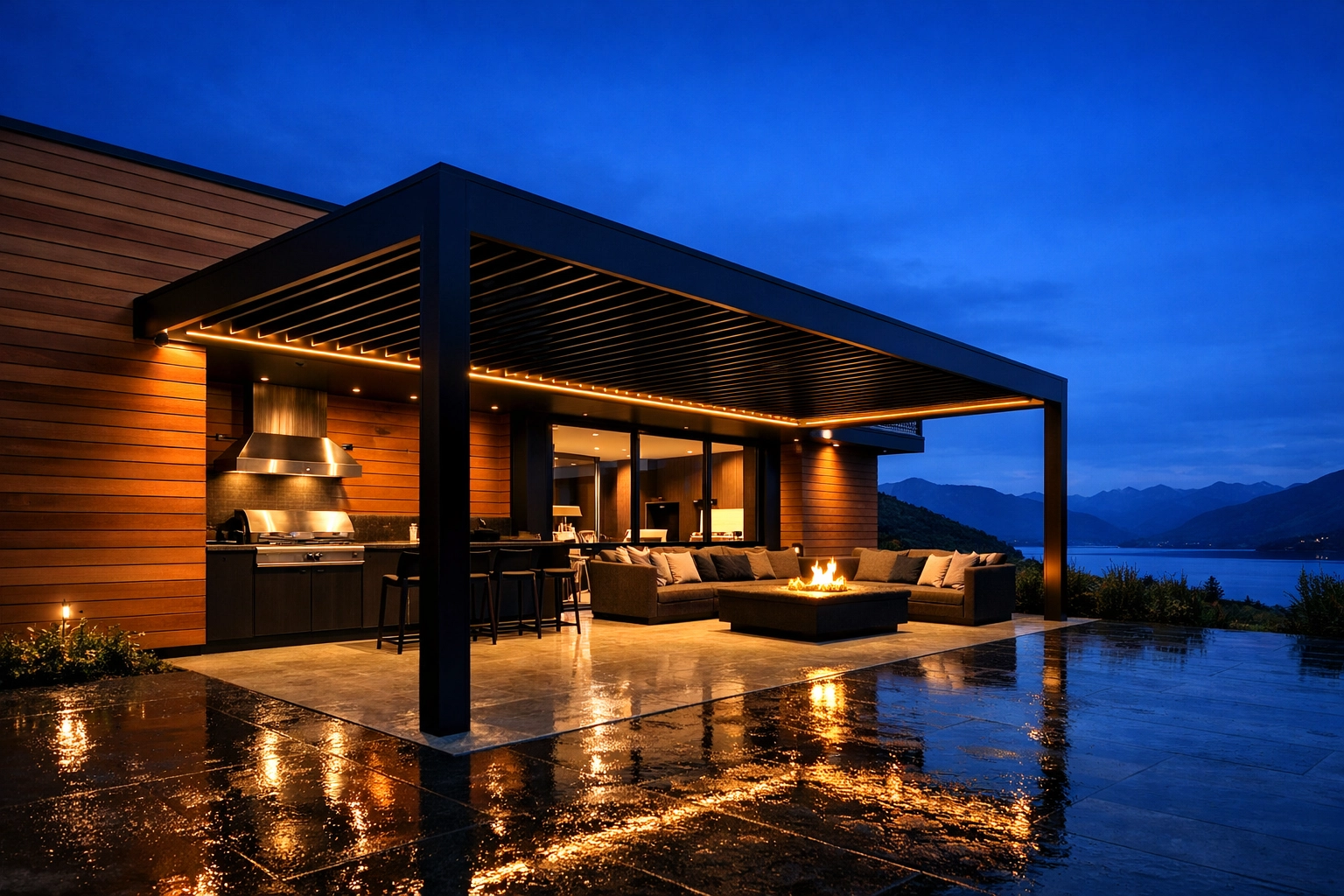
To achieve the "dry space" promise, the engineering must be matched by precise installation. When dealing with "supply-only" kits or custom builds, several factors must be addressed:
For those looking for the pinnacle of integrated design, systems like the Spartan Prestige Series demonstrate how these engineering principles come together in a finished product.
While integrated gutters are designed to be low-maintenance, they are not "no-maintenance." Because the channels are partially enclosed by the frame, they are protected from the bulk of falling leaves, but fine sediment and organic matter can still accumulate over time.
When comparing different louvre systems, it is easy to focus on the price per square meter. However, the price often reflects the depth of the engineering inside the frame. A "supply-only" system with integrated drainage represents a significant value increase for a property because:
✅ It protects outdoor furniture: You can confidently place high-quality lounge suites or outdoor kitchens under the louvres without fear of water damage.
✅ It extends the season: By keeping the area completely dry, the space remains usable in autumn and winter, not just on clear summer days.
✅ It increases structural longevity: By managing water internally and using 6063-T5 aluminum, the risk of rot, rust, and water-marking on the structure (or the house it’s attached to) is virtually eliminated.
The secret to a dry outdoor space isn't just a roof; it’s a comprehensive water management system. By choosing aluminum louvres with integrated gutters, you are investing in a piece of structural engineering that respects the architecture of your home while standing up to the rigors of the New Zealand climate.
Whether you are a builder looking for a reliable kit for a client or a homeowner planning a DIY project, prioritizing internal drainage and high-grade aluminum ensures that your outdoor space remains functional, beautiful, and: most importantly: dry.


