
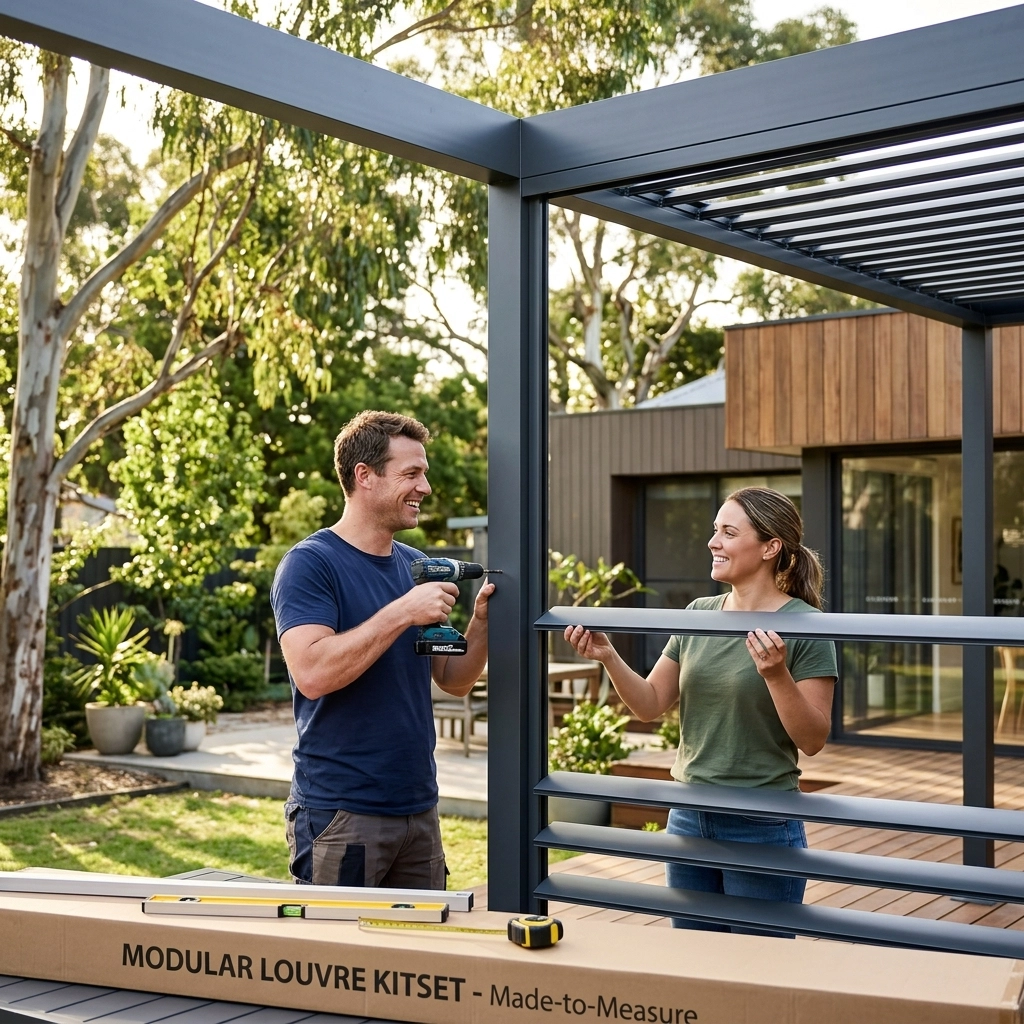
For decades, the outdoor living industry was divided into two distinct tiers. On one side, you had the off-the-shelf kitset systems, affordable and accessible, but notoriously rigid in their dimensions. On the other side sat the bespoke architectural installations, perfectly fitted to the home’s unique footprint but carrying a price tag that reflected specialized labor and custom engineering.
The gap between these two options often left homeowners and builders in a difficult position. Choosing a standard kitset meant compromising on design, often leaving awkward gaps or requiring "make-it-work" modifications on-site. Choosing custom meant waiting months for fabrication and installation.
The introduction of made-to-measure kitset systems has effectively dismantled this barrier. By combining the precision of custom manufacturing with the streamlined logistics of a kitset system, this hybrid model has become a major shift in the New Zealand design and construction landscape.
Traditional kitset systems are mass-produced to specific, popular dimensions (such as 3x3m or 4x3m). While this mass production drives costs down, it introduces several structural and aesthetic challenges:
By moving to a made-to-measure model, these limitations are eliminated. The system is engineered from the outset to fit the specific coordinates of the project, ensuring that every bolt, beam, and blade aligns with the existing structure.
The shift toward made-to-measure kitset systems reflects a broader industry move toward combining custom-fit performance with the efficiency of prefabricated assembly. This approach addresses the core requirements of both the residential and commercial sectors.
The primary "game-changer" is the removal of the specialized installation mark-up. Traditionally, if you wanted a system to fit a specific alcove, you had to pay for a full-service installation team to measure, fabricate, and install. With a made-to-measure kitset, the factory handles the precision fabrication, and the end-user (or their chosen builder) handles the assembly. This provides a high-end architectural finish without requiring a fully bespoke install pathway.
One of the most significant benefits for builders and experienced DIY enthusiasts is the "ready-to-assemble" nature of these kits.
This eliminates the noise, mess, and potential for error associated with cutting heavy-duty aluminum on-site. It also significantly reduces labor hours, allowing a professional finish to be achieved in a fraction of the time.
When evaluating a louvre system, it is essential to look beyond the aesthetics and understand the mechanical drivers that ensure long-term durability. Made-to-measure systems allow for a higher level of technical integration than fixed-size alternatives.
In New Zealand, wind zones play a critical role in outdoor design. A made-to-measure system can be engineered with specific spans in mind. By tailoring the length of the louvre blades and the thickness of the support beams to the specific site requirements, you ensure the structure is optimized for local conditions without being unnecessarily bulky or structurally insufficient.
A major failure point in standard kitsets is the guttering system, which often relies on generic "one size fits all" components. Made-to-measure systems feature integrated internal gutters that are designed to handle the specific surface area of the roof.
For professionals, time is the most valuable commodity. Managing a custom build often involves coordinating with multiple sub-contractors and fabricators. Made-to-measure kitset systems streamline this process:
A made-to-measure system isn't just about the frame; it’s about the functionality of the space. Customization extends to the operational components of the system.
While manual crank systems are available for smaller structures, most modern made-to-measure systems utilize motorized control. This allows homeowners to adjust the angle of the louvres with a remote or a smartphone app.

One of the greatest advantages of the made-to-measure approach is the ability to match the architectural style of the home perfectly. Standard kits often come in a limited range of "safe" colors (usually white or grey).
With a custom-fabricated kit, you have access to a broader palette of powder-coated finishes. This ensures that the new structure looks like an original part of the home’s design rather than a late-stage addition. Whether you are aiming for a minimalist industrial look with charcoal tones or a classic aesthetic with softer hues, the ability to specify the finish is vital.

To achieve the best results with a made-to-measure system, the process must begin with accurate data. Before committing to a specification, consider the following steps:
The shift toward made-to-measure technology reflects a wider industry move toward precision, efficiency, and reduced on-site compromise. For both homeowners and trade professionals, the core advantage is clear: a system that fits properly from the beginning will typically perform better, install faster, and deliver a more durable long-term result.


