
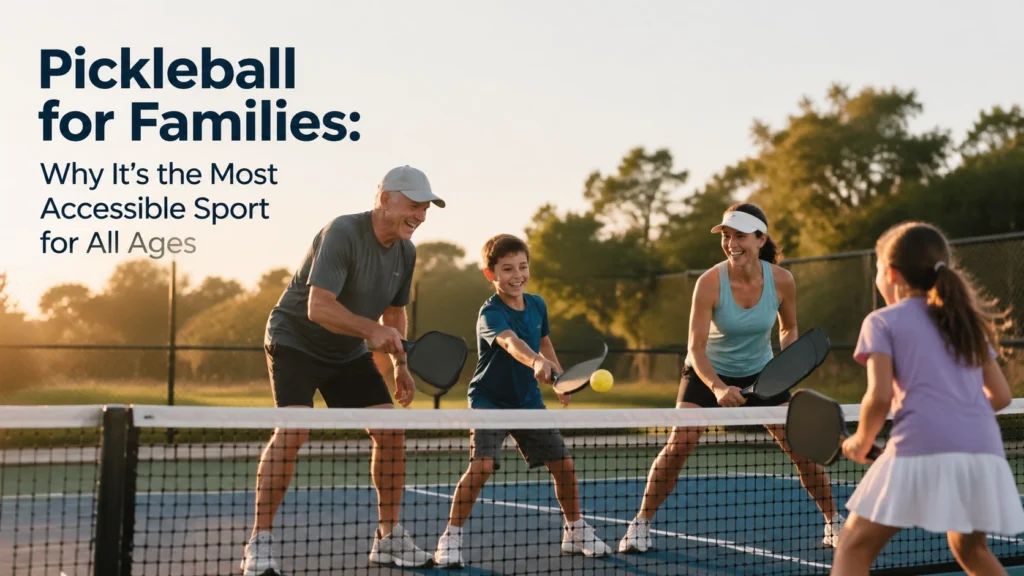
If you have spent any time looking at parks, community centers, or even your neighbor's driveway lately, you have likely seen it: the distinct "pop-pop" sound of a plastic ball hitting a paddle. Pickleball has exploded in popularity over the last few years, transitioning from a niche pastime for retirees to a global phenomenon embraced by professional athletes, teenagers, and families alike.
But why this sport? Why not tennis, padel, or traditional backyard badminton? The answer lies in one word: accessibility. Pickleball is perhaps the only sport where a seven-year-old, a thirty-something parent, and a seventy-year-old grandparent can all stand on the same court and play a genuinely competitive, fun game together.
In this guide, we will break down why pickleball is the ultimate "bridge" sport for families and how you can integrate it into your lifestyle.
The biggest hurdle for most sports is the "barrier to entry." In tennis, if you can’t serve overhand or cover a massive court, the game never really gets going. In basketball, height and vertical leap create an immediate divide. Pickleball removes these barriers through its unique design and ruleset.
A standard pickleball court is 20 feet by 44 feet. To put that in perspective, you can fit about four pickleball courts into the space of one single tennis court. This smaller footprint means there is significantly less ground to cover. You don't need the sprinting endurance of a marathon runner to be effective. This makes it manageable for children with shorter legs and seniors who may have limited mobility.
In many racquet sports, the serve is a weapon used to end the point immediately. In pickleball, the rules require an underhand serve. This intentionally keeps the ball in play, ensuring that rallies last longer. For families, this means more time spent moving and laughing and less time chasing stray balls across the yard.
One of the most distinctive features of the sport is the seven-foot "no-man's-land" on either side of the net, colloquially known as The Kitchen. You are not allowed to volley (hit the ball out of the air) while standing inside this zone. This rule prevents taller, more powerful players from simply standing at the net and "smashing" the ball down at shorter or younger opponents. It forces a game of strategy, placement, and finesse: areas where a patient grandparent often outclasses a hyperactive teenager.

Pickleball is often described as "stealth exercise." Because the game is so engaging, players often don't realize they are getting a full-body workout until they step off the court.
The most underrated aspect of pickleball isn't the physical exercise; it's the social resilience it builds. Because players are physically closer to each other than in almost any other outdoor sport, the court becomes a place for conversation.
Unlike a movie or a video game where everyone is focused on a screen, pickleball requires communication. Partners have to call for the ball, strategize on the fly, and: most importantly: laugh off the inevitable "dink" shots that go awry. It creates a shared language for the family.
For many households, the backyard has become a dead space. By introducing a dedicated area for activity: whether it's a full court or a temporary net on the driveway: you transform that space into a destination.

As the sport continues to grow, many homeowners are looking at how to bring the game home. You don't necessarily need a professional-grade stadium to enjoy the benefits. If you are considering an outdoor renovation, incorporating a multi-use surface is a high-value move.
When planning a home play area, the surface is key. While concrete works, many families are opting for modular sports tiles or high-performance coatings that offer better shock absorption. This is especially important if the court will be used by multiple generations.
Because pickleball can be addictive, you’ll likely find yourself outdoors for hours. This is where the design of the surrounding area becomes vital. To make a backyard court truly functional for the whole family, consider:
For those interested in the technical requirements for home sports installations, reviewing court layout dimensions, surface specifications, and lighting standards can provide a practical baseline for planning.

One of the reasons pickleball has scaled so quickly is the low cost of entry. To start playing tennis, you often need expensive racquets, specific shoes, and a club membership.
To start playing pickleball, you need:
Because the game can be played on any flat surface: a driveway, a quiet cul-de-sac, or a repurposed basketball court: you don't need a "platinum membership" to get your family involved. It is a sport of the people, designed for maximum participation with minimum fuss.
If you watch professional pickleball, you’ll notice periods where everyone is standing at the net, softly tapping the ball back and forth. This is "dinking." It looks simple, but it’s the most strategic part of the game.
For families, the "dink" is a great metaphor. It teaches children that power isn't everything. It teaches parents that finesse often beats brute force. It’s a leveling of the playing field where the smartest player wins, not necessarily the strongest. This tactical depth keeps the sport interesting long after the novelty of hitting a ball wears off.

Pickleball isn't just a trend; it is a fundamental shift in how we approach multi-generational recreation. If you are looking for a way to get your family moving, here is why you should consider the court:
Whether you are heading to a local park or looking to transform your outdoor living space into a high-performance recreation zone, pickleball offers a unique opportunity to bring the generations together. It’s time to pick up a paddle and see what the noise is all about.


