
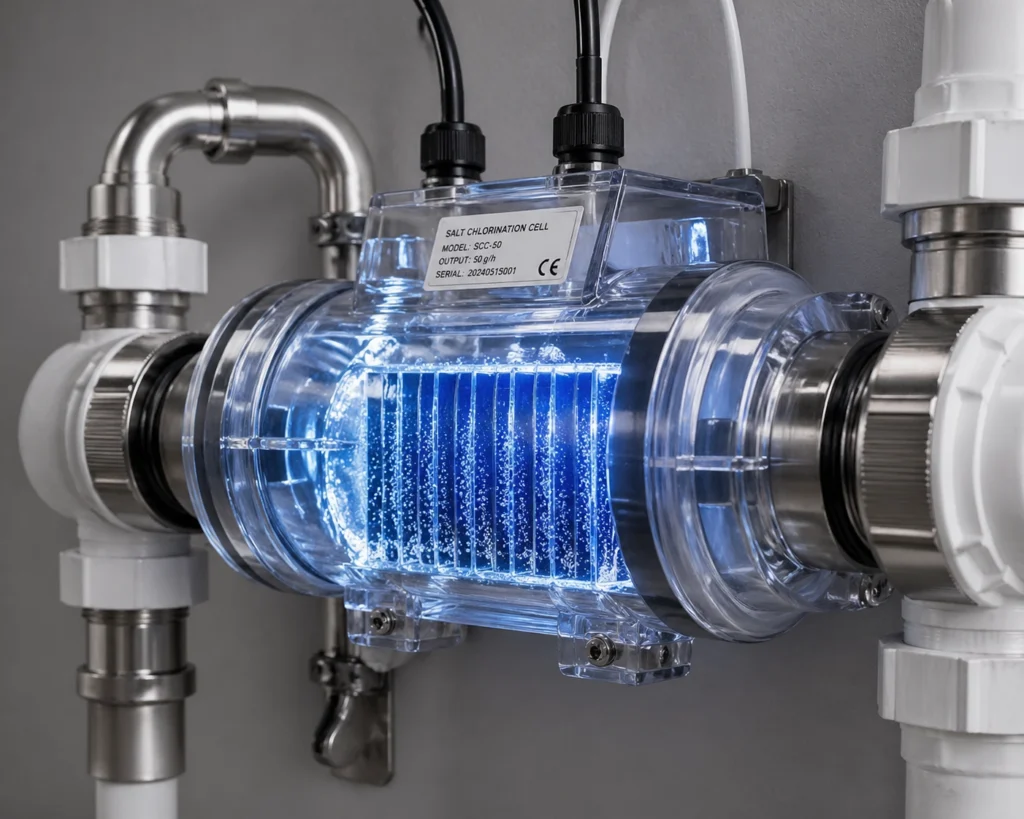
For anyone diving into the world of modern modular pools: specifically those built within or inspired by the structural footprint of shipping containers: the question of sanitation is a big one. While traditional chlorine has been the "old reliable" for decades, there is a massive shift toward salt water systems.
The appeal is simple: a softer, more natural swimming experience with significantly less manual chemical handling. However, when you are dealing with a steel-based structure like a container pool, there are specific technical considerations you need to understand.
This guide breaks down how salt water systems work, why they are becoming a standard upgrade for modular pools, and how to ensure your system remains low-maintenance for the long haul.
A common misconception is that a salt water pool is completely chlorine-free. In reality, a salt water system is simply a chlorine delivery method. Instead of you manually pouring liquid or granular chlorine into the water, the system generates it on-site.
This is achieved through a process called electrolysis. Here is the step-by-step breakdown:
This "closed-loop" system means you aren't constantly losing salt; you only need to top it up when the water level is replenished due to splashing or evaporation.

When designing a modern backyard, the goal is usually to maximize relaxation and minimize "chores." A salt water system fits this brief perfectly. Here are the primary reasons homeowners and developers are opting for this upgrade:
Traditional chlorine pools can often feel "harsh." This is usually due to chloramines: the byproducts formed when chlorine reacts with contaminants like sweat or oils. Chloramines are the true culprits behind red eyes and that strong "chemical smell."
Because a salt chlorinator provides a consistent, steady dose of chlorine, it effectively burns off these chloramines more efficiently. The result is:
Manual dosing is prone to "peaks and valleys." You might forget to add chlorine for a few days, the levels drop, and algae begins to bloom. Then, you "shock" the pool with a massive dose, making it uncomfortable to swim in for 24 hours.
A salt system provides consistent water sanitation. It runs whenever the pump is running, maintaining a steady baseline of protection. This stability is one of the reasons why simpler outdoor systems are gaining popularity.
Storing and handling large containers of liquid chlorine or heavy buckets of powder is a hassle. It's also a safety concern if you have pets or small children. With salt water, you might only need to add a few bags of pool salt once or twice a season, depending on usage.

If you are looking at a container pool, you are likely aware that the primary structure is steel. Salt and steel are not naturally the best of friends. If left unprotected, salt water can accelerate the oxidation (rusting) process.
However, modern modular pool engineering has solved this. To successfully run a salt water system in a container-style pool, the following structural safeguards are essential:
Understanding the materials used in your outdoor structures is critical. For instance, the same logic applies to choosing the right hardware for pergolas; you can read more about the difference between 304 and 316 stainless steel to see why salt-resistance matters.
While "low maintenance" doesn't mean "no maintenance," a salt water system simplifies your weekly routine. To keep your container pool in top shape, follow these steps:
Even though the chlorine is generated automatically, you still need to check your pH levels. Salt chlorination tends to naturally raise the pH of the water over time. If the pH gets too high, the chlorine becomes less effective, and scale can build up on your equipment.
Every 3 to 6 months, you should inspect the electrolytic cell. Depending on the calcium hardness of your water, "scale" (white crusty deposits) can build up on the plates. Most modern systems have a "self-cleaning" feature that reverses polarity to shed this scale, but a quick manual inspection is still a good idea.
Most systems have a digital readout that tells you the salt concentration in parts per million (ppm). If it drops too low (usually after heavy rain or lots of splashing), the system will stop producing chlorine. Simply add a bag of pool salt to the water to bring it back into range.

A salt water container pool is often just one part of a larger outdoor design. Because these pools are modular and often sit above-ground or partially submerged, they pair beautifully with timber decking and architectural shading solutions.
Many homeowners are integrating their pool systems with louvre roof systems to create a year-round entertainment zone. The "clean" look of a container pool, free from bulky chemical storage sheds, complements the minimalist aesthetic of modern outdoor blinds and pergolas.

When weighing the options for your pool build, the salt water upgrade is generally considered one of the best "bang-for-your-buck" investments.
The Pros:
The Cons:
Switching to a salt water system for a modular or container pool is a smart move for those prioritizing lifestyle and ease of use. By understanding the electrolysis process and ensuring your pool structure is properly protected against the corrosive nature of salt, you can enjoy a high-end, "soft-water" experience that feels more like a luxury spa than a traditional backyard pool.
Key Takeaways:
If you are planning a modern backyard retreat, opting for a salt water system is the gold standard for creating a convenient, high-performance pool area.


