
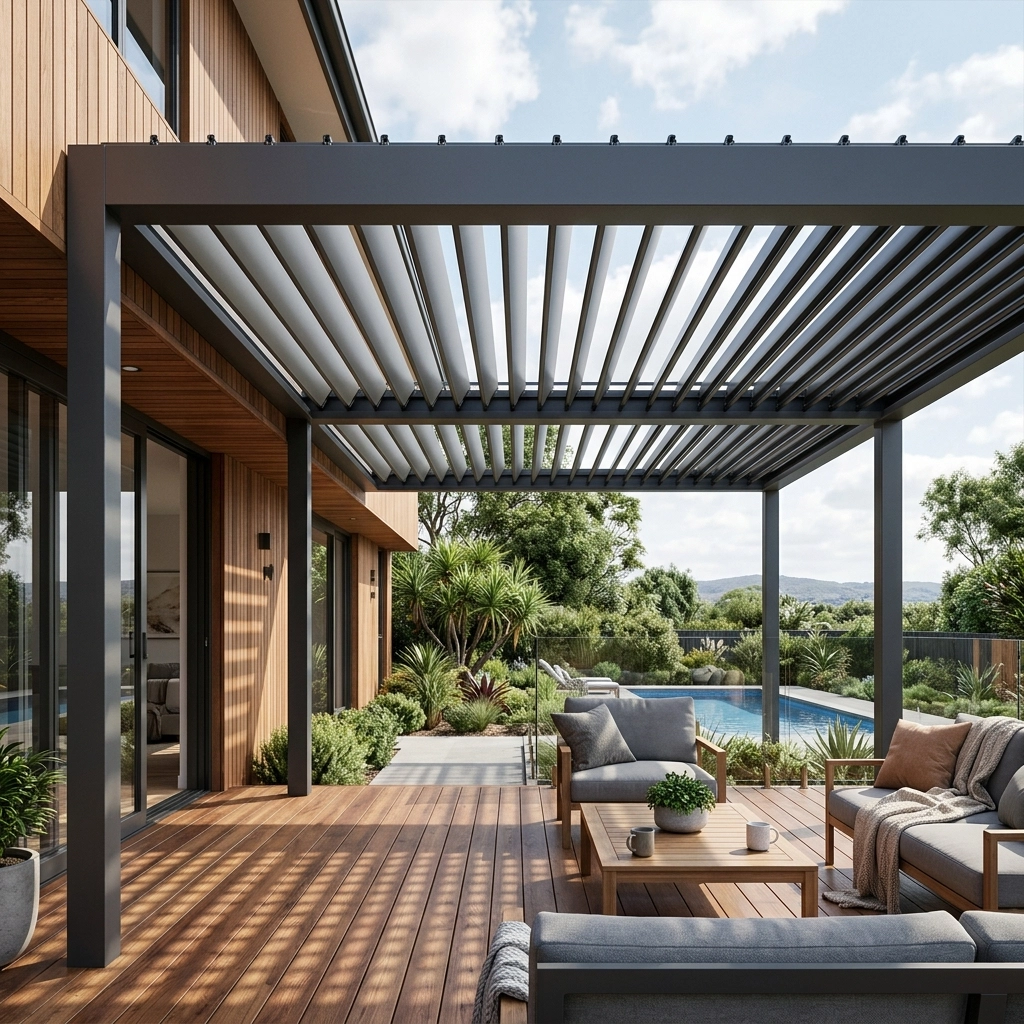
For decades, homeowners and designers were forced to choose between two extremes in outdoor shading: the budget-friendly but rigid "off-the-shelf" pergola, or the high-end, fully bespoke architectural installation. While standard kits often failed to fit the unique dimensions of modern patios, fully custom solutions frequently came with prohibitive lead times and engineering costs.
The emergence of semi-custom louvre kitsets has bridged this gap, offering a sophisticated middle ground. By combining the efficiency of a modular kit with the precision of made-to-measure engineering, these systems allow for a tailored fit that transforms a standard outdoor area into a true architectural extension of the home.
A semi-custom louvre system is not merely a fixed-size box. Instead, it is a modular engineered solution where the primary components: posts, beams, and louvre blades: are manufactured to high standards but designed with the flexibility to be configured to specific site requirements.
Unlike standard retail kits that come in fixed 3x3 or 4x4-meter footprints, semi-custom solutions allow for adjustments in height, width, and depth. This ensures that the structure aligns perfectly with existing rooflines, avoids obstructing windows, and maximizes the usable square footage of a deck or patio.
In architectural design, even a few centimeters can make the difference between a structure that looks like an "add-on" and one that looks integrated. A semi-custom approach allows for:

When selecting a louvre system, materiality is the most critical factor for longevity. Professional-grade semi-custom kitsets almost exclusively utilize architectural-grade aluminum (typically 6063-T5 alloy). This material is chosen for its exceptional strength-to-weight ratio and its natural resistance to corrosion.
A well-engineered louvre system must act as a permanent structure, capable of withstanding local wind zones and environmental pressures.
The primary benefit of a louvre system is the ability to manipulate the environment. Unlike a fixed roof, which can make a home's interior dark in winter, or a shade sail, which offers no protection from rain, a motorized louvre system provides dynamic climate control.
During the summer, tilting the louvres allows for maximum shade while maintaining convective cooling. As hot air rises, it escapes through the angled blades, creating a natural breeze underneath. In winter, the blades can be rotated to track the sun, inviting passive solar heat into the home to reduce heating costs.
One of the most complex aspects of a louvre system is water management. Semi-custom kitsets are engineered with integrated guttering systems hidden within the perimeter beams. When the blades are closed, they form a watertight seal; rain runs off the blades into the internal gutters and down through the hollow support posts. This ensures the area beneath remains dry, even during heavy downpours.
Modern kitsets often include "plug-and-play" electronics. These can be paired with rain sensors that automatically close the roof at the first sign of moisture, or wind sensors that open the blades to reduce uplift during extreme gusts.

A "tailored" look isn't just about size; it’s about finish and detail. Because these systems are semi-custom, homeowners can choose configurations that reflect their personal style and the architectural language of their property.
One of the greatest myths about louvre kitsets is that they are either "too hard for a DIYer" or "too simple for a pro." In reality, the semi-custom nature of these kits makes them highly versatile for different installation paths.
Semi-custom systems are designed to be intuitive. They typically arrive as a series of pre-cut or "ready-to-trim" components. For the capable DIY enthusiast, this means a significant reduction in labor costs. Because the engineering: the motorization, the drainage, and the pivot points: is pre-calculated, the risk of "getting it wrong" is minimized.
For those who prefer a turnkey solution, many homeowners opt for approved installers. A professional installer ensures the footings are secure, the structure is perfectly level (critical for drainage), and the electrical components are safely integrated.
Every property has its quirks: unusual corners, sloping blocks, or tight setbacks. This is where "semi-make-to-measure" truly shines.
In tight urban spaces, every millimeter counts. A standard kit might be too wide, blocking a side access path. A semi-custom system can be specified to fit the exact width of a townhouse courtyard, turning a neglected concrete patch into a premium outdoor room.
For larger decks, multiple louvre modules can be linked together. This allows for independent control over different zones. You might have one section closed over the BBQ area to keep the chef dry, while another section remains open over the dining table to let in the starlight.

While a semi-custom louvre kitset is a larger investment than a basic umbrella or fixed awning, it is widely considered a value-add renovation. Real estate experts often note that a functional, high-end outdoor living space effectively adds another "room" to the house.
By choosing a system with a lifetime manufacturing warranty on key components and utilizing durable materials like aluminum, you are ensuring that the investment pays off over decades, not just seasons.
The decision to install a semi-custom louvre system is an investment in both lifestyle and property value. To ensure the best results for your space, keep these technical requirements in mind:
By moving away from standard off-the-shelf solutions and embracing a tailored, semi-custom approach, you can create an outdoor environment that is as functional as it is beautiful( engineered for the way you live.)


