
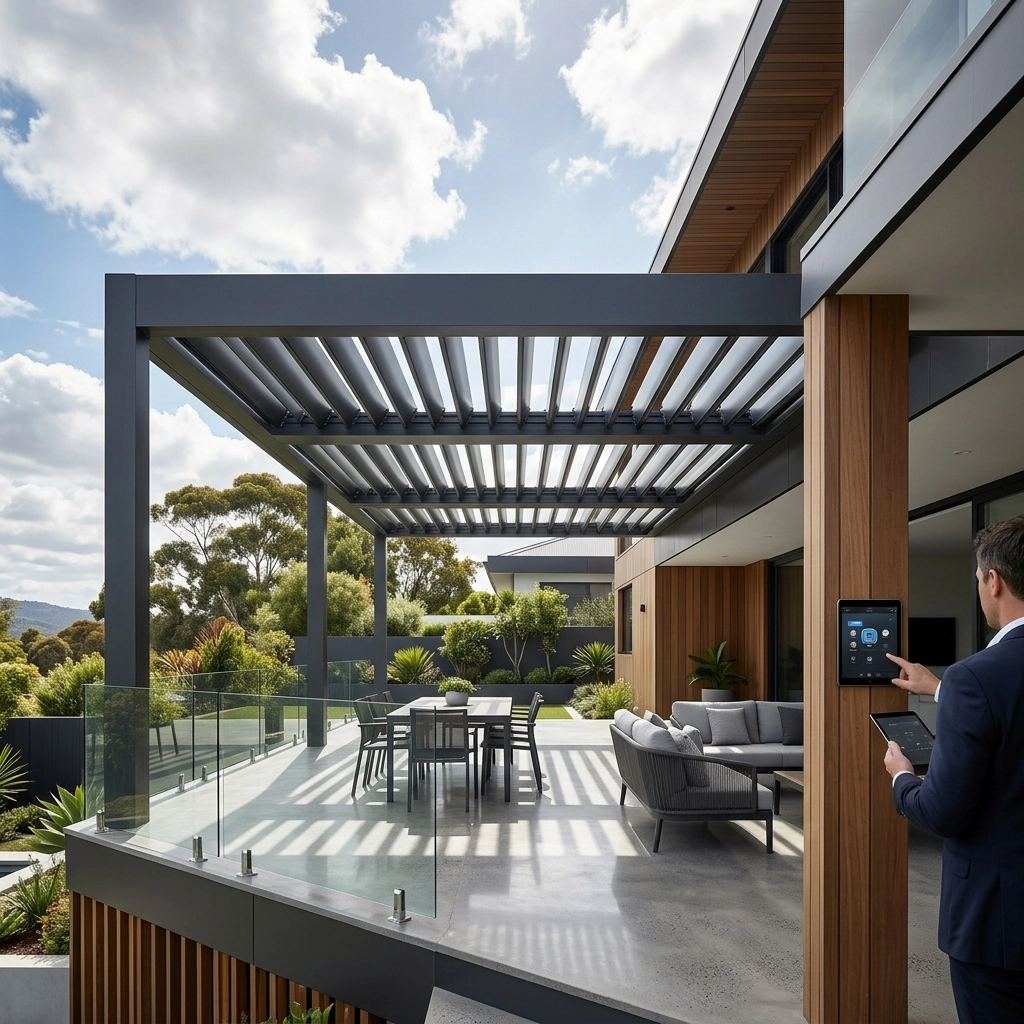
The concept of the "backyard" has undergone a radical transformation over the last decade. It has shifted from a simple patch of lawn with a standalone BBQ to a sophisticated extension of the home’s interior. Central to this evolution is the louvre system.
For a long time, high-end motorised louvres were the exclusive domain of luxury architectural builds, requiring bespoke engineering and professional installation teams. However, the landscape has shifted. The rise of motorised louvre kitsets has democratised outdoor automation, turning what was once a complex mechanical project into an accessible DIY reality.
This shift isn't just about convenience; it’s about how technology is redefining the "kitset" category from basic timber structures to intelligent, responsive outdoor environments.
To understand where we are, we have to look at where we started. The original kitset louvre systems were primarily manual. They functioned via a hand-turned crank or a "wand" that adjusted the angle of the blades. While effective, manual systems had several drawbacks that limited the "outdoor room" experience:
The transition to motorised kitsets has solved these pain points by integrating compact, high-torque motors directly into the frame. This evolution has moved the louvre system from a "static shelter" to a "dynamic climate control" tool.
It wasn’t long ago that "motorised" meant "complicated." If you wanted a motorised roof, you needed an electrician for the wiring, a specialist for the motor calibration, and a significant budget for the hardware.
The modern kitset has changed that narrative. Here is why automation is now the baseline for DIY projects:
Modern kitsets are designed with integrated electronics. Most systems now come with pre-wired motors hidden inside the louvre beams. Instead of complex electrical work, many systems use simple waterproof connectors that plug directly into a control box. This "plug-and-play" approach has removed the technical barrier that previously kept DIYers away from motorised options.
Motors provide a smooth, consistent torque that manual handling cannot replicate. Because the motor applies even pressure to the internal drive mechanism, the blades move in perfect synchronicity. This reduces the risk of the system becoming "racked" or misaligned, which is a common issue with manual systems that are operated too forcefully.
As homeowners become more accustomed to controlling lighting, security, and temperature via their smartphones, they expect the same from their outdoor spaces. Motorised kitsets now frequently include Wi-Fi or Bluetooth bridges, allowing the outdoor roof to be part of a wider home automation ecosystem.
While the user experience is casual and easy, the engineering behind these systems is quite sophisticated. A standard motorised kitset generally consists of several key components that work in harmony:
The shift toward motorisation hasn't just changed how we use the systems; it has changed how the systems themselves are designed. When you remove the need for a manual crank, you change the aesthetics and the structural possibilities of the kitset.
Without the need for visible handles or external gearboxes, the modern motorised kitset is much sleeker. Design lines are cleaner, and the "technical" parts of the structure are completely hidden within the aluminium profile. This allows for a more minimalist, architectural look that mimics high-end custom installs.
Once you have power running to a kitset for a motor, it becomes incredibly easy to add other features. This has led to the rise of "all-in-one" kitsets that include:
Perhaps the most significant change in the kitset landscape is the introduction of automated weather response. In the past, a kitset was "dumb": it did exactly what you told it to do and nothing more.
Today’s motorised systems can be equipped with sensors that allow the structure to think for itself:
This level of intelligence was previously reserved for commercial projects or ultra-premium residential builds. Now, it is a standard add-on for many high-quality kitset systems.

There is a common misconception that adding a motor makes a kitset harder to build. In reality, manufacturers have worked hard to ensure that the motorisation aspect is the easiest part of the assembly.
The focus of modern kitset design is on component reduction. By using modular parts and pre-calibrated motors, the actual "build time" for a motorised system is often comparable to a manual one. The primary difference lies in the planning phase: ensuring you have a power source nearby and understanding how the remote pairing works.
Investing in a motorised system is a form of future-proofing. As we see more extreme weather patterns and a greater emphasis on "staycations," the ability to control your environment at the touch of a button becomes more valuable.
The landscape of kitset systems is moving away from "temporary additions" toward permanent outdoor infrastructure. A motorised louvre kitset is no longer just a garden feature; it is a mechanical component of the home that adds genuine utility and value.
If you are considering an outdoor project in the current market, it is essential to understand how motorised systems have set a new benchmark.
The rise of motorised louvre kitsets represents a coming-of-age for the DIY industry. It proves that "kitset" no longer means "basic." Instead, it means high-tech, high-performance design that puts the power of architectural climate control into the hands of the everyday homeowner.


