
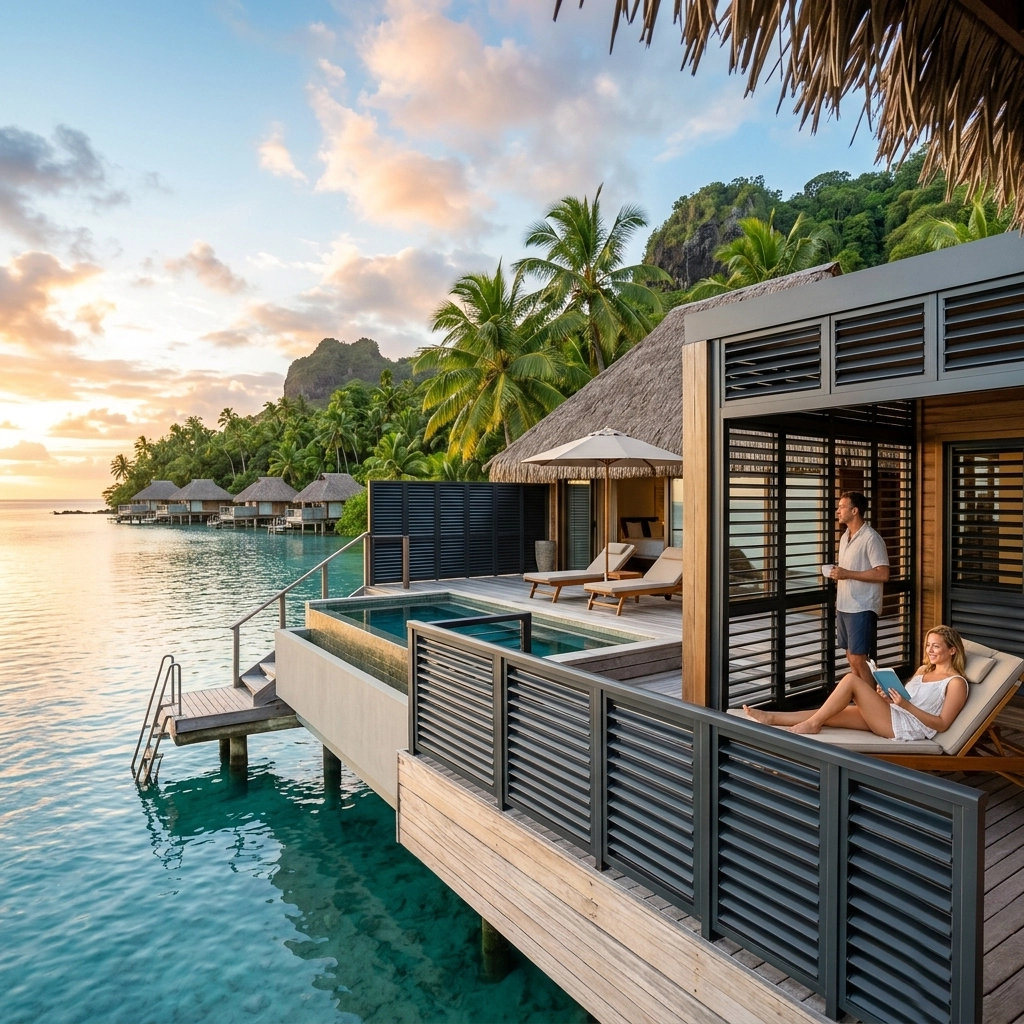
The architectural landscape of the Pacific Islands: spanning from the crystal lagoons of the Cook Islands to the lush coastlines of Fiji and Samoa: is undergoing a significant structural shift. For decades, the "tropical aesthetic" was synonymous with natural timber, thatched roofing, and canvas shading. However, the operational realities of maintaining these materials in one of the world’s most demanding environments have led resort owners, developers, and architects to a more resilient alternative: engineered aluminum louvre systems.
This transition is not merely an aesthetic trend; it is a calculated response to the technical and financial challenges of tropical hospitality management. By prioritizing durability, thermal performance, and low-maintenance longevity, Pacific resorts are redefining the standards for outdoor guest experiences.
The Pacific Islands present a unique set of environmental stressors that can degrade standard building materials in a matter of months. When specifying outdoor structures, architects must account for:
The primary reason for the shift toward aluminum is the material’s inherent chemistry. Unlike iron-based metals, aluminum does not rust. However, not all aluminum is created equal. High-performance louvre systems typically utilize 6063 T5 or T6 grade aluminum alloys.
By utilizing these grades, resorts ensure that their outdoor structures remain rigid and structurally sound, even when subjected to the constant pressure of coastal winds.
One of the most significant advantages of modern aluminum louvre systems over traditional pergolas is their ability to function as a fully waterproof roof. In locations like Samoa or Vanuatu, where a sunny afternoon can turn into a torrential downpour in minutes, the ability to close louvres and protect guest areas is invaluable.
The engineering behind this involves an integrated internal gutter system. When the louvres are closed, the blades overlap to create a watertight seal. Rainwater is channeled into hidden perimeter gutters and then directed down through the structural support posts.
This internal drainage prevents the "waterfall effect" often seen with simple canvas awnings, keeping outdoor dining areas, bar lounges, and private villa decks dry and functional regardless of the weather. For resorts looking to protect high-end outdoor furniture, this level of water management is a prerequisite.
From a developer’s perspective, the decision to install aluminum louvres is often driven by Return on Investment (ROI). While the initial capital expenditure (CAPEX) for an aluminum system may be higher than timber or fabric, the operational expenditure (OPEX) is drastically lower.
For resorts focused on long-term sustainability, reducing the frequency of material replacement is a key component of their environmental and financial strategy.

Beyond durability, aluminum louvres provide superior environmental control. Modern systems allow for blade rotation up to 120 or 135 degrees, giving guests and staff precise control over light and airflow.
In tropical climates, air movement is the most effective way to maintain comfort without over-relying on air conditioning. By angling the louvres, resorts can encourage natural cross-ventilation, pulling cooler air through a space while blocking direct solar gain. This "passive cooling" significantly reduces the energy load on communal areas.
In high-density luxury resorts, privacy is a premium commodity. Vertical louvre screens or adjustable roof systems allow guests to shield their villas from neighbors or public walkways without sacrificing the "open-air" feeling of a tropical holiday.
Architecturally, the clean, minimalist lines of aluminum complement modern Pacific design. Whether finished in a wood-grain sublimation for a more organic look or a sleek powder-coated charcoal for a contemporary feel, these systems integrate seamlessly into high-end resort aesthetics. For specialized protection in high-wind zones, systems like the Titan Outdoor Blinds can be integrated with louvres to provide a complete weather-sealed envelope.

Sustainability is no longer an optional "extra" for Pacific resorts; it is a core business requirement. Aluminum is one of the most sustainable building materials available because it is 100% recyclable.
Furthermore, the longevity of the material reduces the "throwaway" cycle associated with cheaper shading solutions. By installing a permanent, durable structure like The Orion Prime System, developers reduce the carbon footprint associated with shipping replacement parts and materials to remote island locations every few years.
When switching to aluminum louvre systems in a Pacific context, there are several technical specifications that should not be overlooked:

The transition toward aluminum louvre systems in Pacific Island resorts is driven by a need for structural precision and long-term viability. As the hospitality industry in the region matures, the move away from high-maintenance natural materials toward engineered solutions is becoming the gold standard.
For developers and architects working in the Pacific, specifying high-grade aluminum is no longer just an option; it is a strategic necessity for creating resilient, high-performance outdoor environments.


