
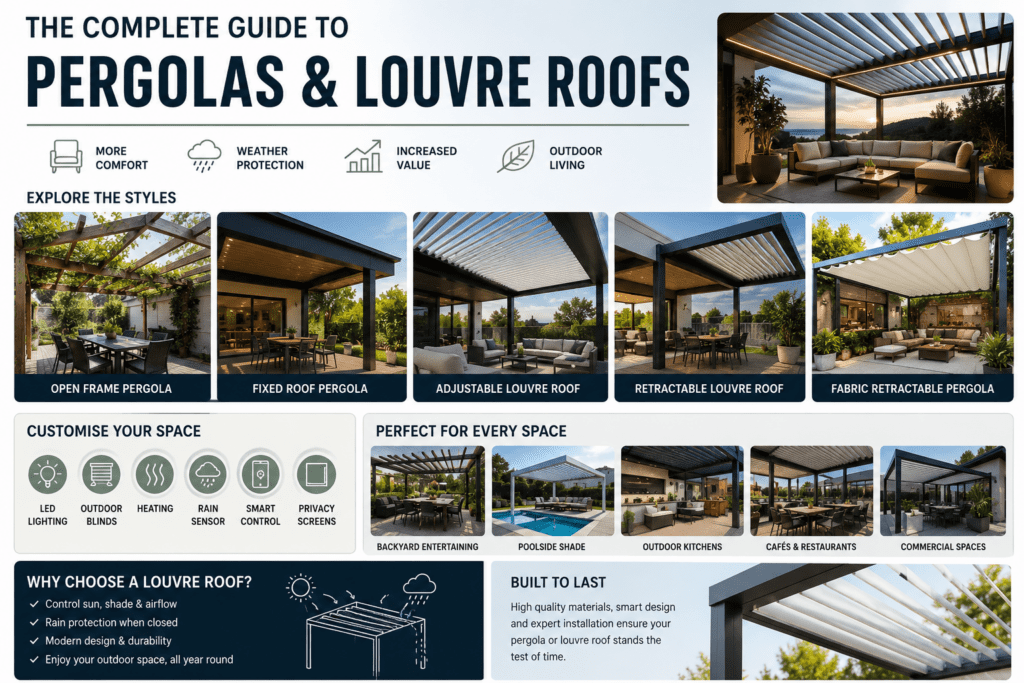
Pergolas and louvre roofs have become one of the most popular ways to improve outdoor living spaces in New Zealand. They add shade, weather protection, structure, and style while turning patios, decks, courtyards, and entertainment areas into usable spaces throughout more of the year.
A pergola is an outdoor structure made from posts and beams that creates a defined outdoor area. Traditional pergolas were often open-frame structures used for shade cloth, vines, or timber battens.
Modern pergolas are much more advanced. They can include fixed roofs, adjustable louvres, blinds, lighting, heating, drainage systems, and smart controls.
A louvre roof is a pergola roof made from adjustable blades. These blades can open, close, or tilt to control sunlight, airflow, and rain protection.
When open, they allow light and ventilation through. When closed, they create a more sheltered roof surface that helps protect the area below from rain and harsh sun.
A pergola is the overall structure.
A louvre roof is one type of roofing system that can be used on a pergola.
In simple terms:
Pergola: the frame or outdoor structure
Louvre roof: the adjustable roof system
Fixed roof pergola: a pergola with a non-moving roof
Retractable roof: a roof system that slides or folds open
An open frame pergola has no solid roof. It is ideal for defining a space, supporting shade sails, or creating an architectural feature.
Best for:
Outdoor styling
Light shade
Future upgrades
Lower-cost starting point
A fixed roof pergola has a permanent roof surface, often made from polycarbonate, insulated panels, steel, or aluminium.
Best for:
Consistent rain protection
Simple outdoor cover
Carports and walkways
Areas where ventilation is less important
This is one of the most flexible options. The blades rotate to manage sun, shade, airflow, and rain.
Best for:
Outdoor entertaining
Decks and patios
Hospitality spaces
Year-round usability
A retractable louvre roof allows the blades to slide or stack open, creating a much more open-sky feeling when required.
Best for:
Premium outdoor areas
Homes wanting full sun when open
Restaurants and cafés
Flexible weather control
These use a folding or sliding fabric canopy instead of aluminium blades.
Best for:
Shade control
Softer outdoor appearance
Large entertaining areas
Areas where full aluminium roofing is not required
Louvre roofs are popular because they give homeowners control. Instead of choosing between full sun or full cover, users can adjust the roof depending on the weather.
Key benefits include:
Better outdoor comfort
Sun and shade control
Rain protection when closed
Improved airflow
Modern architectural appearance
Higher usability of decks and patios
Options for blinds, lighting, and heating
Aluminium is the most common material for premium louvre roofs because it is lightweight, strong, corrosion resistant, and low maintenance.
Steel can be a more economical option in some systems, especially for budget-friendly gazebos or hybrid pergola models.
Good louvre systems should include internal guttering and post drainage. This helps move rainwater away from the roof and down through the structure.
Manual systems are simple and cost-effective.
Motorised systems are easier to use and can often include remotes, wall switches, smart controls, LED lighting, and rain sensors.
New Zealand weather can be demanding, so wind performance matters. Always choose a pergola system suitable for the site conditions.
Coastal, exposed, elevated, or commercial sites may require stronger systems.
Larger openings require stronger beams, posts, and blade systems. Cheap systems may suit small patios, but larger outdoor areas need better structural design.
Common upgrades include:
LED lighting
Heaters
Rain sensors
Smart controls
Sliding glass panels
Side screens
Privacy panels
Fans
Pergolas and louvre roofs can be used for:
Backyard entertaining areas
Poolside shade
Outdoor kitchens
BBQ areas
Spa pool covers
Restaurant dining spaces
Café courtyards
Walkways
Carports
Apartment courtyards
A closed louvre roof is designed to provide strong rain protection, but it should not be described as completely waterproof in the same way as a permanent building roof.
Performance depends on the system design, installation, wind direction, drainage, and site exposure.
For most outdoor living areas, a quality louvre roof provides excellent practical shelter.
A well-designed pergola can improve the usability, appearance, and appeal of a property. It creates an extra outdoor living zone and can make a home feel larger and more functional.
For hospitality businesses, a covered outdoor area can also increase usable seating space and improve customer comfort.
The best option depends on the space and how it will be used.
For simple shade, an open frame or fabric pergola may be enough.
For reliable cover, a fixed roof pergola may be better.
For maximum flexibility, an adjustable louvre roof is usually the strongest choice.
For premium outdoor living, a retractable louvre system offers the most open-air flexibility.
Pergolas and louvre roofs are no longer just decorative outdoor features. They are practical outdoor living systems that help New Zealand homes and businesses get more use from their exterior spaces.
Whether the goal is shade, rain protection, airflow, privacy, or a complete outdoor entertaining zone, there is now a pergola system to suit almost every project.


