
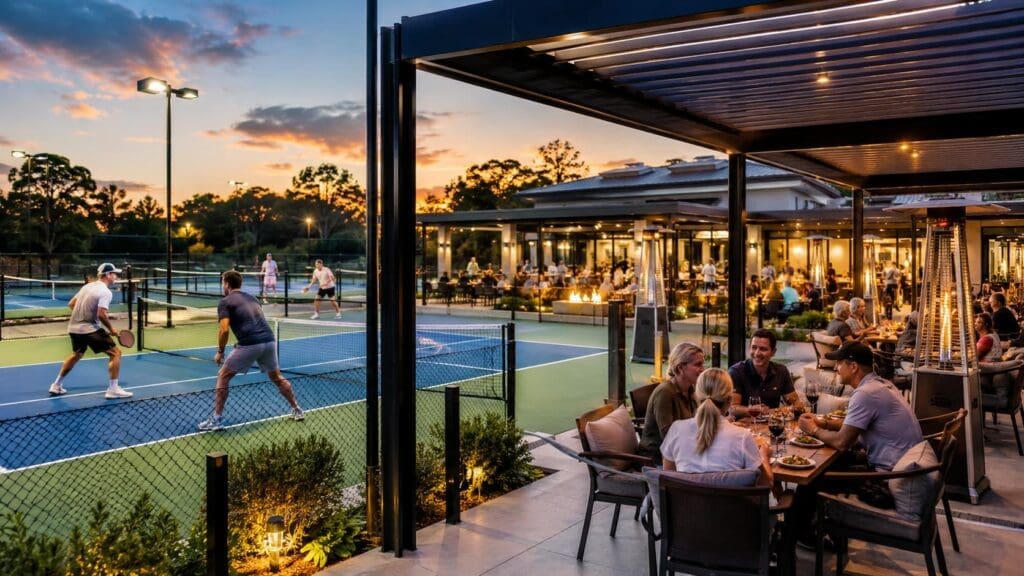
Many clubs have outdoor areas that are not being used to their full potential. These spaces might be grassed areas beside courts, empty corners near clubrooms, old bowling green surrounds, unused patios, or open seating zones that only get used during good weather.
With the right planning, these areas can become valuable revenue-generating assets. For tennis clubs, bowls clubs, golf clubs, sports clubs, schools, and community facilities, outdoor space can help bring in new members, increase casual bookings, support events, and create better social experiences.
The key is to think beyond the playing surface. A club’s outdoor space can support sport, food, seating, shelter, social events, and year-round use.
Pickleball is one of the fastest-growing court sports worldwide, and it is proving popular because it is easy to learn, social, and suitable for a wide age range.
For clubs with spare court space, underused tennis courts, hardstand areas, or open paved zones, pickleball can be a smart way to generate new income.
A single tennis court can often be converted or marked to allow multiple pickleball courts. Clubs can use permanent line marking, modular sports tiles, or roll-out pickleball mats depending on their budget and long-term plan.
Pickleball can create revenue through:
Casual court hire
Club memberships
Social leagues
Beginner sessions
Corporate events
School and community bookings
Coaching programmes
Tournament days
For bowls clubs in particular, pickleball can help bring in younger members and families while still keeping the club’s social atmosphere. It gives people a reason to visit the club more often, stay longer, and use hospitality areas.
Outdoor seating is often underused because it is too exposed to sun, wind, or rain. Adding covered seating can make a big difference to how long people stay at the club.
Covered seating areas work well beside courts, bowling greens, clubrooms, playgrounds, and outdoor dining zones. They give players, spectators, parents, and visitors a comfortable place to gather.
Options can include:
Louvre pergolas
Fixed roof shelters
Retractable roof systems
Outdoor blinds
Shade structures
Covered decks
Modular outdoor seating areas
The benefit is simple: when people are comfortable, they stay longer. Longer stays can lead to more food and drink sales, more event bookings, and a better club atmosphere.
Covered seating also improves the look and feel of the facility. It makes the club feel more professional, more welcoming, and more suitable for hosting functions.
Many clubs already have kitchens, bars, or hospitality facilities, but the outdoor area is often not set up properly for dining. By creating a weather-protected outdoor dining space, clubs can increase revenue without needing to expand the main building.
Outdoor dining can be used for:
Post-game meals
Club nights
Private functions
Fundraisers
Friday evening events
Tournament catering
Birthday parties
Corporate bookings
Community gatherings
A simple covered dining area with tables, lighting, outdoor blinds, and heating can turn unused space into a regular income stream.
For clubs with a bar or café, this is especially valuable. More seating means more capacity, better event options, and a stronger reason for members to spend time at the club after playing.
Clubs are often in great locations and already have parking, bathrooms, kitchens, and open space. This makes them ideal for community events.
Underused outdoor areas can be turned into flexible event spaces for:
Markets
Quiz nights
Open days
Food truck evenings
Live music
Club fundraisers
Sports viewing nights
Corporate functions
Christmas parties
Family days
School holiday activities
The most successful club spaces are flexible. A covered outdoor area can be used for seating one day, a tournament the next, and a private event on the weekend.
This creates multiple revenue streams from the same space.
Weather is one of the biggest reasons outdoor club spaces sit empty. Too much sun, wind, rain, or cold can reduce how often people use the facility.
All-weather upgrades can help clubs get more value from their existing footprint.
Useful additions include:
Covered courts
Louvre pergolas
Outdoor blinds
Retractable awnings
Fixed roof structures
Wind protection screens
Outdoor heating
LED lighting
Artificial turf zones
Modular court flooring
These improvements help extend playing hours and make the club more reliable for bookings.
For example, a covered outdoor seating area can still be used during light rain. A sheltered dining zone can keep events running. A covered court or weather-protected pickleball space can support more consistent bookings throughout the year.
The more reliable the space, the easier it is to sell.
Revenue does not only come from sport. It also comes from creating a place people want to spend time.
Many clubs are moving towards a more social model where sport, food, drinks, seating, and events all work together. Pickleball is a great example of this because it naturally supports social play and mixed-age participation.
A good outdoor club layout might include:
Pickleball or multi-sport courts
Covered spectator seating
Outdoor dining
Bar access
Shade and wind protection
Lighting for evening use
Event-friendly open space
This type of setup encourages members and visitors to stay before and after games. It also makes the club more attractive for families, casual players, and non-playing guests.
Before investing in outdoor improvements, clubs should look at how the space could generate income.
Questions to ask include:
Can this space support more court bookings?
Can it attract new members?
Can it be used for events?
Can it increase food and drink sales?
Can it make the club more useful in poor weather?
Can it bring in families, schools, or corporate groups?
Can it reduce dead space around the club?
A low-use outdoor area may not need a full rebuild. In many cases, the best approach is to start with practical upgrades that create immediate value.
For example, adding pickleball lines, shade, seating, and outdoor dining can be a more affordable first step than building a major new facility.
The strongest revenue opportunities often come from combining several ideas together.
A pickleball court on its own can bring in new players.
A covered seating area on its own can improve comfort.
An outdoor dining space on its own can increase hospitality income.
But when these are combined, the club becomes much more valuable.
A club could run a social pickleball evening where players book courts, spectators sit under cover, and the club sells food and drinks afterwards. The same area could then be used for a private event, a community market, or a weekend tournament.
This is how outdoor space becomes a true revenue asset.
Many clubs already have the space they need to grow revenue. The opportunity is in using that space better.
By adding pickleball, covered seating, outdoor dining, event areas, and weather protection, clubs can create new income streams while improving the member experience.
For clubs with ageing memberships or underused facilities, this can be especially important. A more flexible outdoor area can bring in new people, support social activity, and make the club more relevant to the wider community.
The best club spaces are no longer just places to play. They are places to meet, eat, watch, socialise, and return to throughout the year.


