
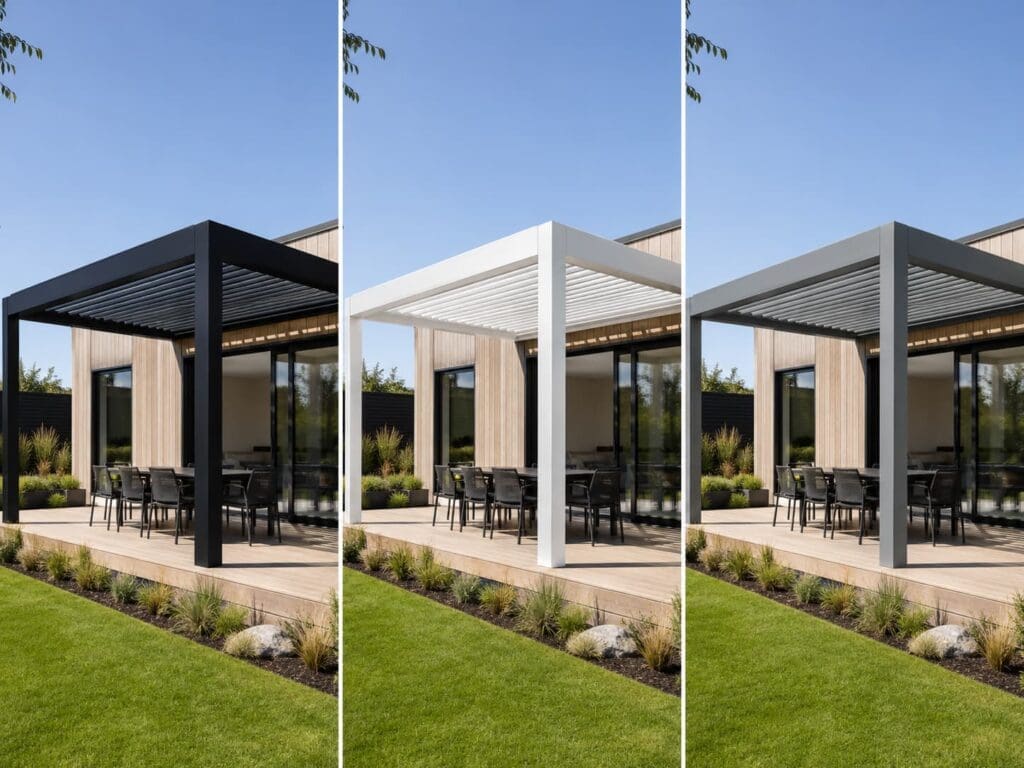
Choosing the right pergola colour can make a major difference to how the structure looks beside your home.
Black, white and grey are the most popular pergola colours because they work with a wide range of architectural styles, exterior cladding materials and outdoor spaces. However, each colour creates a different visual effect and comes with its own practical considerations.
The best choice will depend on your home’s exterior, the size of the outdoor area, the amount of sunlight it receives and whether you want the pergola to stand out or blend into its surroundings.
A pergola is often a large and highly visible addition to a property. Its colour can affect:
A well-chosen colour can help the pergola feel like a natural extension of the home rather than a separate structure added later.
Black pergolas are a popular choice for modern homes, architectural builds and properties with strong exterior contrasts.
They create a bold, defined look and can work particularly well with light-coloured cladding, concrete, timber decking and large glass doors.
A black pergola can:
Black can also help a pergola frame appear more streamlined, particularly when the structure includes dark outdoor blinds, shutters or glass panels.
Black surfaces absorb more heat than lighter colours. Aluminium pergolas are designed for outdoor use, but the framing may feel warmer when exposed to strong summer sunlight.
Dust, pollen, salt residue and water marks may also be more visible on darker surfaces, especially in coastal areas or during dry weather.
Regular washing can help maintain the finish.
Black pergolas are often suited to:
White pergolas create a light, clean appearance and are particularly popular around coastal homes, villas, townhouses and smaller outdoor areas.
White reflects more light and can help an outdoor space feel open and bright.
A white pergola can:
White can be especially effective where the pergola is positioned close to the house or where the outdoor area receives limited natural light.
Although white can make an outdoor area look clean and open, dirt and organic staining may become noticeable over time.
Leaves, insects, bird droppings, mould and runoff marks can be more visible on white framing. Areas beneath gutters and around drainage points may require occasional cleaning.
A quality powder-coated aluminium finish will generally be easier to maintain than painted timber.
White pergolas are often suited to:
Grey sits between black and white, making it one of the most flexible pergola colour options.
Depending on the shade, grey can create a soft modern appearance or a stronger architectural look without appearing as bold as black.
Common options include anthracite grey, charcoal, basalt grey and lighter neutral greys.
A grey pergola can:
Grey is often the safest option when the house includes several different exterior materials or colours.
The undertone of the grey is important.
Some greys have cool blue undertones, while others have warmer brown or green undertones. A grey pergola that looks good in a sample may appear different beside the home’s cladding, roof or paving.
It is helpful to compare the pergola colour against the house in both direct sunlight and shade.
Grey pergolas are often suited to:
A pergola does not need to be exactly the same colour as the house.
In many cases, matching the pergola to an existing detail creates a more balanced result. This could include the colour of the:
For example, a white house with black windows may look best with a black pergola rather than a white one. The black structure connects visually with the existing window frames and creates intentional contrast.
A grey pergola may work well where the roof and paving are grey, even when the house cladding is a different colour.
Lighter colours generally make a structure feel more open.
White is often the best choice for narrow decks, compact courtyards and smaller backyards because it reflects light and reduces the visual weight of the framing.
Black creates stronger outlines and can make a pergola feel more defined. This can work well in larger outdoor spaces but may feel visually heavier in a very small area.
Grey provides a middle option. It can add definition while remaining softer than black.
No outdoor colour is completely maintenance-free.
Black may show:
White may show:
Grey is often the most forgiving colour because it tends to hide everyday dust and minor marks better than very dark or very light finishes.
Regardless of colour, pergola framing should be washed periodically with fresh water and a mild detergent. Coastal properties may require more frequent cleaning to remove salt deposits.
Dark colours absorb more solar heat than light colours.
A black pergola frame may become warmer in direct sunlight than a white or light-grey frame. However, the overall comfort beneath the pergola is usually influenced more by:
For an adjustable louvre pergola, opening the roof can release trapped heat and improve ventilation.
Some pergola designs use the same colour throughout, while others combine a dark frame with lighter louvre blades.
Popular combinations include:
A single-colour system creates a consistent appearance.
A dark frame with white louvres can provide contrast while helping the underside of the roof feel lighter when the louvres are closed.
The right option depends on whether the pergola should appear bold, minimal or closely integrated with the house.
You want a bold, contemporary appearance and the home already includes black windows, roofing, gutters or other dark features.
You want the outdoor area to feel bright, open and spacious, particularly around a coastal home, villa, courtyard or pool.
You want a versatile neutral that hides everyday marks reasonably well and works with a broad range of exterior materials.
The pergola should also coordinate with nearby outdoor elements, including:
A black pergola may look impressive beside warm timber decking. A white pergola may complement pale paving and pool surrounds. Grey can connect naturally with stone, concrete and composite decking.
Online photos and digital colour charts can help narrow down the options, but screen colours are not always accurate.
Where possible, view physical powder-coat samples beside the house. Check them:
This helps reveal undertones that may not be visible in photographs.
There is no single pergola colour that suits every property.
Black is ideal for strong contrast and modern architectural styling. White creates a bright, open appearance and works particularly well in smaller or coastal outdoor spaces. Grey offers a practical and flexible middle ground that suits many New Zealand homes.
The best result usually comes from connecting the pergola colour with an existing feature of the property rather than choosing the colour in isolation.
By considering the home’s cladding, windows, roof, outdoor flooring and surrounding landscape, you can select a pergola colour that looks balanced and remains appealing for years to come.


