
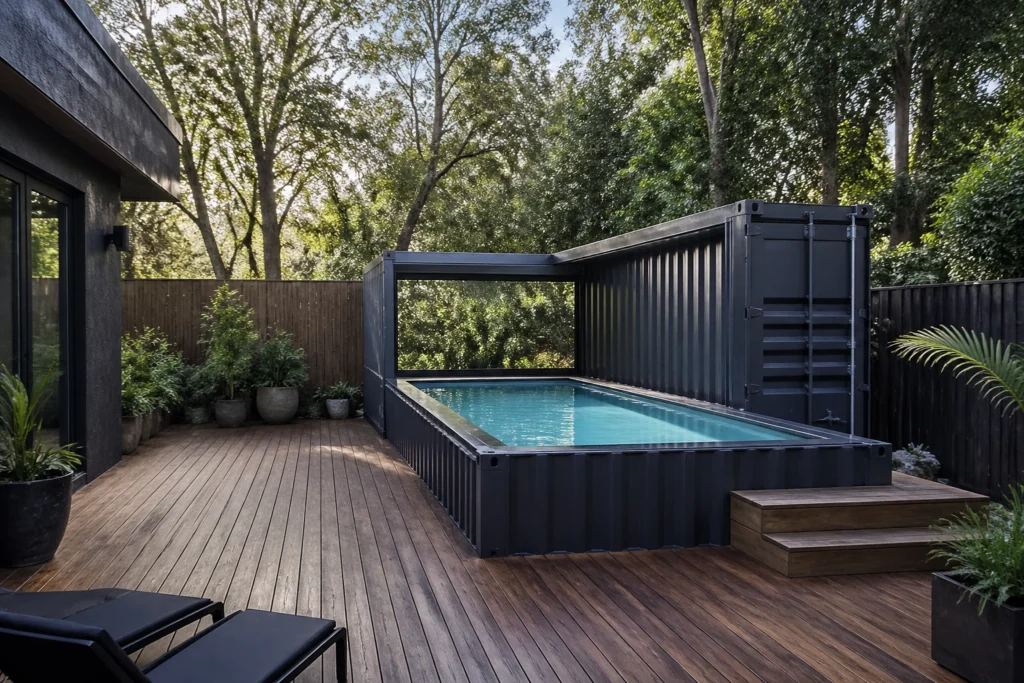
The traditional backyard swimming pool is undergoing a radical transformation. For decades, the gold standard was the in-ground concrete or fiberglass pool: a project often involving months of heavy machinery, muddy trenches, and a revolving door of contractors. However, a new contender has disrupted the industry: the shipping container pool.
What started as a niche DIY project for off-grid enthusiasts has exploded into a global architectural trend. From the suburbs of North America to the coastal towns of Australia and New Zealand, container pools are "taking the world by storm" because they offer a unique trifecta of speed, style, and structural resilience.
The rise of the container pool isn't just about aesthetics; it’s a response to a changing real estate and lifestyle landscape. As urban sections get smaller and the cost of traditional construction climbs, homeowners are looking for smarter, more efficient ways to upgrade their outdoor living spaces.
Traditional pools can take anywhere from six months to a year to complete, depending on weather and contractor availability. In contrast, a container pool is largely manufactured off-site in a controlled factory environment. Once the unit arrives at your property, it can often be swimmable within 48 to 72 hours, provided the site preparation is complete.
Perhaps the most revolutionary aspect of the container pool is its mobility. Because the pool is built within a self-contained steel shell, it is technically a modular asset. If you decide to sell your home and move, you can: in many cases: drain the pool, crane it onto a truck, and take it with you. This turns a pool from a fixed-property improvement into a relocatable asset.
Sustainability is a massive driver in modern design. Repurposing a retired shipping container gives 2.5 to 4 tons of steel a second life. By upcycling these massive structural boxes, the demand for new raw materials is significantly reduced, making it an attractive option for eco-conscious homeowners.

To the untrained eye, it looks like a simple box filled with water. In reality, converting a shipping container into a functional pool requires significant engineering. A standard container is designed to hold weight on its corners, not to withstand the outward hydrostatic pressure of thousands of liters of water.
Most high-quality container pools utilize Corten steel (weathering steel). This material is chosen for its exceptional corrosion resistance. When the container is modified for a pool, the interior is typically lined with a secondary layer: either a heavy-duty vinyl membrane or a thick fiberglass shell: to ensure it remains 100% watertight.
When you cut the top off a shipping container to create a pool, the structural integrity of the walls is compromised. To counter this, engineers weld a heavy-duty box section or steel "C-channel" around the top perimeter. This prevents the walls from bowing outward under the weight of the water.
One of the cleverest design features of modern container pools is the integrated equipment room. Usually tucked behind a partition at one end of the container, this space houses the pump, filtration system, heater, and electrical components. This "plug-and-play" setup means you don't need to build a separate shed for your pool equipment.

The "industrial chic" look is a major selling point, but container pools are surprisingly versatile in terms of finish. You are not limited to a corrugated metal box sitting in the middle of your lawn.
For those looking to integrate these pools into a broader outdoor design, it is essential to start with structural precision and CAD drawings to ensure every custom feature fits perfectly within the site constraints.
While the benefits are numerous, installing a container pool requires careful planning. It is not as simple as "dropping a box and adding a hose."
Because the pool arrives as a single, heavy unit, you must ensure a crane or hiab truck can access your property. Overhanging trees, power lines, and narrow driveways are common hurdles. Furthermore, the pool requires a level, engineered foundation: typically a concrete pad or a series of screw piles: to ensure the weight is distributed evenly and the unit doesn't sink over time.
In most jurisdictions, a container pool is subject to the same safety regulations as a traditional pool. This means you will need a building consent and compliant safety fencing. The advantage of a container pool is that the high walls of the container can often serve as part of the safety barrier, provided they meet the required height and climb-resistance standards.
Steel is an excellent conductor of heat, which means an uninsulated container pool will lose heat rapidly to the surrounding air or ground. Premium manufacturers solve this by applying closed-cell spray foam insulation to the exterior of the shell before cladding. This helps maintain water temperature and reduces the energy costs associated with heating.

A major trend within the container pool world is the "swim spa" configuration. Many users don't just want a place to cool off; they want a fitness solution. By installing powerful jet propulsion systems, a 6-meter container can be turned into an endless lap pool.
Homeowners are also increasingly looking at customizing features like internal heating, LED lighting, and integrated benches to transform the unit into a year-round wellness hub.
A common question is: Will it rust?
Because container pools are built from Corten steel and coated with high-performance marine-grade epoxy primers, they are incredibly durable. However, like any outdoor structure, they require maintenance.

The container pool movement represents a shift toward efficiency, modularity, and bold industrial design. By moving the construction process into the factory, we have eliminated the unpredictability of traditional pool building. Whether it’s used as a sleek lap pool, a compact plunge pool for a tiny home, or a centerpiece for a luxury backyard, the shipping container pool has proven it is far more than a passing fad.
Container pools are no longer just an alternative; for many, they are the first choice for a modern, durable, and rapidly deployed outdoor oasis.


