
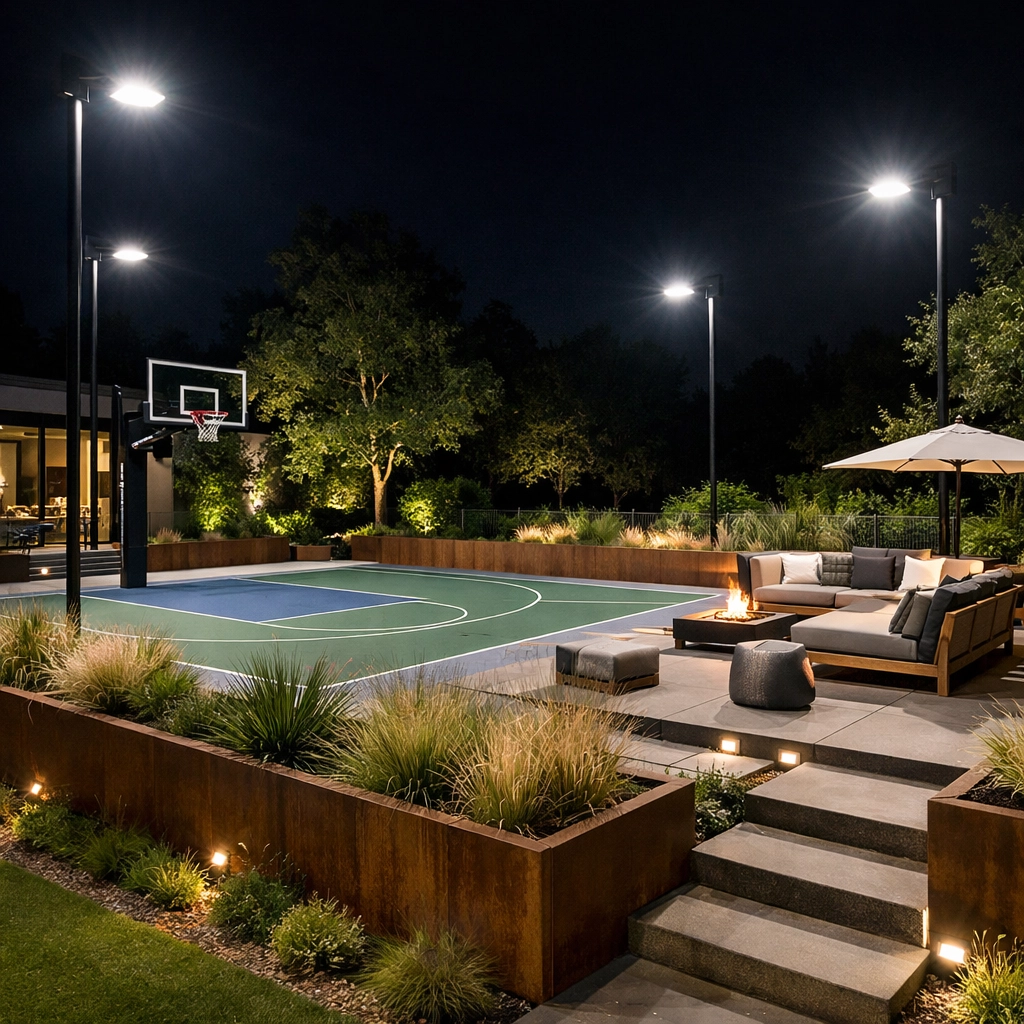
Let’s be honest: the standard New Zealand backyard has spent decades being a place for slightly tilted trampolines, rusty clotheslines, and patches of grass that refuse to grow. But the "she’ll be right" approach to landscaping is getting a serious upgrade. If you’ve spent any time on social media or at a local park lately, you’ve probably noticed two things: everyone is playing Pickleball, and 3x3 Basketball has turned the traditional driveway hoop into a high-octane sport.
Converting a portion of your property into a professional-grade court isn't just about giving the kids something to do. It’s the ultimate lifestyle flex. It’s about hosting the neighborhood tournament, staying fit without a gym membership, and, let’s face it, having the coolest house on the block. Here is everything you need to know to take your backyard from "patch of dirt" to "pro-level arena."
Pickleball is the fastest-growing sport in the world for a reason. It’s essentially what happens when tennis, badminton, and ping-pong have a very high-energy baby. It’s accessible, intensely social, and: most importantly for homeowners: it fits into a much smaller footprint than a full-sized tennis court.
A regulation Pickleball court requires a playing surface of 44 feet by 20 feet. However, you can’t just stop at the lines. You need "overrun" space so you don’t go face-first into a fence while chasing a lob. The recommended total area is 34 feet by 64 feet.
When planning your layout, orientation is everything. Unless you enjoy being blinded by the afternoon sun mid-serve, you must orient the court North-South. This ensures the sun crosses over the court rather than sitting directly in one player's eyes during peak play times.

If Pickleball is the social butterfly of backyard sports, 3x3 Basketball is its high-intensity cousin. Gone are the days of just bolting a hoop to the garage and hoping the ball doesn't bounce into the rose bushes. A professional 3x3 setup is a dedicated space designed for speed and precision.
While a full FIBA-spec 3x3 court is 15 meters wide by 11 meters long, backyard versions are highly adaptable. The key is ensuring you have a regulation free-throw line (15 feet) and a three-point arc (22 feet, or adjusted for the "key" space available). If you are looking to deck out your space with pro-level hoops and accessories, checking out specialized basketball equipment is a great place to start to ensure your hardware can handle a heavy dunk.
You can have the fanciest net in the world, but if your ground is uneven, your Pickleball game will feel more like a game of pinball. The foundation is where 80% of your budget and effort should go.

Playing on raw concrete is fine for a while, but your knees will eventually start a formal protest. Professional backyard courts utilize specialized surfacing to enhance playability and safety.
This is the "secret sauce" for high-end home courts. Products like Versacourt or modular polypropylene tiles snap together over your concrete base. They offer several advantages:
If you prefer the look of a pro tennis court, multi-layer acrylic coatings are the way to go. They include a "cushion" layer of rubber granules topped with a textured paint that provides the perfect "grit" for ball spin.
To move from "backyard project" to "professional facility," you need to sweat the small stuff.
For Pickleball, you want a semi-permanent net system. While portable nets are great for driveways, a sleeve-mounted permanent net allows you to maintain the perfect tension. Remember: the net must be 36 inches high at the sidelines and 34 inches at the center.
For basketball, don't settle for a flimsy pole. Look for an in-ground, glass-backboard system with a breakaway rim. It looks better, plays better, and won't vibrate for three minutes every time the ball hits the ring. Explore the full range of outdoor sports gear to find systems that are built to withstand the elements.
Nothing kills the vibe of a fast-paced game like having to jump the neighbor's fence to retrieve a stray ball. Install a perimeter fence at least 10 feet high. Black vinyl-coated chain link is the industry standard: it’s durable, nearly invisible from a distance, and won't rust.

The sun shouldn't dictate when the game ends. High-output LED sports lighting has become incredibly affordable. You want "shoebox" style fixtures mounted on 15-to-20-foot poles to minimize glare and maximize court coverage.
If you’re going to build a pro court, you might as well act like a pro. One of the coolest additions to modern backyard courts is automated filming technology. Installing a 4K sports live camera allows you to record your games, analyze your footwork, or even livestream your Sunday morning Pickleball sessions to your jealous extended family.
A professional court is an investment, and like any investment, it requires a bit of upkeep.
A court sitting in the middle of a barren field looks like a construction site. To make it a "design solution," integrate it into your landscaping. Surround the court with low-maintenance native grasses or even some Corten steel planters to give it a modern, industrial edge. If you're building in a particularly windy area, consider high-wind protection blinds nearby so spectators can watch the game in comfort without being buffeted by the breeze.
Building a pro-quality backyard court is a structured process that rewards careful planning and quality materials. If you follow the blueprint, you'll create a space that adds significant value to your home and your health.


