
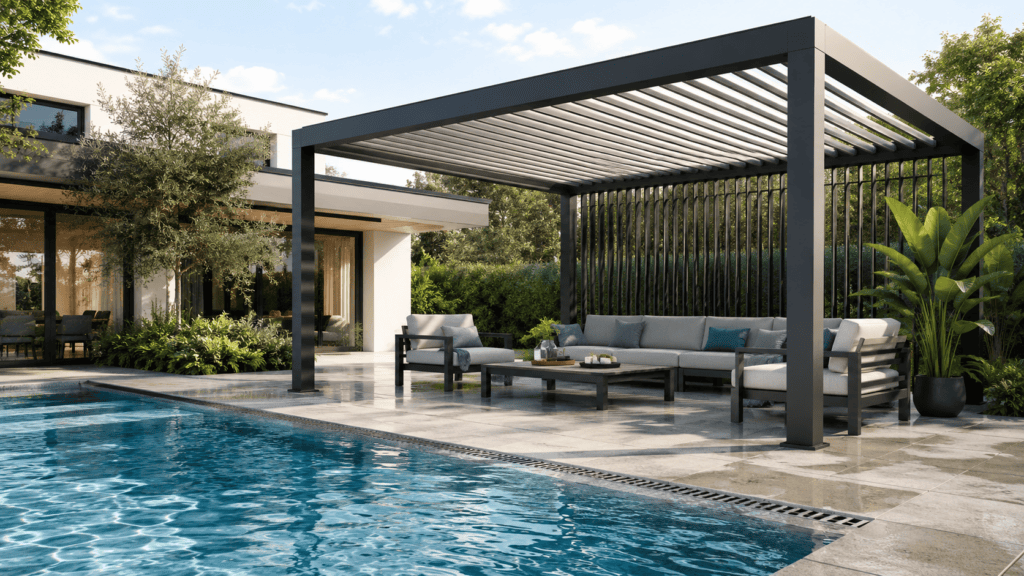
A pergola beside a swimming pool can create one of the most useful areas in an outdoor space. It provides shade for seating, shelter for outdoor dining and a comfortable transition between the pool and the house.
However, poolside pergolas operate in a more demanding environment than standard backyard structures. Regular splashing, wet paving, cleaning chemicals, salt exposure and poor drainage can all affect the pergola over time.
Good planning should therefore consider not only the pergola’s size and appearance, but also how water will move through the area and how the structure will be protected from corrosion.
Water from a swimming pool rarely stays within the pool itself. It may be carried onto nearby surfaces by swimmers, wind, cleaning equipment and overflowing water.
A poolside pergola may be exposed to:
These conditions can accelerate deterioration when unsuitable materials, exposed fixings or poorly drained surfaces are used.
The closer the pergola is to the pool edge, the more carefully splash exposure should be considered.
The pergola should be close enough to provide convenient shade without obstructing access around the pool.
Before confirming its location, consider the primary walking routes between the pool, house, changing areas and outdoor seating. Pergola posts should not create narrow gaps or obstacles in areas frequently used by wet swimmers.
There should also be sufficient space to clean the pool surround and inspect the pergola posts, base plates and drainage points.
Where possible, avoid placing posts directly within areas that remain constantly wet. Even corrosion-resistant materials benefit from being installed where water can drain away quickly.
Local requirements relating to pool barriers and climbable objects must also be checked before installing a pergola near a fenced pool area.
The splash zone is the area surrounding the pool that regularly becomes wet during normal use.
Its size will depend on:
A quiet residential plunge pool may produce relatively little splash, while a resort pool or family swimming area may keep nearby paving wet for much of the day.
Furniture, electrical components, blinds and pergola controls should be positioned with this splash zone in mind.
Motorised blinds can be useful beside pools, but their lower rails should not sit in permanently wet areas or drag across the paving. Electrical connections, motors and lighting should be appropriately rated and installed for the environment.
Poor surface drainage is one of the most common causes of problems around poolside structures.
Water should move away from pergola posts, wall connections and enclosed seating areas. It should not collect around base plates or remain trapped beneath furniture.
The paving or concrete surface should have a controlled fall toward suitable drainage points. Depending on the site, drainage may include:
Drain placement should account for both pool splash and rainwater discharged from the pergola.
A covered area can sometimes create an unexpected low point where water accumulates. This is especially common when a pergola is added after the original pool and paving were completed.
Before installation, check the actual direction of the surface fall rather than assuming the paving slopes away from the house or pool.
A louvred, fixed-roof or retractable pergola can collect a significant amount of rainwater.
That water must be directed somewhere suitable. Many pergola systems use perimeter gutters and internal post drainage, allowing rainwater to travel through selected columns.
The drainage design should confirm:
Allowing water to discharge directly beside the pool may increase surface flooding or wash debris into the pool.
Where a pergola is attached to a building, the junction between the pergola and house should also be carefully detailed. Water should not be allowed to flow behind flashings or toward doors, cladding and internal floor levels.
Aluminium is commonly used for poolside pergolas because it is lightweight, strong and naturally resistant to rust. However, aluminium can still be affected by aggressive environments, particularly when protective coatings are damaged or incompatible metals are placed in direct contact.
A durable poolside pergola should include:
Coastal properties and saltwater pools may require a higher level of corrosion protection than standard inland installations.
The grade and suitability of stainless-steel components should also be confirmed. Stainless steel is corrosion resistant rather than completely corrosion proof, and surface staining can still occur if contaminants and salt deposits are not removed.
Galvanic corrosion can occur when different metals are in contact in the presence of water or salt.
For example, an aluminium structure connected directly to certain steel components without suitable separation may develop localised corrosion around the connection.
Installers may use isolating washers, protective coatings, compatible sealants or other separation methods to reduce this risk.
Cutting, drilling and fastening performed during installation should not compromise the original protective finish. Any exposed areas should be treated using the manufacturer’s recommended repair process.
Pergola posts beside pools are particularly vulnerable because water and chemical residue can collect around their bases.
The installation detail should prevent water from becoming trapped between the post, base plate and paving.
Important considerations include:
A decorative post cover may improve the appearance of the installation, but it should not conceal trapped water or make corrosion difficult to detect.
Posts should be fixed to a suitable structural foundation rather than relying only on pool pavers, tiles or a thin surface topping.
Concentrated pool chemicals can be highly corrosive.
Chemical containers should not be stored against pergola posts or beneath enclosed outdoor seating areas. Spills should be cleaned promptly and according to the chemical manufacturer’s instructions.
Pool equipment should also be positioned so that chemical vapour, salt residue or backwash water is not directed toward the pergola.
Avoid placing chlorinators, pumps or chemical storage cabinets in poorly ventilated areas enclosed by blinds or solid walls.
The pergola itself is only one part of the poolside environment.
Furniture, heaters, kitchens, speakers, fans and lighting must also be selected for regular exposure to moisture.
Outdoor fabrics should dry quickly and resist mould. Metal furniture should have appropriate coatings, while timber furniture may need more frequent maintenance.
Outdoor kitchens should be positioned away from heavy splash zones. Electrical appliances and outlets must be suitable for outdoor use and installed with the required clearances from the pool.
Heating may be useful during cooler evenings, but heaters should be located where wet swimmers cannot accidentally touch them.
Retractable outdoor blinds can help control wind, glare and low-angle sun around a poolside pergola.
However, lowering blinds around a wet area reduces airflow. Moisture can then remain trapped beneath the pergola, particularly when the blinds are closed immediately after swimming or rain.
Allow the area to dry before fully enclosing it. Blinds should also be cleaned regularly to remove salt, chlorine residue and airborne dirt.
The bottom rail should finish above the surface rather than resting on wet paving. Drainage channels and access routes should remain unobstructed when the blinds are lowered.
Routine washing is one of the simplest ways to protect a poolside pergola.
Use fresh water to remove salt, chlorine residue, dirt and other contaminants from:
Coastal locations, saltwater pools and high-use commercial environments may require more frequent cleaning.
Avoid harsh abrasive products that could damage the powder-coated finish. Follow the pergola manufacturer’s cleaning and maintenance instructions.
Gutters and drainage channels should also be checked for leaves, insects and debris. A blocked internal downpipe can cause water to overflow from unexpected points in the pergola.
Periodic inspection helps identify minor issues before they become expensive repairs.
Pay particular attention to:
Any coating damage should be repaired promptly using an approved method. Simply painting over corrosion without cleaning and preparing the surface may conceal rather than solve the problem.
Pergolas beside hotel, holiday-park and resort pools face greater demands than most residential installations.
They may experience continuous daily use, frequent cleaning and a larger splash zone. Furniture layouts may also change regularly, creating additional risks around posts, drainage channels and electrical equipment.
Commercial poolside pergolas should be designed for straightforward cleaning and inspection. Drainage points should remain accessible, and staff should be given clear maintenance instructions.
Materials and finishes should be selected for the actual exposure conditions rather than appearance alone.
It is easy to focus on the visible features of a pergola, such as its louvres, lighting, colour and blinds. However, the long-term performance of a poolside structure often depends on less visible details.
The surface fall, drainage outlets, post foundations, fixings and corrosion protection all influence how well the pergola performs.
By planning for splash, drainage and chemical exposure from the beginning, a poolside pergola can remain comfortable, practical and visually appealing for many years.


