
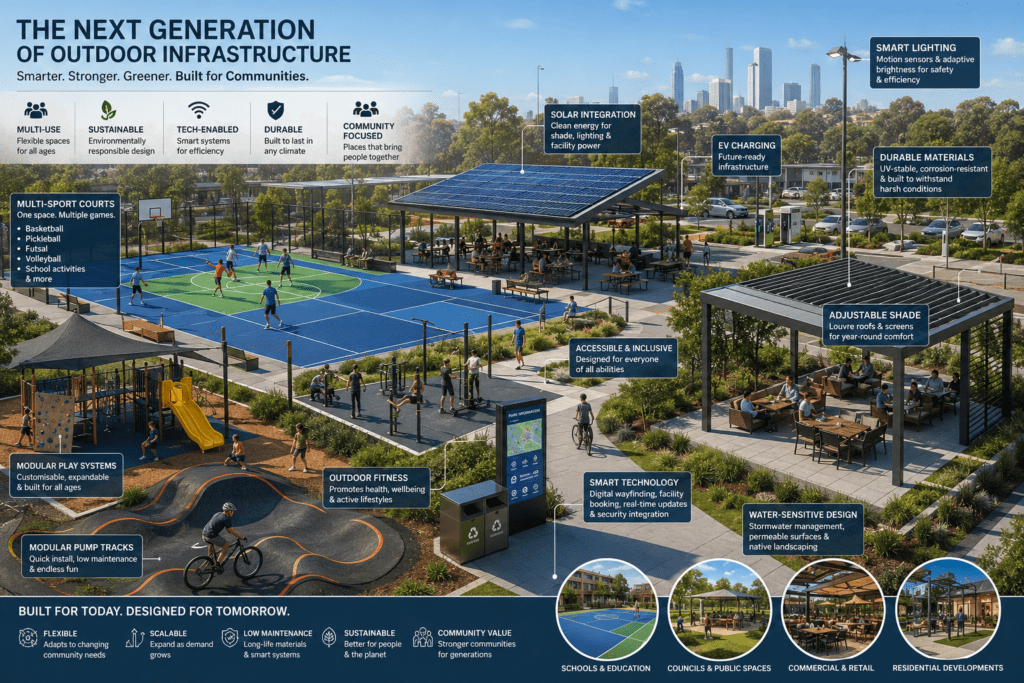
Outdoor infrastructure is undergoing a significant transformation. What was once focused solely on functionality is now being designed to deliver multiple benefits, including recreation, community engagement, sustainability, health, and long-term adaptability.
From parks and sports facilities to public gathering spaces and commercial developments, the next generation of outdoor infrastructure is about creating environments that are smarter, more durable, and capable of serving multiple purposes.
Several trends are reshaping how outdoor spaces are planned and built:
Modern outdoor infrastructure is no longer viewed as a cost. It is increasingly seen as an investment in community outcomes and long-term asset performance.
One of the biggest shifts is the move away from single-purpose facilities.
A basketball court may also function as:
Likewise, parks and recreational areas are increasingly designed to accommodate a range of users and activities rather than serving a single purpose.
This approach maximises land use while delivering greater value to communities.
Traditional construction methods often require lengthy timelines and significant site disruption.
Modern modular systems are changing this.
Examples include:
Benefits include:
As councils and developers seek greater efficiency, modular infrastructure is becoming increasingly attractive.
Technology is becoming an integral part of outdoor infrastructure.
Future facilities may include:
These technologies help reduce operating costs while improving user experiences.
Climate change is forcing designers to think differently.
Infrastructure must withstand:
This has accelerated demand for:
Future infrastructure is being designed not only for today's conditions but for decades of changing weather patterns.
Communities increasingly recognise the connection between outdoor environments and wellbeing.
New infrastructure projects often incorporate:
These elements encourage physical activity while helping create stronger communities.
Environmental performance is becoming a key consideration in project design.
Modern infrastructure projects increasingly utilise:
Durability is now viewed as a sustainability feature because longer-lasting infrastructure reduces replacement cycles and resource consumption.
As outdoor spaces become more heavily used, demand for effective shelter solutions continues to grow.
Modern structures now offer:
These systems allow outdoor spaces to remain functional throughout the year rather than being limited by weather conditions.
The growth of sports such as pickleball, 3x3 basketball, futsal, and multi-sport recreation is driving innovation.
Emerging trends include:
These technologies make it easier for schools, councils, and private developments to create recreational opportunities without major construction projects.
Perhaps the most important characteristic of next-generation outdoor infrastructure is adaptability.
Facilities built today must be capable of evolving alongside community needs.
The most successful projects are designed to:
Infrastructure is no longer just about building something that works today. It is about creating spaces that remain useful, relevant, and valuable for decades to come.
The next generation of outdoor infrastructure is defined by flexibility, resilience, sustainability, and community value. Whether it is a sports court, public park, recreational facility, or commercial outdoor space, modern infrastructure is increasingly designed to serve more people, support more activities, and adapt to future challenges.
As communities continue to invest in outdoor environments, the focus will increasingly shift from simply building spaces to creating connected, multi-functional destinations that enhance how people live, work, play, and interact.


