The Wind-Proof Patio: A Guide to Outdoor Blinds That Won't Fly South

April 15, 2026
Spread the love

Creating a functional outdoor living space is a priority for homeowners across New Zealand and the Pacific. However, the geographic reality of these regions means that wind is a constant factor. Whether it’s a coastal breeze or a localized gust through a valley, wind is the single most common cause of damage to outdoor shading systems.

When an outdoor blind is installed without considering wind dynamics, it effectively becomes a sail. This article provides a technical guide to selecting, installing, and maintaining outdoor blinds that are engineered to stay put, even when the weather turns.

The Physics of Failure: Why Standard Blinds Fail

The primary reason outdoor blinds fail in high-wind areas is the sail effect. A standard, free-hanging blind: even one with a weighted bottom bar: is only secured at the top. When wind hits the fabric, the surface area acts as a catchment. A 3-meter wide blind under a 40km/h wind can experience hundreds of kilograms of pressure.

If the blind is not locked into a track system, this pressure leads to several failure points:

  • Fabric Whipping: The material flaps violently, leading to fraying and structural fatigue.
  • Hardware Stress: The constant tugging can pull mounting brackets out of the soffit or wall.
  • Noise Pollution: The sound of metal bottom bars banging against posts is not only annoying but indicates mechanical damage.

To avoid these issues, homeowners must move away from "bungy-cord" or "crank-style" hanging blinds and toward integrated track systems.

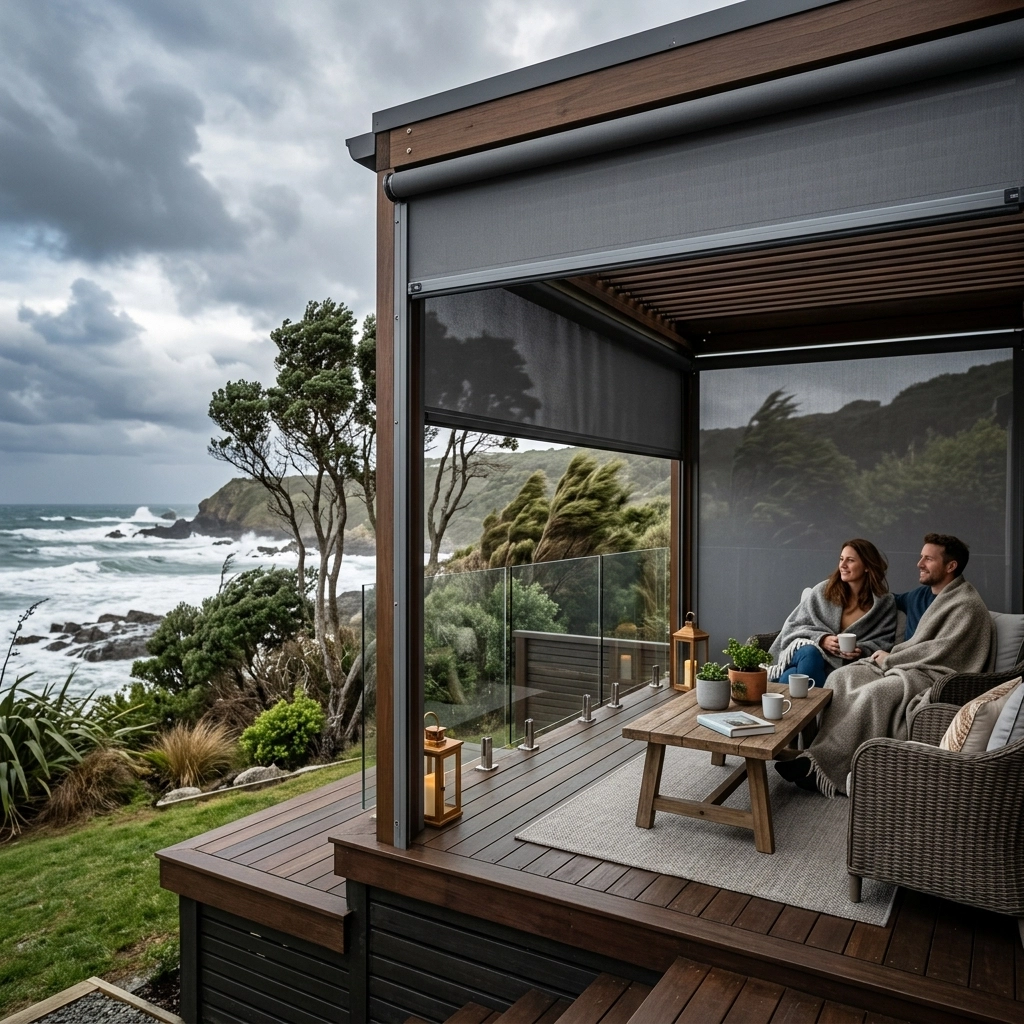
Tensioned wind-proof outdoor blinds providing stability on a stormy coastal patio.

The Gold Standard: Tracked Systems and Fabric Retention

For a patio to be truly wind-proof, the fabric must be tensioned and secured on all four sides. This is achieved through tracked systems, often referred to as "zip" or "side-channel" technology.

How Tracked Systems Work

Instead of the fabric hanging loose, it is welded to a specialized core or "zip" that slides inside a vertical side track. This creates a complete seal between the blind and the structural posts of your patio or pergola.

  • Pressure Distribution: By locking the fabric into the tracks, wind pressure is distributed evenly along the entire vertical edge of the blind rather than being concentrated on the top mounting points.
  • Weather Sealing: Because there are no gaps on the sides, these systems also stop rain and insects from entering the space, effectively creating an outdoor room.
  • Smooth Operation: High-quality tracked systems utilize spring-loaded or motorized mechanisms that keep the fabric taut at any height.

When evaluating these systems, ensure the tracks are made from powder-coated extruded aluminium. Plastic or thin-gauge metal tracks will warp under heat or buckle under wind load.

Material Matters: Mesh vs. PVC

The choice of fabric is the next critical decision. In high-wind areas, the debate usually settles between high-visibility mesh and solid PVC.

1. High-Visibility Mesh (The "Breathing" Option)

Mesh fabrics are woven with small perforations. This is the preferred choice for wind-prone areas for several reasons:

  • Wind Permeability: Small amounts of air can pass through the mesh, reducing the total pressure on the system.
  • Heat Regulation: Mesh allows for air exchange, preventing the "greenhouse effect" that can occur with solid plastic covers.
  • Visual Clarity: Premium mesh provides up to 95% UV protection while maintaining your view of the garden or coastline.

2. Clear or Tinted PVC (The "Total Barrier" Option)

PVC is completely airtight. While it provides a crystal-clear view and total protection from rain, it also bears the full brunt of the wind.

  • The Draft Factor: If you use PVC in a high-wind area, the tracked system must be rated for higher wind loads because the blind will not "leak" any air pressure.
  • Expansion and Contraction: PVC is more susceptible to temperature changes, meaning it can sag in the heat or tighten in the cold.

For most modern residential applications, a 95% or 99% block-out mesh is the superior choice for durability and comfort. You can find specialized outdoor solutions in the outdoor sports and leisure categories that utilize these heavy-duty materials.

Engineering for Durability: Hardware Specifications

Beyond the tracks and the fabric, the "hidden" components of the blind system determine its lifespan. In a wind tunnel environment, the following hardware specs are mandatory:

  • Reinforced Bottom Bars: The bottom rail should be heavy enough to assist in tensioning but rigid enough not to flex. Look for internal steel or heavy-gauge aluminium reinforcement.
  • Marine-Grade Fixings: In coastal NZ and the Pacific, salt spray will corrode standard screws in months.
  • Locking Mechanisms: In extremely high winds, some systems allow you to lock the bottom bar into the floor or side tracks, providing an extra layer of security.

The Wholesale Advantage: High Quality Without the Markup

One of the biggest hurdles for homeowners is the cost of premium wind-rated systems. Traditional retail models involve multiple middlemen, each adding a margin to the product.

Choosing a supply-only wholesale model allows homeowners and developers to access professional-grade hardware at a fraction of the cost. This is particularly beneficial for those building louvre pergola systems or large-scale outdoor enclosures where the cost of multiple blinds can quickly escalate.

Maintenance in Harsh Environments

Even the most robust wind-proof patio system requires upkeep to survive the elements. Wind carries dust, salt, and debris that can act as an abrasive in your blind tracks.

  1. Track Lubrication: Use a dry silicone spray in the side tracks every 3–6 months. Avoid oil-based lubricants, as they attract dust and will eventually gum up the mechanism.
  2. Fabric Cleaning: Hose down the mesh or PVC regularly to remove salt crystals. Salt buildup can become "welded" into the weave of mesh fabric, making it brittle over time.
  3. Regular Inspection: After a significant wind event, inspect the top mounting brackets. If there is any movement or "play" in the fixings, tighten them immediately to prevent the holes from enlarging.
  4. The "Retraction" Rule: While tracked systems are wind-resistant, they are not wind-proof under "gale-force" conditions (typically 80km/h+). If a storm is forecasted, it is always best practice to retract the blinds into their protective headbox.

Planning Your Wind-Proof Space

Before purchasing, conduct a site audit. Note the direction of the prevailing wind. If your patio faces the southwest, your blinds will need to be the highest spec available.

If you are also considering overhead protection, ensure your blinds are compatible with your roofing system. For example, integrating blinds with aluminium louvre systems creates a unified structural envelope that can be significantly more wind-resistant than a standalone awning or umbrella.

Modern louvre roof system integrated with tracked outdoor blinds for a wind-resistant patio.

Summary of Key Takeaways

  • Select Tracked Systems: Never use free-hanging blinds in high-wind zones; look for side-channel "zip" technology.
  • Prioritize Mesh: Use breathable mesh fabrics to reduce wind pressure while maintaining UV protection and views.
  • Use Marine-Grade Hardware: Ensure all fixings are 316 stainless steel to prevent corrosion in salt-air environments.
  • Consider Wholesale: Opt for supply-only models to access professional-grade durability without the retail price tag.
  • Regular Maintenance: Clean tracks and lubricate with silicone spray to ensure long-term operational smoothnes.

By focusing on structural tension and material permeability, you can transform a wind-swept deck into a calm, usable outdoor room that adds genuine value and comfort to your home.

Return to insights

Charities We Support

cart
Scale your business : 30 day growth accelerator guide. How to plan optimized routes for window cleaning docs. Dtf transfers zijn de meest gebruikte vorm van dtf printen en worden vaak gekozen voor textieldruk.