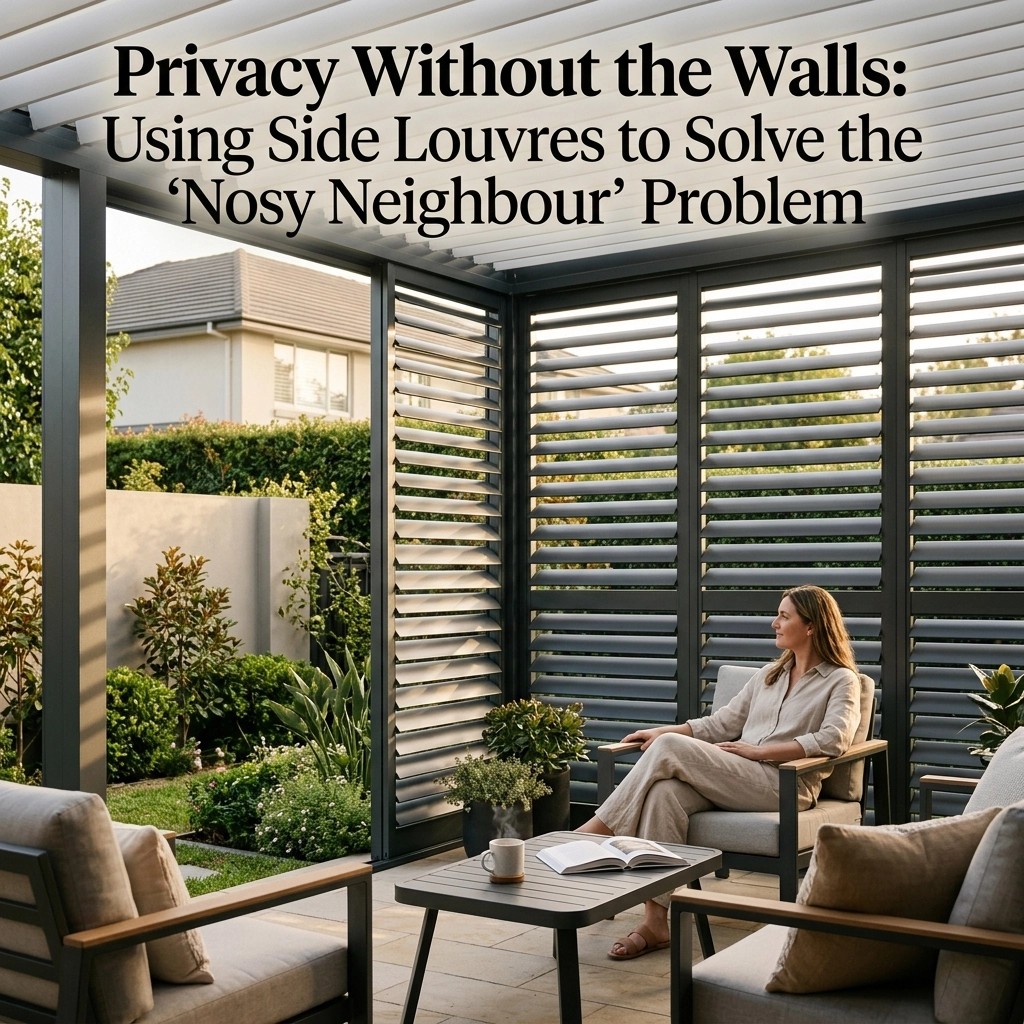
Privacy Without the Walls: Using Side Louvres to Solve the "Nosy Neighbour" Problem
April 9, 2026
Spread the love
As residential sections in New Zealand become increasingly compact, the challenge of maintaining privacy in outdoor living spaces has intensified. Homeowners and renovators are frequently faced with a difficult choice: leave the deck or patio exposed to the prying eyes of neighbors, or erect a solid wall that sacrifices airflow, light, and aesthetic appeal.
The traditional solution: a tall timber fence or a solid masonry wall: often creates a "boxed-in" sensation. These structures can make a small courtyard feel like a cell and a large deck feel disconnected from the surrounding landscape. Side louvres and vertical privacy screens offer a sophisticated alternative, providing visual security while maintaining the structural openness that defines modern architecture.
The Problem with "Solid" Solutions
While a solid wall provides 100% privacy, it also brings several structural and environmental disadvantages that can degrade the quality of an outdoor space:
Air Stagnation: Solid walls block the natural movement of air. On a hot summer afternoon, a walled-in deck can become a heat trap, making the space uncomfortable despite being outdoors.
Light Deprivation: Depending on the orientation of the property, a tall wall can cast long, oppressive shadows over the living area for most of the day.
The "Fortress" Aesthetic: From both the inside and the outside, a solid wall can look defensive and bulky, often clashing with the sleek lines of a modern home.
Acoustic Reflection: Solid surfaces tend to reflect sound. Conversations within a walled area can echo, and street noise from the other side can be amplified as it "bounces" over the top.
By contrast, louvre systems are engineered to mitigate these issues through aerodynamic design and light diffusion.
Vertical Louvres: Why Direction Matters
When homeowners think of louvres, they often envision horizontal blades. However, for privacy purposes, vertical louvres are frequently the superior choice.
Vertical systems align with the human field of vision and the way we move through a space. From a design perspective, vertical lines create an illusion of height, which can make a small terrace feel more expansive. From a functional perspective, vertical blades are highly effective at blocking sightlines from specific angles: such as a neighbor’s second-story window or a side-path: without completely closing off the view to the horizon.
The Science of Sightlines
The effectiveness of a louvre system lies in its blade profile. Modern engineering has moved beyond simple flat slats to specialized shapes designed specifically for privacy:
Inverted Chevron Profiles: These blades are shaped like a "V" or a "Λ". They are positioned so that the peaks overlap. This allows air to flow through the "gap" in the middle, but prevents a direct line of sight from any angle.
Inverted Y-Blades: Similar to the chevron, these blades provide a deep overlap. They are often used in high-traffic areas where total visual occlusion is required without sacrificing ventilation.
Adjustable Blade Technology: Systems, such as those found in the Cerberus Plus series, allow the user to rotate the blades. By adjusting the angle,you can follow the sun throughout the day.
Achieving Seclusion Without Claustrophobia
The primary psychological benefit of using louvres for privacy is the feeling of "transparency." Even when the blades are angled to block a neighbor’s view, the inhabitant of the space can still perceive the movement of light and air. This prevents the "boxed-in" feeling associated with traditional fencing.
Key Benefits of Louvre Privacy Screens:
✔️ Maintained Airflow: Louvres allow prevailing breezes to pass through, keeping the outdoor area cool and fresh.
✔️ Filtered Light: Instead of a harsh shadow, louvres create a soft, diffused light, which is ideal for reading or dining.
✔️ Variable Privacy: With manual or motorized options, you can choose exactly how much of the world you want to let in at any given moment.
✔️ Architectural Value: A well-integrated louvre system, such as premium vertical systems, adds a level of sophistication that increases the resale value of the property.
Integrating Side Louvres into Existing Structures
For those undergoing a renovation, side louvres can be retrofitted to existing pergolas or decks. However, the most seamless results are achieved when the privacy screens are integrated into a comprehensive system from the outset.
Many modern homeowners are opting for kitset systems that combine overhead weather protection with side privacy panels. This "all-in-one" approach ensures that the materials, powder-coat colors, and structural tolerances are consistent across the entire installation.
Strategic Placement Tips:
Identify the "Hot Zones": Walk around your outdoor area and note exactly where the neighbors' sightlines are most intrusive. You may only need louvres on one or two sides, leaving other sections open to views of your garden or the landscape.
Consider Sun Tracking: In the Southern Hemisphere, a north-facing privacy screen will also act as a sunshade. If you want to keep the warmth in winter, ensure you choose a system with adjustable blades.
Aesthetic Continuity: Match the blade finish to your joinery. Most systems are available in high-grade aluminum with durable powder-coating in standard architectural colors like Slate Grey, Black, or Arctic White.
Materiality and Longevity
In the harsh New Zealand climate: characterized by high UV levels and coastal salt spray: material choice is paramount. Timber screens, while beautiful initially, are prone to warping, fading, and rotting over time, which eventually creates gaps that compromise privacy.
Aluminum is the industry standard for louvre systems for several technical reasons:
Structural Rigidity: Aluminum blades maintain their shape over long spans, ensuring the privacy gaps remain consistent for decades.
Corrosion Resistance: When treated with the correct powder-coating, aluminum is impervious to rust, making it ideal for properties near the coast.
Low Maintenance: Unlike timber, which requires annual staining or painting, aluminum louvres simply require an occasional wash with soapy water to maintain their appearance.
For those looking for a permanent, "set and forget" solution, fixed deco panels offer a sleek look with zero moving parts, providing a consistent architectural rhythm to the home’s exterior.
Beyond Privacy: The Multi-Functional Screen
While solving the "nosy neighbor" problem is the primary driver, side louvres offer several secondary benefits that improve the utility of an outdoor room:
Wind Mitigation: A louvre screen breaks up the force of the wind. Instead of the "swirling" effect caused by a solid wall, louvres filter the wind, turning a gusty afternoon into a gentle breeze.
Acoustic Buffering: By breaking up sound waves, louvres can provide a slight reduction in ambient neighborhood noise, such as lawnmowers or distant traffic.
Extended Growing Seasons: The microclimate created by a partially enclosed louvre system can protect sensitive potted plants from frost and direct wind damage.
For homeowners who want to go a step further, integrating sliding glass doors alongside louvre panels can create a truly multi-seasonal room that can be fully enclosed during a storm or opened up during a summer BBQ.
Implementation Checklist for Homeowners
If you are planning to install side louvres to solve a privacy issue, follow these steps to ensure a successful outcome:
Check Local Bylaws: Ensure your proposed screen height complies with local council regulations regarding boundary fences and "sight-line" obstructions for traffic.
Specify Blade Orientation: Decide between vertical (best for side-to-side privacy) or horizontal (best for overhead privacy from multi-story buildings).
Determine Operation Mode: Decide if you need the flexibility of motorized blades or if a fixed panel will suffice for your specific needs.
Select a Heavy-Duty System: For areas prone to high winds, ensure the system has a high wind rating, such as those in the Cerberus Plus series.
Coordinate with Outdoor Living: If you plan on adding elements like a wood-fired pizza oven or a grill, ensure the louvres are positioned to allow smoke to escape while still providing the necessary privacy.
The New Standard of Seclusion
The "nosy neighbor" problem is a reality of modern urban living, but it doesn't have to dictate the design of your home. By moving away from the "fortress mentality" of solid walls and embracing the technical advantages of side louvres, you can create an outdoor sanctuary that feels both private and limitless.
Whether you choose a motorized vertical system or a series of fixed architectural panels, the result is the same: a space that breathes, invites light, and: most importantly: belongs entirely to you.