
The hospitality landscape is shifting. Gone are the days when a simple bar stool and a draft beer were enough to anchor a Friday night crowd. Today’s consumers: particularly the lucrative millennial and Gen Z demographics: are trading passive consumption for active engagement. They want experiences, they want movement, and they want social interaction that goes beyond a smartphone screen.
Enter pickleball. What started as a niche sport for retirees has exploded into a global phenomenon, and hospitality venues are the primary beneficiaries. From boutique breweries in Auckland to massive resorts in Fiji, the "Pickleball Bar" model is the new benchmark for high-ROI commercial design.
The concept of "eatertainment": combining food and beverage with activity: isn't new. Bowling alleys and golf simulators have paved the way for years. However, pickleball offers a unique set of advantages that other sports cannot match. It is low-impact, incredibly easy to learn, and inherently social.
Unlike tennis, which requires significant skill and space, or golf, which takes hours to complete, a pickleball match is fast-paced and inclusive. This accessibility is what transforms a standard venue into a high-traffic social hub. When you add pickleball courts to a hospitality venue, you aren't just adding a sport; you are adding a reason for people to stay, play, and spend.
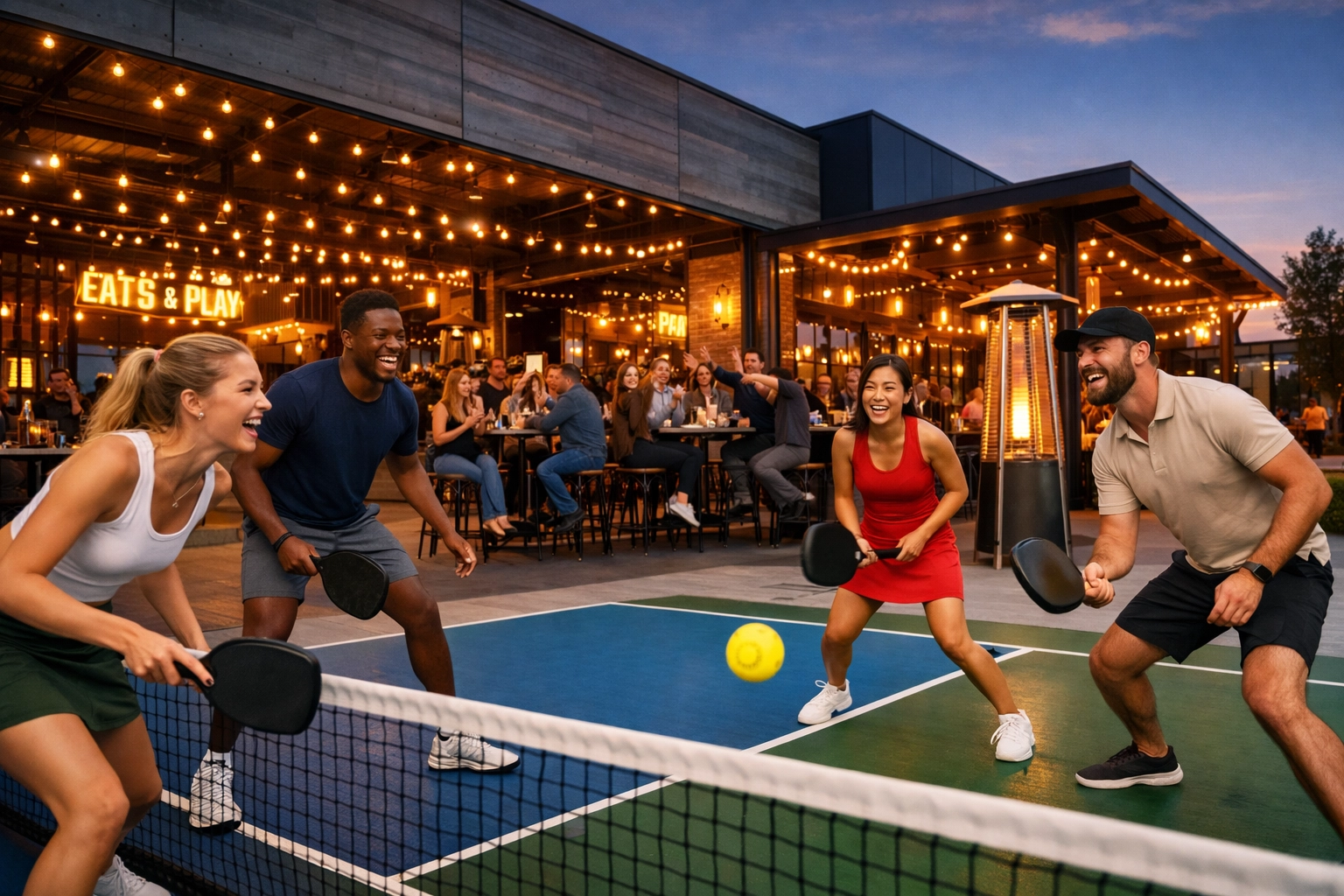
The "addictive" nature of pickleball is a phrase often used by venue owners. Because the learning curve is so shallow, new players experience immediate success, leading to high retention rates. For a hospitality manager, this translates to:
While charging for court hire is a valid revenue stream, the real financial power of a pickleball bar lies in the secondary spend. The court acts as the "anchor tenant" of your facility, driving traffic that fuels the rest of your business.
In a standard restaurant or bar, "churn and burn" is often the goal. However, in an integrated sports venue, the goal is to keep the customer on-site for as long as possible. A typical group will arrive 20 minutes before their court time for a drink, play for an hour, and then spend another 60 to 90 minutes post-match having a meal and more drinks. This doubles or triples the average dwell time compared to a traditional venue.
Pickleball is a social sport, and social sports drive thirst. Craft beer, cocktails, and "shareable" food platters are the perfect accompaniment to the game. Global benchmarks like Chicken N Pickle in the United States have demonstrated that the majority of their revenue comes from food and beverage, not court rentals. The courts are the lure; the hospitality is the hook.
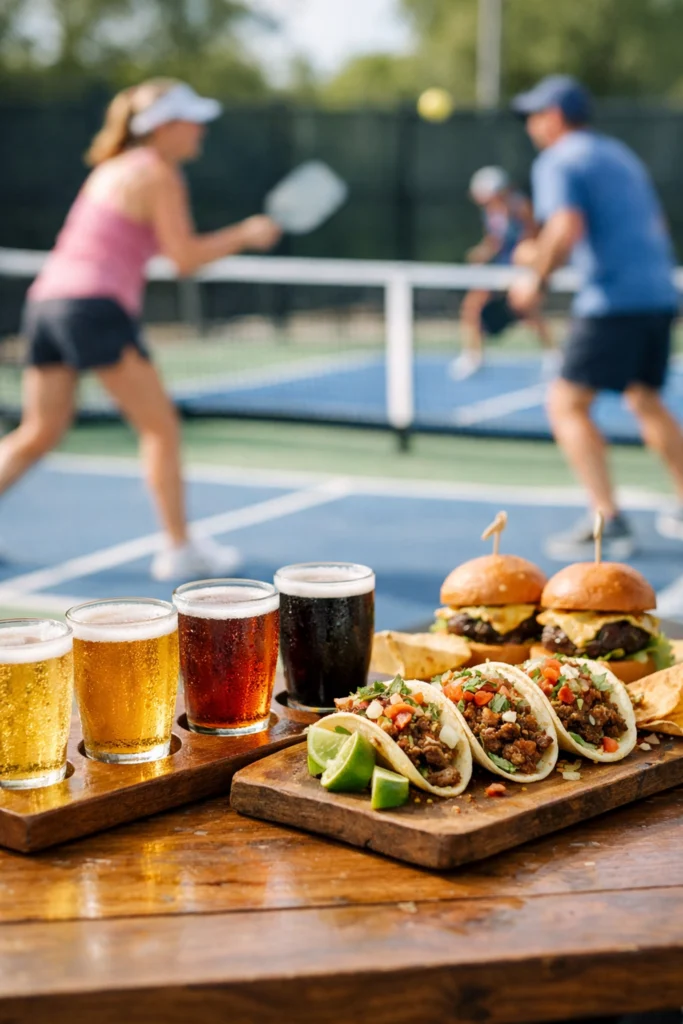
Pickleball courts are goldmines for corporate team-building. They offer a structured activity that doesn't require guests to be athletes. By offering "Pickleball & Prosecco" packages or "Corporate Challenge" events, venues can fill off-peak hours (like Monday or Tuesday afternoons) with high-value group bookings.
One of the biggest misconceptions for venue owners is that installing a court requires a massive civil engineering project. Modern modular systems have changed the game, making it possible to convert underutilized car parks or warehouse spaces into professional-grade courts in a matter of days.
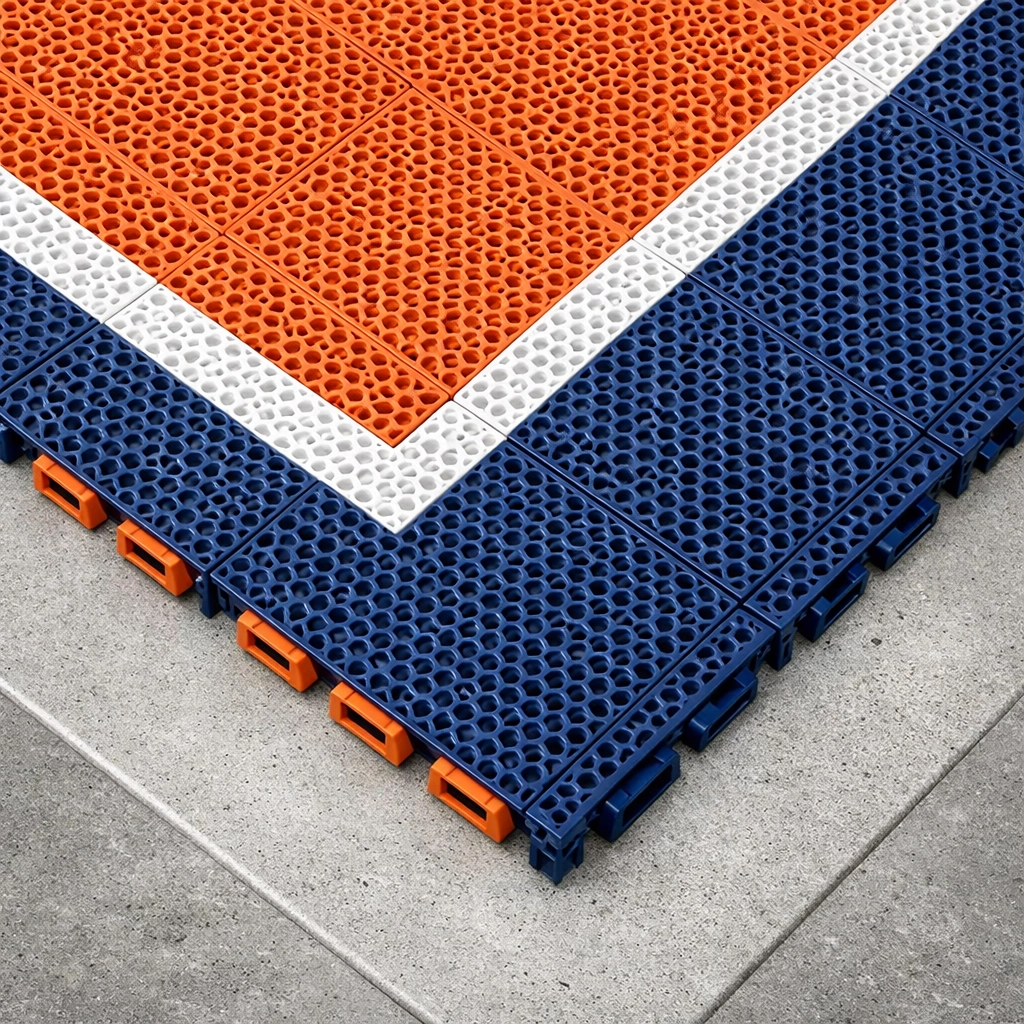
For many venues, PP (polypropylene) interlocking tiles are the gold standard. These tiles are designed for rapid deployment and high performance.
For those looking at similar multi-sport upgrades, the technology used in 3x3 basketball courts is very similar, emphasizing the versatility of modular flooring.
For indoor venues or luxury resorts looking for a more "permanent" look and feel, PickleSand rolls offer a professional surface with consistent ball bounce and excellent traction. These are often preferred in high-end club environments where aesthetics and professional-grade performance are non-negotiable.
The New Zealand and Pacific markets are perfectly positioned for the pickleball bar explosion. Our culture is deeply rooted in outdoor living and social sports, yet many venues still rely on outdated models.
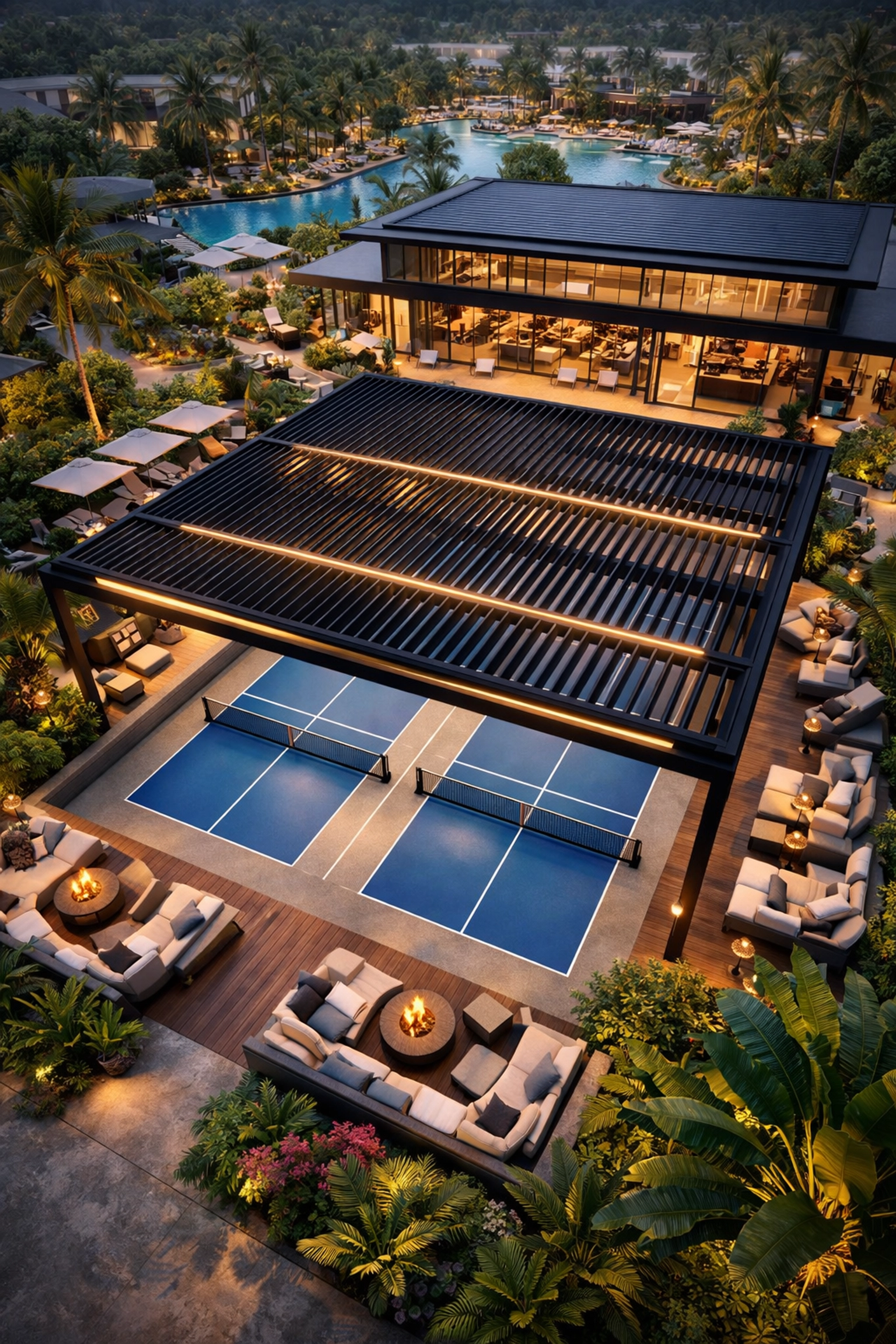
In New Zealand, where the weather can be unpredictable, integrating courts with all-weather outdoor structures is essential. By combining a modular court with a louvre system or frame extension, you ensure that your revenue stream doesn't stop when the rain starts. This is particularly vital for Pacific Island venues, where high UV and tropical rain require durable, resilient materials.
For resorts in Fiji, Vanuatu, or the Cook Islands, pickleball is an easy win. It requires less space than a tennis court and appeals to the growing segment of "active travelers." Modern commercial hubs in the islands, such as the Vuvale Plaza in Nadi, show how premium design and activity-based social spaces can revitalize a local economy.
If you are considering integrating pickleball, don't just "paint lines on concrete." To maximize ROI, you must treat the court as a part of the architectural flow of the venue.
Looking at global success stories provides a roadmap for local venues. Facilities like St. Pete Athletic in Florida are moving toward 45,000-square-foot mega-venues that feature 14+ courts alongside saunas, fitness amenities, and gourmet dining. They aren't just selling sport; they are selling a lifestyle.
While you don't need 14 courts to be successful, the principle remains: Pickleball is the anchor, but hospitality is the engine. Even a single court added to a brewery courtyard can change the dynamic of the venue, attracting groups that would otherwise have gone elsewhere.
Investing in pickleball is more than a sporting decision: it is a strategic commercial move. By creating a space where "active engagement" meets high-quality hospitality, venues can secure a long-term competitive advantage.
✅ High Dwell Time: Keeps customers on-site for 2-3 hours on average.
✅ New Revenue Streams: Court hire, equipment rental, and corporate events.
✅ Inclusive Appeal: Attracts all ages and skill levels, broadening the customer base.
✅ Modular Installation: Quick to deploy with systems like PP tiles or PickleSand.
✅ Climate Ready: Easily integrated with louvres and blinds for year-round use in NZ and the Pacific.
The "rush to the court" is well underway. For hospitality venues looking to future-proof their business, the question isn't whether to add pickleball: it's how quickly they can get the first game started.


