
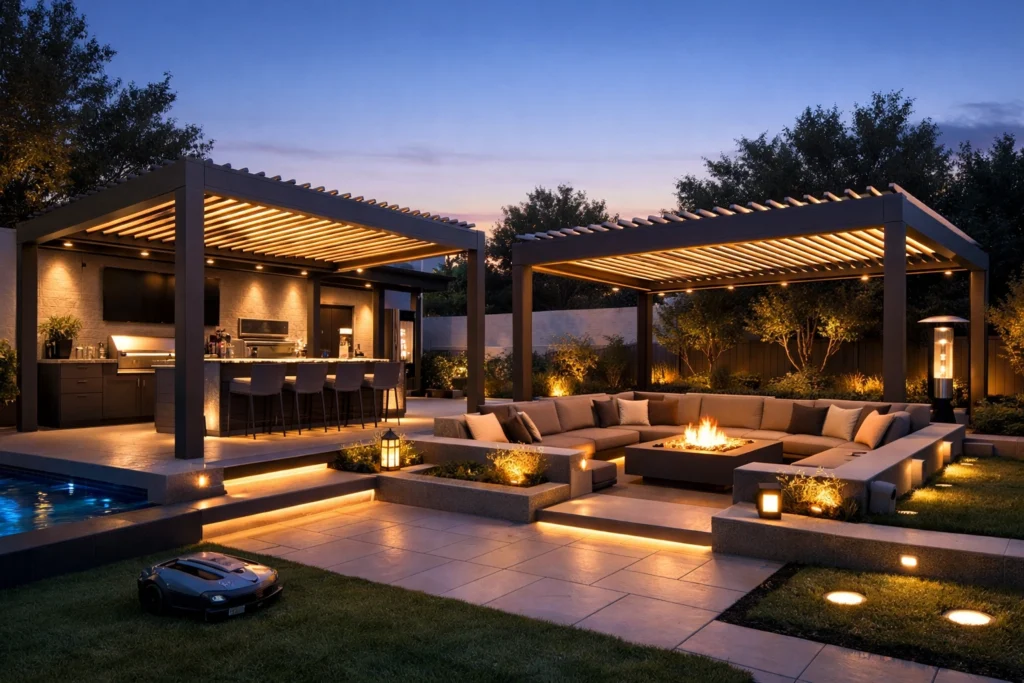
It is April 2026. If you’re standing on your deck right now, looking at a basic wooden pergola or a fixed-roof patio, you’re looking at a relic. Over the last two years, the New Zealand outdoor living market has shifted. We’ve moved past the era of "disposable" flat-packs and the "over-engineered" bespoke systems that cost as much as a small SUV.
The middle ground has won. DIY louvre kitsets have become the gold standard for Kiwis who want high-end architectural aesthetics without the boutique price tag. But as we look toward 2027 and beyond, the question isn’t just about how we shade our decks, it’s about how our decks start thinking for themselves.
The future of aluminum louvres is smart, sustainable, and surprisingly modular. Here is what is coming to a backyard near you.
We’ve had rain sensors for a while, but they were binary, on or off. If a drop hit the sensor, the roof closed. In 2027, the "thinking" louvre system takes over.
Next-generation louvre systems are being integrated with AI-driven weather forecasting. Instead of waiting for the first drop of rain to hit, your roof will communicate with local meteorological data. If a southerly blast is ten minutes away from hitting your Wellington suburb, the louvres will automatically tilt to a "wind-buffering" angle to protect your furniture before the first gust arrives.
Key innovations include:
For a long time, louvres were purely passive. They provided shade, and that was it. The next big leap in aluminum louvres involves turning every individual blade into a power plant.
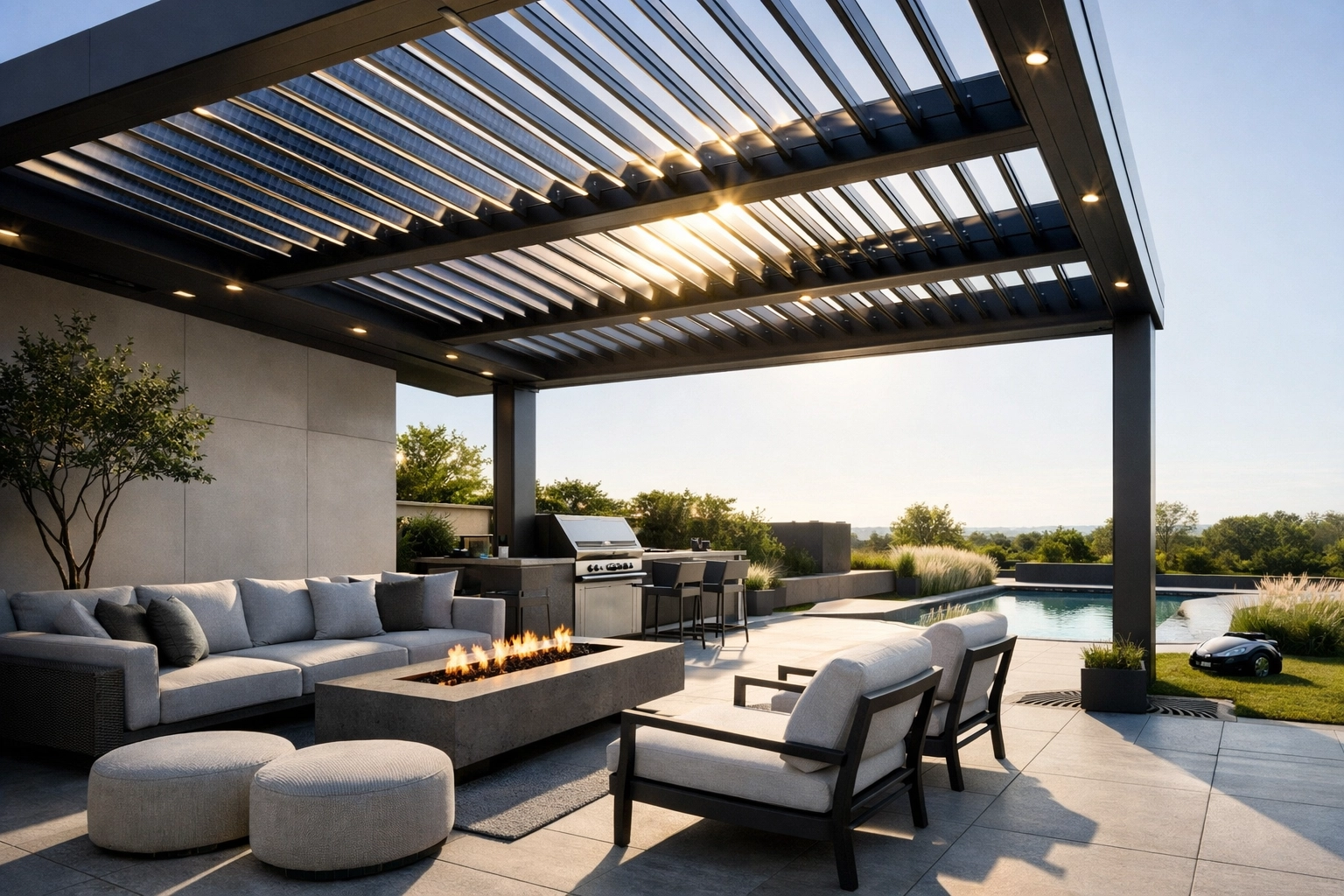
Solar-integrated blades are the future of energy independence in the backyard. By embedding thin-film photovoltaic cells directly onto the top surface of the louvre, the system can harvest energy throughout the day. This isn't about powering your whole house (yet), but it is about making your outdoor room entirely self-sufficient.
Imagine a DIY louvre kitset that generates enough power to run its own motor, charge your outdoor lighting, and power your laptop while you work from the "garden office." It’s clean, it’s invisible, and it cuts the cord on expensive electrical installations. This is particularly relevant as more people look for simpler outdoor systems that don't require a team of electricians to set up.
Let’s be honest: no one buys a louvre system because they want a new hobby involving a ladder and a bucket of soapy water. Maintenance is the enemy of relaxation.
The future of mid-range louvre systems involves high-tech surface science. We are seeing the introduction of "hydrophobic nanocoatings" applied during the powder-coating process. These coatings work at a molecular level to repel water, dirt, and organic growth.
When it rains, instead of the water sitting on the blades and creating streaks, it beads up and rolls off, taking dust and debris with it. For those living near the coast, these coatings are a game-changer for salt-spray resistance. It turns your "outdoor chore" into a "once-a-year-rinse" reality.
The biggest frustration for homeowners has traditionally been the "all or nothing" nature of outdoor renovations. You either bought the basic frame or the full-featured suite.
The 2027 model is moving toward a modular, "LEGO-style" ecosystem. The future belongs to the DIY louver kit that allows for future-proofing. You start with a high-quality manual frame. Six months later, you clip in a motorization kit. Next summer, you slide in some integrated outdoor blinds to block the wind.
This modularity includes:
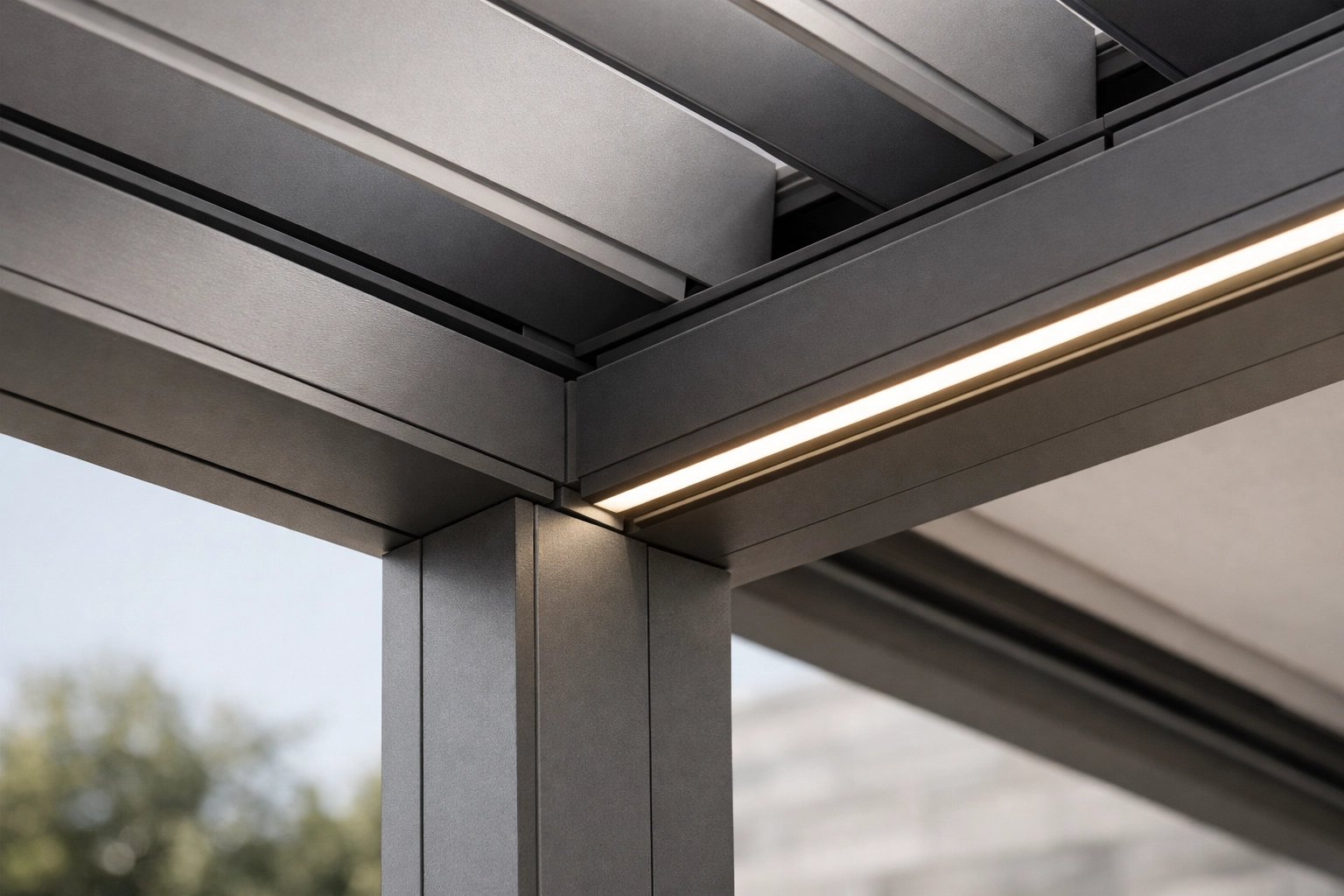
As we move deeper into the 2020s, sustainability isn't just a buzzword; it’s a building requirement. The future of aluminum louvres lies in "Circular Aluminum", systems made from 75% or more post-consumer recycled material that requires 95% less energy to produce than primary aluminum.
But "recycled" doesn't mean "weak." Innovations in alloy blending mean these new-age kitsets are actually more durable than the heavy, clunky systems of the past. They are designed to withstand the "Typhoon 12" conditions that are becoming more frequent in the Pacific. We are seeing a move toward PS1 certified structural designs that prove you don't need a massive, ugly beam to handle a massive, ugly storm.
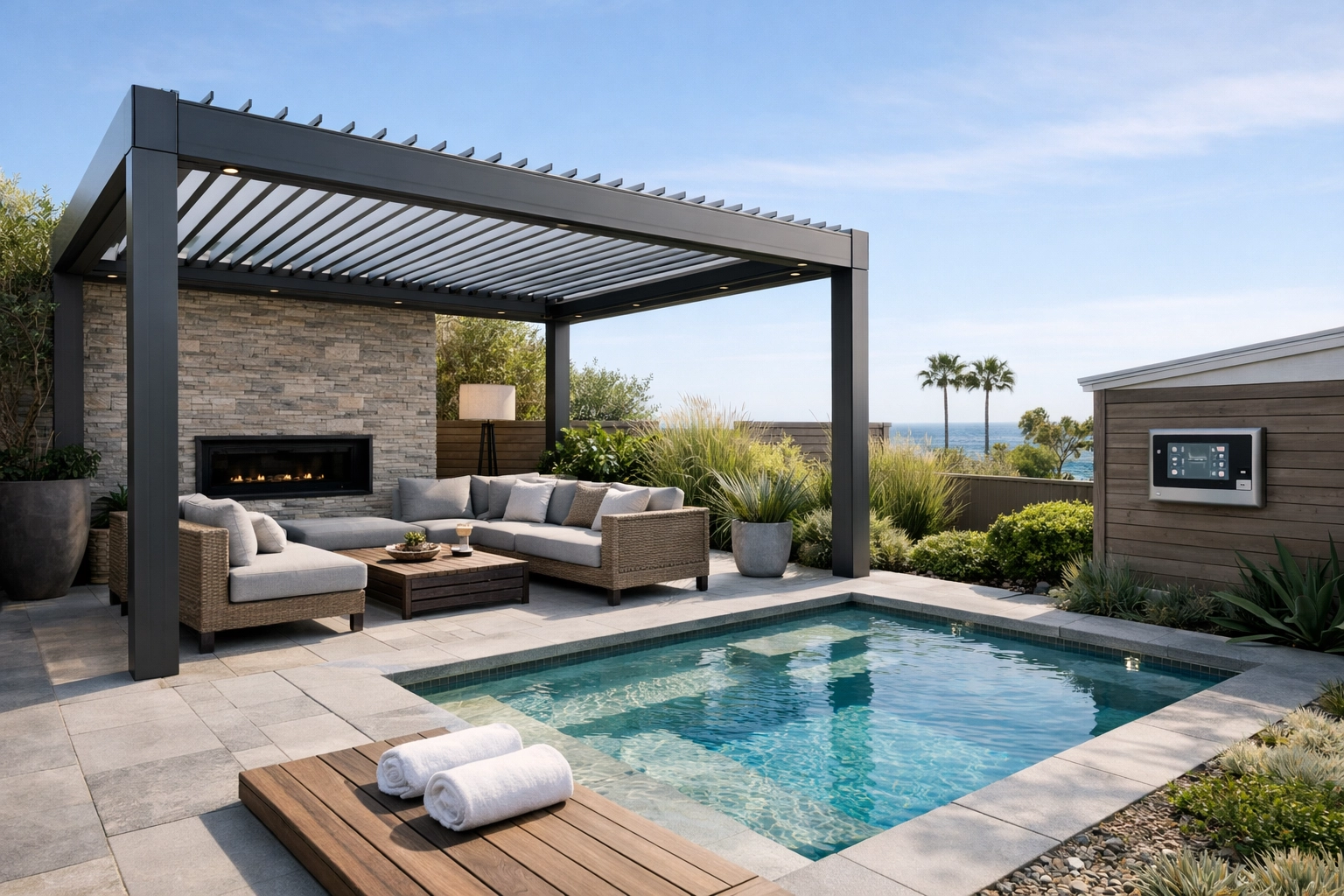
The shift in the market is clear: Kiwis are ditching the extremes. They aren't buying the cheap, flimsy kits that rust in three years, and they are moving away from the $50k custom builds that take six months to permit and install.
The smart money is on mid-range systems that prioritize longevity and performance. If you are planning an install this year, the most important thing you can do is look at the "Upgrade Path." Even if you don't want the AI sensors and the solar blades today, ensure the system you buy has the internal capacity to house them tomorrow.
Check the fixings, are they 304 or 316 stainless steel? Does the frame have internal tracks for wiring? If the answer is yes, you aren't just buying a shade structure; you're buying a piece of technology that will grow with your home.
As we look forward, the "perfect" outdoor setup is defined by three things: Autonomy, Adaptability, and Aesthetics.
The future of the New Zealand backyard isn't about adding more "stuff": it's about adding smarter systems that let us do less work and more living. Whether it's a city balcony or a sprawling rural deck, the next generation of louvres is ready to work for you.


