
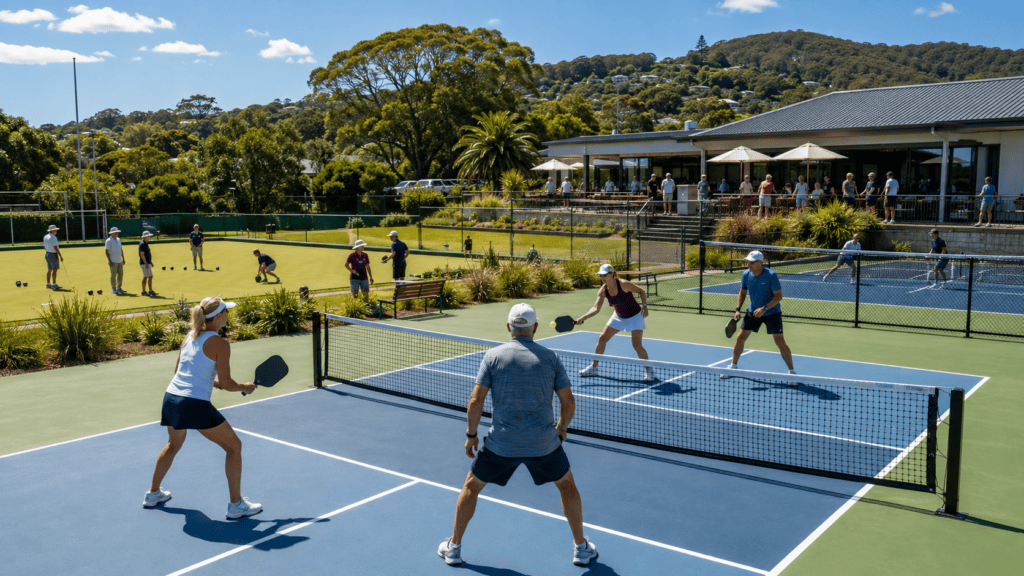
Pickleball is no longer a small overseas trend. It has become one of the fastest-growing participation sports globally, and its momentum is now being seen across New Zealand. Pickleball New Zealand has been officially accredited by Sport NZ, with Pickleball New Zealand Association recognised as the national governing body for the sport in Aotearoa New Zealand. This is a major step for the sport’s long-term growth, club pathways and community participation.
For tennis and bowls clubs, this creates a clear opportunity. Many clubs already have the land, parking, clubrooms, lighting, changing facilities and community base needed to support pickleball. Adding pickleball is not about replacing existing sports. It is about making better use of facilities, attracting new members and creating more activity across the week.
For clubs with ageing memberships or underused facilities, pickleball offers a practical way to bring in new people, increase revenue and make better use of existing space.
One of the biggest advantages is space efficiency. A regulation pickleball court is much smaller than a tennis court, measuring 20 feet by 44 feet, or around 6.1 m by 13.4 m. This makes it easier for clubs to create multiple playing areas within existing court footprints, unused hardstand areas or parts of facilities that are no longer being fully used.
Pickleball is also highly accessible. It combines elements of tennis, badminton and table tennis, but it is generally easier for new players to pick up than many traditional racquet sports. The court is smaller, the game is social, doubles are common, and players can enjoy a game without needing years of technical experience.
For tennis clubs, pickleball can help bring new life to existing courts. Older courts can be resurfaced, line-marked or converted into multi-use areas. Clubs can run casual sessions, beginner nights, social leagues, school programmes, corporate bookings and tournaments. This creates more reasons for people to visit the club outside traditional tennis times.
For bowls clubs, the opportunity can be even stronger. Many bowls clubs have great locations, strong community history and good clubroom facilities, but they often face an ageing membership base. Pickleball gives these clubs a way to attract younger adults, families, social players and casual groups who may never have considered joining a bowls club.
This is where the return on investment becomes important. The biggest ROI is not just from the court itself, but from getting more people through the gate more often. A quiet green, spare hardstand area or underused space can become a new source of activity, bookings and club revenue.
The financial upside can come from several areas: casual court hire, memberships, beginner sessions, social leagues, coaching, tournaments, school use, community programmes and corporate events. Because pickleball games are short and doubles are popular, clubs can move a lot of players through a small area in a short period of time. This makes it a strong option for clubs wanting more regular income from space they already control.
For bowls clubs, pickleball can also support bar, café and clubroom revenue. New players arriving for social pickleball may stay for food and drinks, attend events, join as social members or introduce the club to friends and family. This helps the club become more than a single-sport venue. It becomes a more active community facility.
Pickleball can also help bridge the gap between generations. Existing older members can stay connected to the club environment, while new players bring fresh energy, families and community activity. Rather than replacing bowls, pickleball can sit alongside it as an extra participation stream that helps protect the long-term future of the club.
There is strong evidence of the sport’s wider growth. In the United States, participation reached 24.3 million players in 2025, with SFIA reporting growth of 171.8% from 2022 to 2025. While New Zealand is a smaller market, the same overall pattern is emerging: more players, more clubs and more demand for suitable places to play.
For clubs looking at long-term sustainability, pickleball is practical because it does not always require a full rebuild. Options can include temporary nets, multi-sport line marking, modular sports flooring, roll-out pickleball surfaces or fully dedicated courts. This means clubs can start small, test demand and expand as participation grows.
The key is to see pickleball as an add-on revenue and participation stream. Tennis clubs can use it to attract new racquet-sport players. Bowls clubs can use it to bring younger people and families into the venue. Community clubs can use it to create a more active, social and multi-generational facility.
Pickleball is popular because it is simple, social and easy to enjoy quickly. For tennis and bowls clubs, those same qualities make it one of the smartest facility upgrades available. Clubs that add pickleball now are not just following a trend; they are future-proofing their facilities, creating new income opportunities and giving more people a reason to be part of the club.


