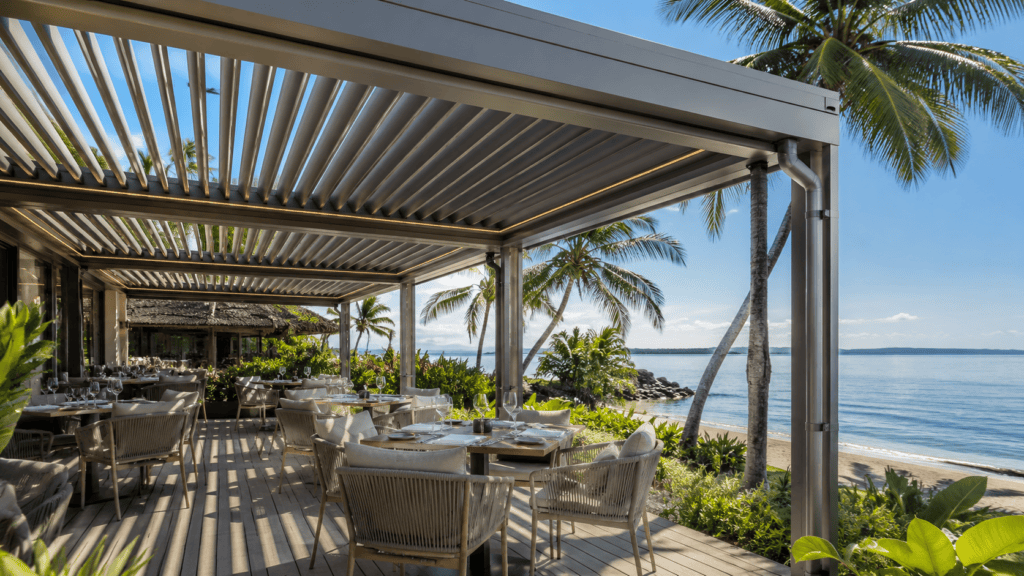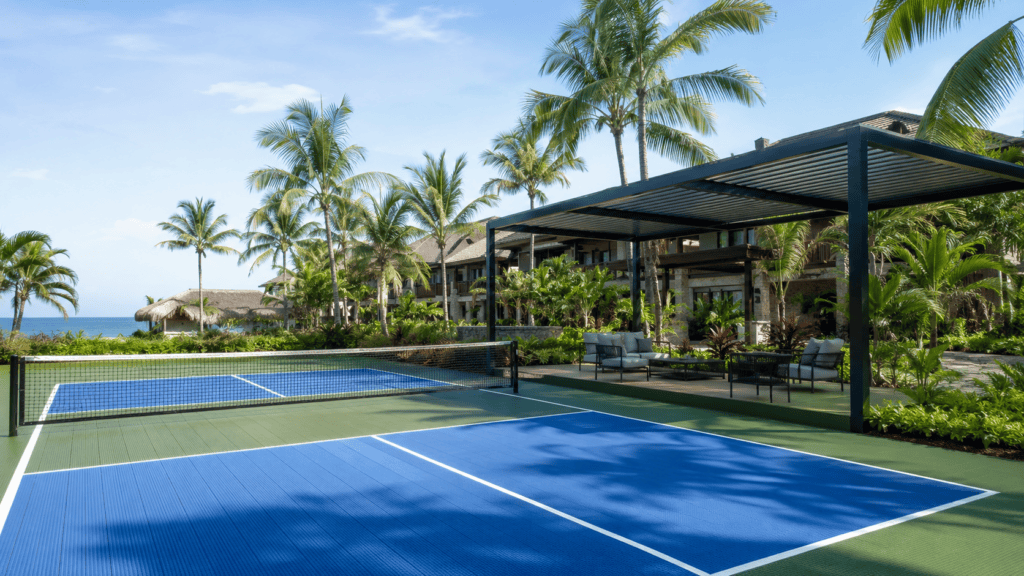
Outdoor spaces are a major part of the guest experience in Fiji. From beachfront restaurants and poolside lounges to private villa decks and shaded activity areas, guests expect to spend much of their stay outdoors.
However, products selected for a Fiji resort must do more than look attractive. They need to cope with strong sunlight, tropical rain, high humidity, salt-laden coastal air and periods of severe weather. Fiji’s tropical cyclone season generally extends from November to April, with activity normally peaking between January and March. Heavy rainfall and flooding can also occur during tropical depressions.
The right outdoor products can create comfortable guest areas, increase usable resort space and reduce long-term maintenance. Poorly selected products can quickly become faded, corroded, difficult to operate or unsuitable for exposed island conditions.
Not every Fiji property experiences the same conditions. A product that performs well in a protected courtyard may not be suitable for an exposed beachfront deck.
Before selecting a structure or outdoor system, consider:
A resort on Denarau, the Coral Coast or within an urban centre may have relatively straightforward delivery access. A remote island resort may require products to be packed into smaller sections for barge, boat or manual handling.
This makes modular and kitset systems particularly useful for island accommodation projects.
Wind performance should be one of the first considerations when choosing pergolas, roofs, blinds and freestanding outdoor structures.
Fiji’s building requirements include provisions relating to wind loading, cyclone resilience and securing structures to suitable foundations. The exact requirements can depend on the location, terrain, building use and proposed structure.
Resort owners should request:
Avoid relying on descriptions such as “heavy duty” or “commercial grade” without supporting technical information.
No outdoor product should simply be described as cyclone-proof. Final suitability should be confirmed through site-specific assessment, appropriate foundations and local engineering approval.
Motorised and manual aluminium louvre pergolas are well suited to Fiji resorts because they allow outdoor spaces to respond to changing weather.
The louvres can be opened for ventilation and sunlight, partially angled for shade or closed during normal rainfall. Suitable applications include:
Aluminium is generally a practical choice for tropical properties because it does not rot or attract termites. However, the aluminium grade, powder-coating system, drainage design, fixings and maintenance requirements still need to be examined.
For coastal properties, stainless-steel fasteners and protected mechanical components are especially important. Higher-grade stainless steel may be appropriate in locations exposed to regular salt spray.
Pergola drainage should be built into the structure rather than added as an afterthought. Water should move from the roof into perimeter gutters and then down through designated posts or downpipes.
Look for:
Leaves, seeds and windblown debris can quickly obstruct small outlets, so the system must be easy for resort maintenance teams to inspect and clean.
A fixed polycarbonate roof can be a practical alternative where continuous weather protection is more important than opening the roof.
These systems can work well over:
Polycarbonate panels allow natural light into the covered area while providing protection from rain. Tinted or heat-control panels may help reduce glare and heat in highly exposed locations.
Important considerations include UV protection, panel thickness, frame strength, thermal movement, drainage and the ability to replace an individual damaged panel without dismantling the entire roof.
Retractable roofs provide a balance between an open-air setting and weather protection. They can be valuable for restaurants, function spaces and poolside lounges where resort operators want to preserve the outdoor atmosphere.
A retractable system may be particularly effective where management needs to:
The motor, tracks and fabric or roof panels must be suitable for humid conditions. Resort teams should also receive clear operating instructions, including when the roof must be retracted or secured because of high winds.
Outdoor blinds can improve shade, privacy and protection from wind-driven rain. They are often used around restaurants, pergolas, bars and private villas.
For exposed areas, mesh blinds are generally more appropriate than solid clear PVC because the open weave allows some air to pass through. Solid PVC presents a larger surface to the wind and is usually better suited to protected areas.
Suitable options include:
These can provide:
Different fabric openness factors can be selected depending on whether the priority is airflow, visibility, shade or privacy.
Clear PVC can provide useful rain protection while maintaining views, but it should normally be reserved for more sheltered locations. Heat build-up, surface marking and wind pressure should be considered.
Regardless of fabric type, retractable blinds should normally be raised before severe winds. Sensors can assist with day-to-day operation, but they do not replace resort procedures or staff responsibility.
Fixed or adjustable aluminium shutters can create privacy without completely enclosing a space.
They can be used for:
Aluminium screens may offer lower maintenance than untreated timber in humid coastal environments. Wood-look finishes can provide a warmer appearance while retaining an aluminium structure.
Designs should still allow sufficient airflow and should not unintentionally create large wind-catching surfaces.
Food and beverage facilities are central to the Fiji resort experience. Tourism Fiji highlights outdoor restaurants, bars, private dining, pool areas and pavilion-style relaxation spaces across many of the country’s accommodation offerings.
A modular outdoor kitchen or covered bar pavilion can support:
Materials should be easy to clean and resistant to moisture. Stainless-steel work surfaces, aluminium cabinetry and weather-protected electrical components are generally more practical than conventional indoor cabinetry.
Where barbecues, pizza ovens or other heat-producing appliances are installed beneath a structure, the appliance position, flue diameter, required clearances, ventilation and roof opening must be planned before manufacture.
Resorts often compete on the range of activities they provide. Family-focused Fiji resorts commonly promote swimming pools, kids’ facilities, water sports and other outdoor recreation as major guest amenities.
Modular sports flooring can be used for:
Interlocking polypropylene tiles can be easier to transport and replace than some conventional sports surfaces. Damaged sections can be changed individually, and line markings can be incorporated into the court layout.
The supporting surface remains important. A correctly constructed concrete or asphalt base is normally preferable to installation directly over loose or unstable ground.
Rain can arrive quickly in tropical environments. Covered connections between accommodation, restaurants, reception areas and activity facilities can significantly improve the guest experience.
Fixed roof structures can be used for:
These areas do not always need the same decorative finish as a signature restaurant, but they must be safe, durable and easy to maintain.
Island locations can make specialist servicing slower and more expensive. A successful product specification should therefore consider maintenance from the beginning.
Ask suppliers about:
Simple systems with replaceable components are often more valuable to a remote resort than complicated products that require a specialist technician for every adjustment.
Even high-quality aluminium and stainless-steel products require cleaning in coastal environments.
A resort maintenance programme should include:
Beachfront products may need more frequent attention than structures located farther inland.
A single product specification should not automatically be used across an entire property.
| Resort area | Suitable product options |
|---|---|
| Beachfront restaurant | Engineered louvre pergola, mesh blinds and integrated drainage |
| Poolside bar | Fixed or adjustable roof, aluminium outdoor kitchen and solar screens |
| Private villa | Compact pergola, privacy shutters and retractable blinds |
| Reception entrance | Fixed weatherproof canopy |
| Covered walkway | Polycarbonate or insulated fixed roof |
| Spa area | Privacy screens, adjustable shade and low-maintenance decking |
| Recreation zone | Modular sports flooring and shaded spectator area |
| Remote beachfront deck | Simplified corrosion-resistant structure with minimal electrical components |
The lowest purchase price does not always create the lowest long-term cost.
Resort operators should consider:
A well-planned outdoor dining area may allow a restaurant to continue operating through light rain and strong sun. A poorly planned structure may remain unused whenever weather conditions change.
Before ordering an outdoor product for a Fiji resort, confirm:
The best resort outdoor products combine architectural appearance with practical performance. They should provide shade, airflow and weather protection while remaining manageable for resort staff.
Louvre pergolas, fixed roofs, retractable systems, outdoor blinds, aluminium screens, modular kitchens and sports flooring can all add value to island accommodation. The key is choosing each system for its exact location rather than selecting products based only on appearance or headline price.
With appropriate engineering, reliable drainage, coastal-grade materials and a realistic maintenance plan, outdoor areas can become some of the most productive and memorable spaces within a Fiji resort.