
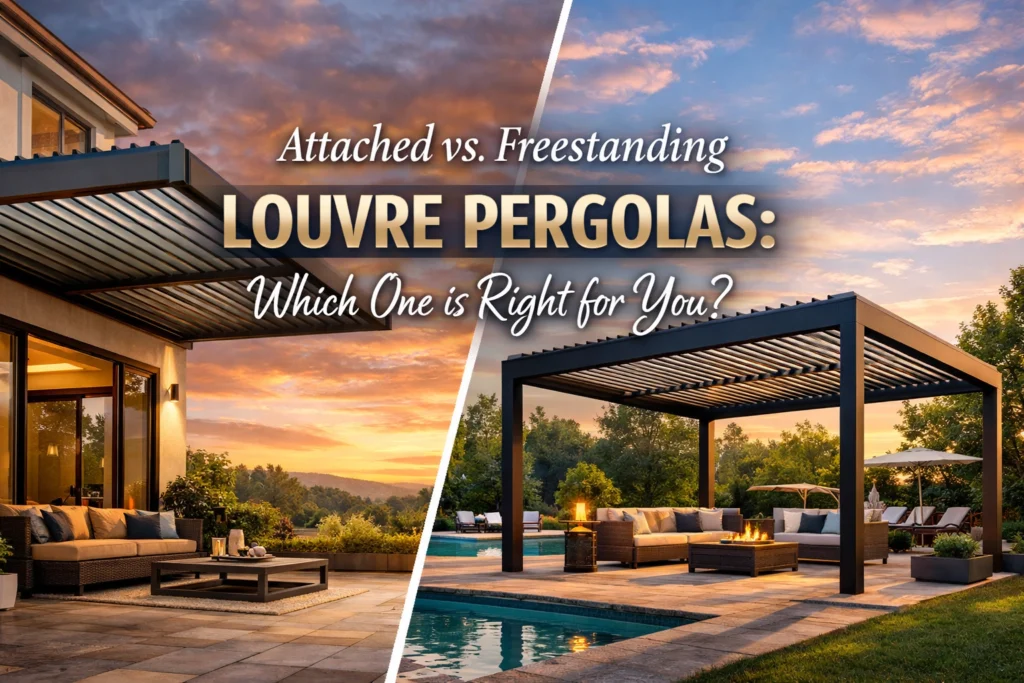
Choosing between an attached and a freestanding louvre pergola is a pivotal decision in architectural planning for any New Zealand home. This choice dictates not only the aesthetic flow of the property but also the structural requirements, installation complexity, and long-term maintenance of the outdoor space.
Both configurations offer the high-end functionality of adjustable shading, but they serve different spatial and lifestyle purposes. This guide provides a technical breakdown of each system to help you determine which structure aligns with your site conditions and design objectives.
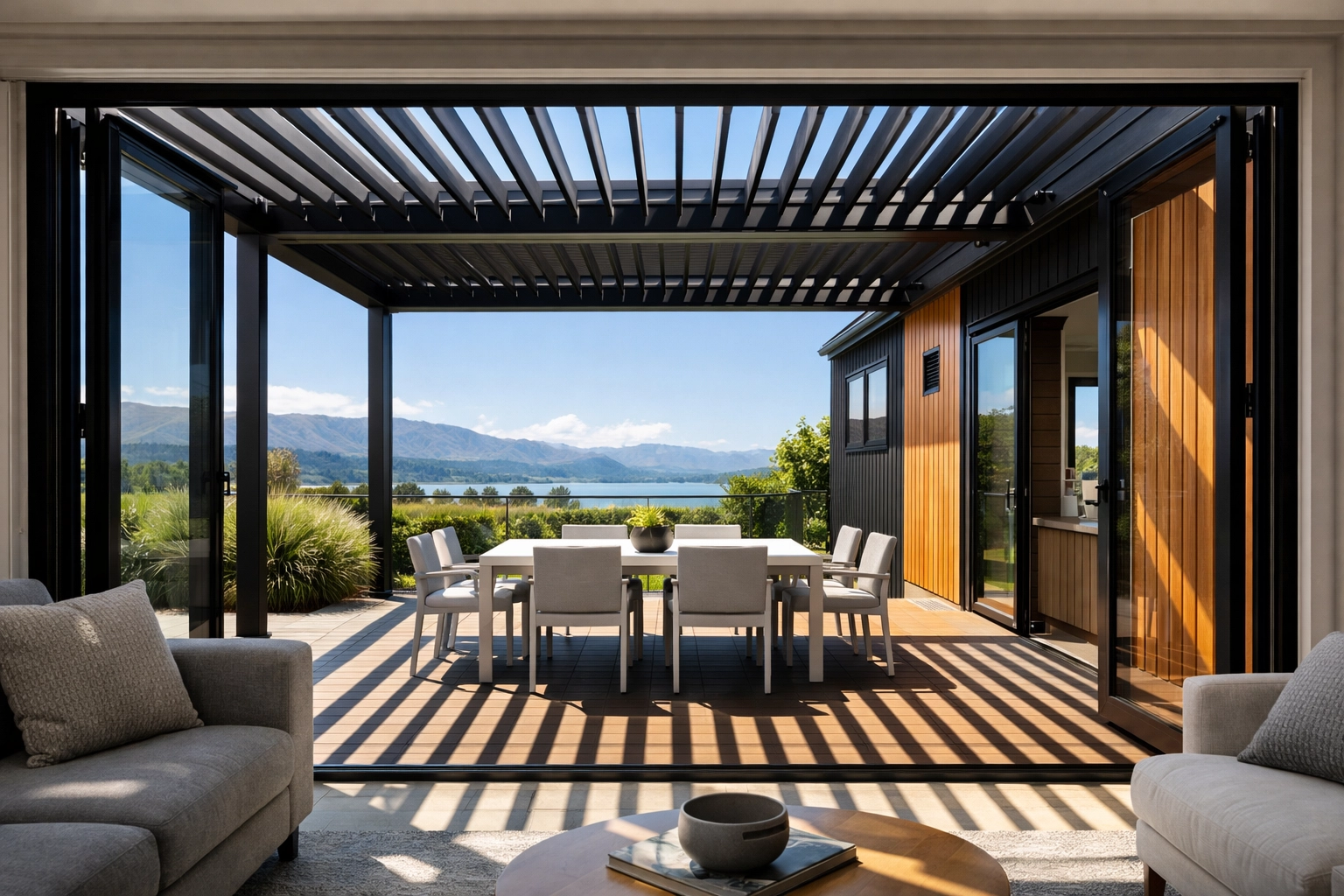
An attached louvre system is structurally integrated with the existing building. One or more sides of the pergola frame are secured directly to the house's exterior wall or fascia using a ledger board and heavy-duty brackets.
The primary requirement for an attached system is a load-bearing connection point. Installers must identify the structural framing of the house: typically studs or floor joists: to ensure the weight of the pergola is safely distributed.
Because the house provides a significant portion of the structural support, attached pergolas often require fewer vertical posts. In many residential deck layouts, this results in a cleaner look with only two outer posts, maximizing the usable floor area beneath the louvres.
One of the most critical aspects of an attached system is the building envelope integrity. Penetrating the house cladding requires precise flashing to prevent water ingress. In New Zealand, compliance with E2/AS1 (External Moisture) standards is non-negotiable. If the attachment is not handled with professional precision, there is a risk of moisture damage to the home's internal framing over time.
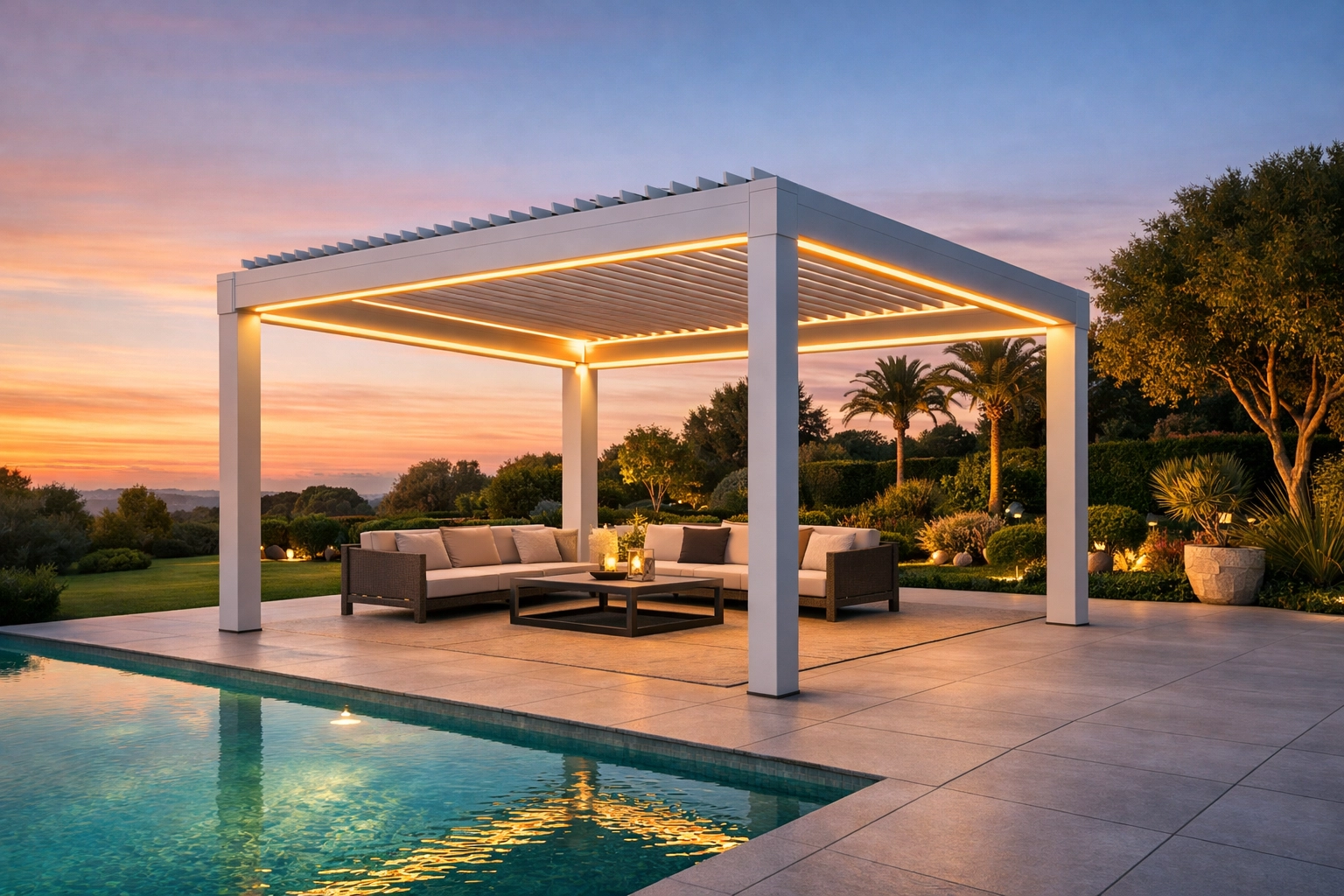
A freestanding louvre pergola is a self-supporting structure that stands independently of any other building. It is supported by a minimum of four posts (or more, depending on the span) and requires independent footings for every vertical support.
The greatest advantage of a freestanding system is its geographic flexibility. It can be positioned anywhere on a property: next to a pool, in the center of a garden, or on a remote viewing platform. This allows for the creation of a "destination" space, separate from the main house. For large-scale projects, systems like the Spartan Series Prestige System offer the structural robusticity needed for these independent architectural statements.
Unlike attached models, a freestanding pergola must withstand lateral loads (wind and seismic) entirely through its own frame and foundations. This usually necessitates:
Regardless of whether you choose an attached or freestanding configuration, the materials must be suited to the New Zealand climate. The local environment is characterized by high UV levels and corrosive salt air in coastal regions.
Specify only systems constructed from high-grade 6063-T6 aluminium.
This material ensures that your louvre blades will not warp under the intense summer sun and that the frame remains structurally sound through decades of winter storms. When looking at long-term investments, the Orion Louvre System is a benchmark for this level of material quality.
Navigating the legalities of outdoor structures is essential to avoid council complications during property resale.
For both attached and freestanding structures, you should look for systems that come with a PS1 (Producer Statement for Design). This is a document signed by a chartered engineer confirming that the design meets the requirements of the New Zealand Building Code (NZBC). Having a PS1 simplifies the building consent process significantly, as it provides the local council with verified structural calculations regarding wind loads and snow loads.
In many cases, outdoor louvre systems may fall under "exempt building work" if they meet certain criteria:
For those managing their own construction projects or working with independent contractors, "supply-only" kitsets are an increasingly popular route. A high-quality kitset, such as the Cerberus Plus Louvre Kitset System, provides the high-spec materials of a custom build with the logistical ease of a pre-engineered package.
Advantages of Kitsets:
Choosing the right louvre system is about balancing structural practicalities with how you intend to inhabit your outdoor space. By focusing on high-grade materials and verified engineering, you ensure that whichever path you choose: attached or freestanding: results in a durable, high-value addition to your property.


