
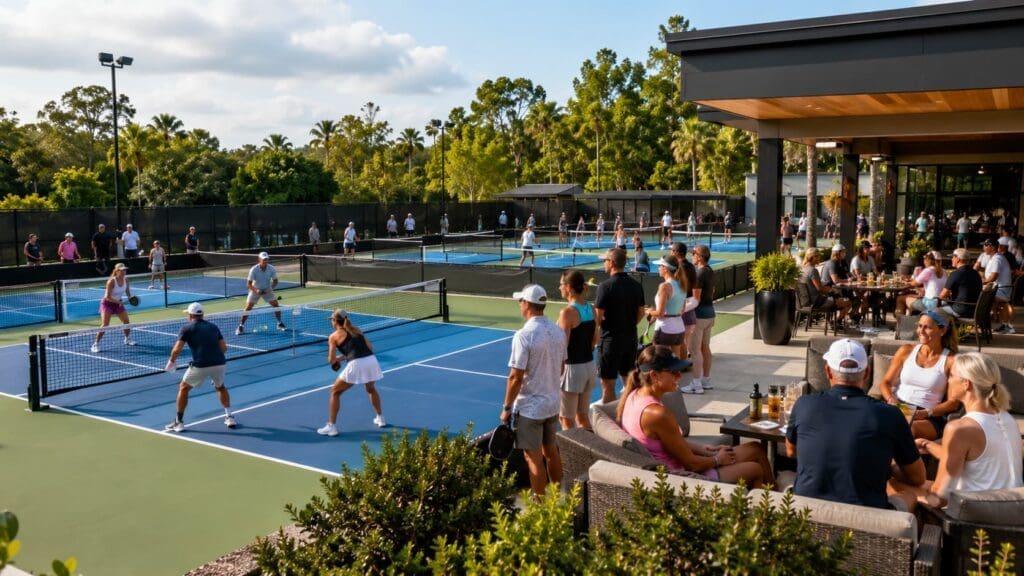
Pickleball is no longer just a casual backyard game. It has become one of the fastest-growing sports in the world, and clubs across New Zealand are starting to see the opportunity. For tennis clubs, bowls clubs, schools, retirement villages, community clubs and sports facilities, pickleball courts can turn unused space into a new income stream.
In the United States, pickleball reached 24.3 million players in 2025, with participation growing 171.8% from 2022 to 2025. In New Zealand, the sport has also taken a major step forward, with Pickleball New Zealand Association recognised by Sport NZ as the national governing body in November 2025. This shows pickleball is not just a trend. It is becoming an organised, recognised and commercially valuable sport.
For clubs looking for new members, more bookings, extra bar sales and better use of outdoor or indoor space, pickleball is one of the easiest sports to introduce.
Pickleball is popular because it is easy to learn, social, low-impact and suitable for a wide age range. New players can enjoy a game quickly without needing years of coaching. This makes it ideal for clubs that want to attract beginners, families, older players and social sports groups.
Unlike some sports that require large fields or expensive construction, pickleball can often be added to existing spaces. Tennis courts, indoor halls, bowls club surrounds, unused concrete areas and multi-sport zones can all be considered.
A standard pickleball court is much smaller than a tennis court, which means clubs can often create multiple playing areas from one existing space. This gives clubs more booking opportunities and more people using the facility at the same time.
The most direct way to make money from pickleball is through court hire.
Clubs can charge players by the hour, by session, or through casual booking systems. This works well because pickleball is often played in doubles, meaning four players can use one court at a time.
Possible booking options include:
For many clubs, even a few regular weekly sessions can create a steady new income stream.
Social pickleball is one of the strongest opportunities for clubs. Many people do not want to join a formal competition straight away. They want a fun, easy, welcoming activity where they can turn up, meet people and play.
Clubs can run social pickleball sessions with a simple entry fee per person. For example, a club might charge a small fee for a two-hour session and rotate players through games.
This is especially useful for bowls clubs and tennis clubs that want to bring in new people who may not currently be members. Once people are visiting the club regularly, they are more likely to buy food and drinks, join as members, bring friends or book additional sessions.
Pickleball can help clubs attract people who may not have joined a traditional tennis, bowls or squash club.
It appeals to:
This is important for clubs with ageing memberships or underused facilities. Pickleball can create a new pathway into the club.
A smart approach is to offer a pickleball membership category. This could be cheaper than a full membership but still gives players access to set playing times, booking discounts and club facilities.
Because pickleball is easy to start, beginner clinics are a great revenue option.
Clubs can run:
A coach or club organiser can teach the rules, basic shots, serving, court positioning and doubles rotation. These sessions can be charged per person or sold as a multi-week programme.
This is also a strong way to convert first-time players into regular players.
Once a club has a group of regular players, leagues can create consistent weekly income.
Pickleball leagues are simple to run and can be structured for different levels. Clubs can offer beginner, intermediate, mixed doubles, social doubles or competitive divisions.
A league creates commitment. Players pay for a season, turn up every week, and often stay afterwards for food or drinks.
Possible league formats include:
Leagues help clubs build habit, community and repeat income.
This is where pickleball can become especially valuable for clubs.
Pickleball is a social sport. Players often stay after games, talk, eat and drink. This gives clubs an opportunity to increase bar, café or kitchen sales.
For bowls clubs, RSAs, community clubs and sports clubs with hospitality facilities, pickleball can bring more people through the door during quiet times.
Examples include:
The court hire may be one income stream, but the real value can come from the extra spend around the activity.
Pickleball is ideal for corporate groups because it is easy to understand, quick to play and does not require a high fitness level.
Clubs can package pickleball as a corporate event option. A simple package could include court hire, paddles, balls, an organiser, basic coaching and food or drinks afterwards.
This works well for:
Auckland already has dedicated pickleball facilities offering open play, coaching, events and corporate sessions, showing there is a market for organised pickleball experiences in New Zealand.
Tournaments can bring strong one-off revenue and wider exposure for the club.
A club does not need to start with a major competition. A simple social tournament can still attract players, spectators and sponsors.
Tournament income can come from:
Pickleball tournaments can be themed around social play, mixed doubles, beginners, seniors, businesses, schools or charity fundraising.
For clubs trying to raise their profile locally, a pickleball open day or tournament can be a strong community event.
As pickleball grows, local businesses may be interested in sponsoring courts, competitions or club events.
Clubs can offer sponsorship packages such as:
A local café, retirement village, real estate agency, physiotherapist, sports shop or building company may see value in being connected with a fast-growing community sport.
Clubs can also generate smaller add-on income through equipment.
This may include:
For new players, being able to turn up and hire a paddle removes a barrier. For clubs, it creates extra income and makes the sport easier to access.
One of the biggest financial benefits of pickleball is that it can help clubs make better use of space they already have.
Many clubs have areas that are underused during the day, in winter, or outside peak sport times. Pickleball can be added as a new activity without needing the club to completely change its identity.
Good spaces to consider include:
For some clubs, a modular tile court or roll-out pickleball mat system may be a practical option. These surfaces can help create a cleaner, more defined playing area without a full traditional court build.
Bowls clubs are one of the biggest opportunities for pickleball in New Zealand.
Many bowls clubs have great locations, clubrooms, parking, bar facilities and a strong community base. However, some are looking for ways to attract younger members and increase facility use.
Pickleball can help by bringing in a new audience without replacing bowls. It can run alongside existing club activities and provide another reason for people to visit.
For bowls clubs, pickleball can create:
The key is to position pickleball as an addition to the club, not a replacement for traditional activities.
Tennis clubs are also well placed to benefit.
Pickleball can be added to existing tennis court areas, especially where court utilisation is low during certain times of the week. It can bring in beginners who may find tennis harder to start, while still supporting a racquet-sport environment.
Tennis clubs can use pickleball to create:
Rather than competing with tennis, pickleball can become a feeder activity that brings more people into the club.
The right court option depends on budget, space, surface condition and how permanent the club wants the setup to be.
This is a simple option for clubs with existing concrete or asphalt courts. It can work well where the base surface is already in good condition.
PP sports tiles are a strong option for multi-sport areas. They can provide a clean, consistent playing surface and can often be used for pickleball, basketball, futsal, netball and other sports.
Roll-out pickleball mats can be a good option where clubs want a more flexible or semi-portable court. These are useful for indoor halls, events, temporary setups or clubs that may want the ability to move or store the surface.
For clubs wanting a long-term, high-use pickleball facility, a dedicated court build may be the best option. This can include base preparation, surfacing, fencing, lighting and permanent nets.
A club does not need to build a large pickleball facility on day one.
A smart starting plan could be:
This reduces risk and allows the club to test demand before investing further.
Pickleball can deliver return on investment because it creates multiple income streams from the same court space.
A single court can support:
That makes pickleball more than just another sports surface. It becomes a club growth tool.
The clubs that move early can become local hubs for the sport before the market becomes crowded.
Pickleball gives clubs a practical way to attract new people, create new income and make better use of existing facilities.
For tennis clubs, it can increase court utilisation. For bowls clubs, it can bring in younger members and new social activity. For community clubs, it can create events, bookings and extra hospitality revenue.
The key is to think beyond the court itself. The real money comes from the full club experience: play, coaching, leagues, food, drinks, events, memberships and community.
As pickleball continues to grow across New Zealand, clubs that add courts now have the chance to become leaders in their local area.


